
Why Are Prosthetics Still So Expensive? Breaking Down the Costs

Why Are Prosthetics Still So Expensive? This question remains one of the most pressing issues in modern healthcare as we enter early 2026.
While technology moves at a lightning pace, the high price tags for artificial limbs often leave amputees feeling financially stranded.
Choosing a prosthetic device is not like buying a standard consumer gadget; it is a complex medical investment.
High costs stem from a unique intersection of personalized craftsmanship, rigorous clinical oversight, and the extreme research demands of bionic engineering.
What are the Main Factors Driving Prosthetic Costs?
The primary reason Why Are Prosthetics Still So Expensive involves the highly custom nature of every single device produced.
Since no two residual limbs share the exact same shape or sensitivity, mass production remains an impossible dream for the industry.
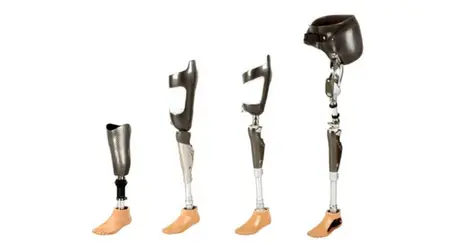
Every socket the critical interface between the person and the machine must be hand-fitted by a specialized professional known as a prosthetist.
This labor-intensive process requires multiple visits and expensive materials like carbon fiber to ensure the user’s long-term comfort and mobility.
How Does Professional Expertise Influence the Price?
A significant portion of the final bill covers the years of clinical expertise required to fit and maintain the device.
A prosthetist doesn’t just hand over a limb; they manage the patient’s gait, skin health, and mechanical adjustments for years.
This ongoing care is bundled into the initial acquisition cost, making the price appear inflated at first glance.
However, without this expert alignment, even a $50,000 robotic leg would be useless and potentially harmful to the wearer’s body.
++ Self-Healing Materials in Medical Devices: A Innovation to Watch
Why is Research and Development So Costly?
Developing microprocessor-controlled knees or myoelectric arms requires millions of dollars in testing and regulatory approval from agencies like the FDA.
Manufacturers must recoup these massive investments from a relatively small pool of global users, which naturally drives up unit prices.
Unlike smartphones, which sell by the millions, advanced bionics have a limited market, preventing the price-lowering effects of scale.
This “low-volume, high-complexity” dynamic is a fundamental reason Why Are Prosthetics Still So Expensive in our current economic landscape.
Also read: Predictive Health Alerts in Assistive Devices: A Life-Saving Trend?
What Role do Materials and Durability Play?
Prosthetics must withstand millions of cycles of pressure while remaining lightweight enough for a human to carry all day.
High-grade titanium, specialized silicone, and aerospace-quality carbon fiber are necessary to prevent mechanical failure during simple activities like walking or climbing.
Using cheaper materials would lead to frequent breaks, creating a safety hazard and increasing long-term costs through constant repairs.
Therefore, the “expensive” materials are actually a strategic choice to ensure the device lasts its expected three-to-five-year lifespan.
Read more: Telehealth and Assistive Tech: Closing the Accessibility Gap
How Does Insurance Complexity Impact Final Costs?
Navigating the labyrinth of medical insurance often adds thousands of dollars in administrative overhead to a prosthetic clinic’s budget.
Staff must spend hours filing appeals and documenting “medical necessity” just to ensure the patient receives a functional device.
These hidden administrative costs are ultimately reflected in the retail price of the prosthetic components. For many clinics, the paperwork is almost as labor-intensive as the actual fabrication of the limb itself.
How Do Technology Trends Impact Today’s Pricing?
Recent data shows a shifting landscape, where 3D printing and AI are beginning to challenge traditional manufacturing monopolies.
According to Mordor Intelligence, the global prosthetics and orthotics market is valued at approximately $7.69 billion in 2026, growing steadily as technology evolves.
This growth suggests that while prices remain high, the variety of available technology is expanding.
We are seeing a “tiered” market where basic mechanical options coexist with high-end bionic systems that offer near-natural movement.
What is the Promise of 3D Printing?
3D printing is arguably the biggest disruptor in the quest to answer Why Are Prosthetics Still So Expensive for the average person.
By digitizing the casting process, startups are producing functional bionic arms for roughly $8,000, compared to $80,000 for traditional models.
This technology allows for rapid prototyping and localized manufacturing, which eliminates shipping costs and reduces material waste.
While 3D-printed limbs aren’t yet as durable as carbon-fiber versions, they offer a vital “entry-level” option for many.
How are AI and Sensors Changing the Game?
Artificial intelligence now allows prosthetic limbs to “learn” a user’s specific walking pattern, adjusting resistance in real-time to prevent falls.
These sensors are becoming cheaper to produce, yet the software development behind them remains a premium expense.
The inclusion of AI creates a smarter device that reduces the metabolic energy a user needs to move.
This efficiency is life-changing, but it contributes to the narrative of Why Are Prosthetics Still So Expensive for those seeking high-end functionality.
What Statistic Highlights the Replacement Cycle?
A study published in the Journal of Prosthetics and Orthotics notes that the average prosthetic limb requires replacement every 3 to 5 years.
This means the initial $20,000 to $60,000 investment is not a one-time fee but a recurring lifetime cost. For a young person, this cycle could mean purchasing over 15 different limbs throughout their life.
When you calculate the cumulative cost, the financial burden becomes a staggering barrier to long-term mobility and social participation.
How is a Prosthetic Like a Formula 1 Car?
Imagine a prosthetic as a Formula 1 car; it is a high-performance machine built specifically for one driver and one purpose.
You cannot simply buy a “generic” version and expect it to win a race or handle a sharp turn. Every nut, bolt, and sensor must be calibrated to the driver’s unique physiology and weight.
Just as F1 technology eventually trickles down to regular cars, we hope prosthetic innovation will eventually lead to cheaper consumer versions.
Can We Expect Prices to Drop Soon?
As more competitors enter the market, the pressure to solve Why Are Prosthetics Still So Expensive is increasing.
The rise of open-source designs and modular components allows users to repair small parts themselves rather than replacing the entire unit.
However, as long as prosthetics remain “custom medical devices” rather than “consumer products,” the costs will remain higher than most people expect.
The goal for 2026 is to bridge the gap between high-tech bionics and affordable accessibility.
Why is Localized Manufacturing Growing?
Localized hubs are popping up across North America and Europe, using desktop scanners to create digital molds of residual limbs.
This reduces the need for physical plaster casts and long-distance shipping, cutting days off the delivery time.
By keeping production “in-house,” clinics can reduce their overhead and potentially pass those savings onto the patient.
This shift is a key part of the modern strategy to address Why Are Prosthetics Still So Expensive in remote or underserved areas.
What Role Does Public Policy Play?
Advocacy groups are pushing for “Fair Access” laws that would force insurance companies to cover more advanced, microprocessor-controlled devices.
If insurance covers a larger portion of the cost, the out-of-pocket burden on the amputee decreases significantly.
When the government recognizes a prosthetic as a “necessity” rather than a “luxury,” the market dynamics shift in favor of the user.
This policy-driven approach is just as important as the technological one in lowering the barriers to entry.
What is an Original Example of Modular Innovation?
Consider a new 2026 startup that sells “modular feet” where the carbon-fiber blade can be swapped out for a “hiking” or “running” attachment.
Previously, a user would need to buy two entirely separate $10,000 legs to enjoy both activities.
This modularity represents a massive leap in value for the user, effectively providing two functions for the price of one. It is a practical, clever way to reduce the total cost of ownership for active amputees.
Is the Future of Prosthetics Truly Affordable?
Will we ever see a day where a high-functioning limb costs the same as a high-end smartphone? While we are moving in that direction, the medical safety requirements will always keep prosthetics in a higher price bracket.
The real victory won’t be a $500 limb, but a system where every person who needs a $20,000 limb can get one without debt. This vision is the ultimate goal of the “Assistive Technology and Innovation” sector in 2026.
Estimated Cost Breakdown of a Mid-Range Prosthetic Leg (2026)
| Component/Service | Estimated Cost (USD) | Percentage of Total | Reason for Cost |
| Microprocessor Knee | $15,000 – $35,000 | 50% | R&D, Sensors, Battery Tech |
| Custom Carbon Socket | $3,000 – $6,000 | 15% | Labor-intensive hand-fitting |
| Carbon Fiber Foot | $2,000 – $5,000 | 10% | Specialized material strength |
| Clinical Fitting/Adjustments | $5,000 – $12,000 | 20% | Professional expertise & follow-up |
| Liner and Suspension | $1,000 – $2,500 | 5% | Biocompatible silicone materials |
In conclusion, understanding Why Are Prosthetics Still So Expensive requires looking past the hardware and into the complex world of personalized medicine.
From the aerospace materials to the years of clinical expertise, every dollar reflects a commitment to restoring human movement.
While 3D printing and modular designs are finally beginning to lower the financial bar, the journey toward total affordability is ongoing.
We must continue to advocate for better insurance coverage and smarter engineering to ensure that no one is left immobile due to their bank account.
Do you believe the government should subsidize bionic limbs as a basic human right? Share your experience in the comments!
Frequently Asked Questions
Why can’t I just buy a 3D-printed arm online for cheap?
While you can buy the hardware, a prosthetic is useless without a custom-fitted socket. A poorly fitted limb can cause skin ulcers, nerve damage, and long-term joint pain, which is why a professional fitting is mandatory.
Does insurance cover high-end “bionic” limbs in 2026?
Coverage is improving, but many insurers still categorize microprocessor limbs as “not medically necessary” for sedentary users. You often have to prove a high activity level to get these advanced models covered.
How often do I need to pay for maintenance?
Most high-end limbs require a professional “tune-up” once or twice a year to check the sensors and mechanical joints. These visits can cost between $200 and $800 if not covered by a warranty or insurance plan.
Are there charities that help with the cost?
Yes, organizations like the “Amputee Coalition” and specialized local foundations often provide grants for those who cannot afford their co-pays. Many manufacturers also have “hardship programs” for eligible patients.
Is the price higher for children?
Yes, because children grow so quickly, they may need a new socket every 6 to 12 months.
This makes pediatric prosthetics one of the most expensive sub-fields, though modular “telescoping” designs are helping to extend the life of each device.
