
Accessibility Audits in Public Buildings: Are Governments Checking Compliance?
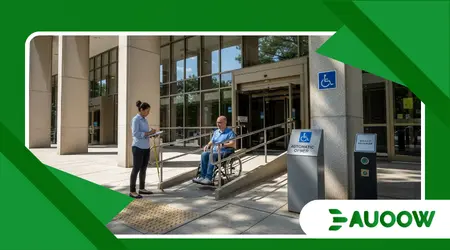
Accessibility Audits in Public Buildings represent the frontline of civil rights in 2026, serving as a vital mechanism to ensure every citizen can navigate democracy.
While legislative frameworks look perfect on paper, the physical reality of administrative offices and city halls often reveals a starkly different, more restrictive story.
Governments worldwide face mounting pressure to move beyond mere promises and deliver tangible structural changes that reflect a truly inclusive modern society.
Effective oversight through these specialized inspections determines whether a public space is truly open or merely a monument to bureaucratic architectural exclusion.
Why are governmental inspections essential for true inclusion?
Accessibility Audits in Public Buildings identify hidden barriers that able-bodied architects often overlook, ranging from steep ramp gradients to inadequate braille signage.
Without rigorous, independent verification, “compliance” remains a hollow term that fails to account for the lived experience of citizens with diverse mobility needs.
Regular checks force public administrators to prioritize budget allocations toward necessary retrofitting and universal design upgrades that benefit everyone in the long run.
Inclusion is not a charitable act; it is a fundamental legal obligation that maintains the social contract between the state and its people.
What does a comprehensive audit involve?
A professional team evaluates everything from parking lot proximity to the tactile sensitivity of elevator buttons during Accessibility Audits in Public Buildings.
This holistic approach ensures that a building is not just “reachable,” but fully usable for people with sensory or physical disabilities.
Modern 2026 standards now include digital accessibility for kiosk interfaces and emergency alert systems within these physical structures to ensure safety.
Neglecting these technical details creates dangerous gaps that can isolate vulnerable citizens during critical moments of administrative interaction or public crisis.
++ Who Monitors Accessibility Laws? The Accountability Gap in Public Policy
How do audits improve public service efficiency?
Streamlining entry and navigation through Accessibility Audits in Public Buildings reduces the need for specialized assistance and speeds up foot traffic for all.
When a building functions intuitively for a wheelchair user, it typically operates more effectively for parents with strollers and aging seniors too.
Universal design turns a public office into a high-performance environment where barriers do not dictate the speed of civil service delivery.
Investing in these structural improvements now prevents costly legal battles and retrofits that inevitably arise from neglecting modern accessibility mandates.
What is the status of global compliance in 2026?
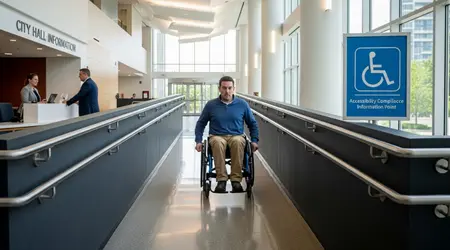
Current data reveals that while new structures often meet codes, over 60% of historic government assets still fail Accessibility Audits in Public Buildings.
This gap creates a “two-tier” citizenship where access to justice or heritage depends entirely on the age of the local building.
According to a 2025 World Health Organization (WHO) report, only 35% of countries actively enforce penalties for government agencies failing these critical safety checks.
This lack of accountability suggests that many officials view accessibility as an optional aesthetic choice rather than a mandatory civil right.
Is it fair for a taxpayer to be barred from a public hearing simply because the local courthouse lacks a functioning lift?
Democracy remains an unfinished bridge as long as physical barriers prevent full participation in the civic processes that govern our lives.
Addressing these failures requires a shift from passive observation to active enforcement through transparent, publicly accessible reporting of every single inspection.
We must demand that the structures housing our laws do not simultaneously violate the rights of the people they serve.
Also read: Middle East Accessibility Policies: Slow Change or Silent Revolution?
Why do some regions lag behind?
Resource allocation often dictates the pace of progress, with rural municipalities struggling to fund the findings of Accessibility Audits in Public Buildings.
Smaller councils frequently cite “historic preservation” as a shield to avoid the necessary costs of installing modern lifts or sensory-friendly lighting.
This prioritization of old stone over living people creates a systemic barrier that disproportionately affects residents in less affluent geographic areas.
Real equality requires a centralized federal fund that ensures every city hall meets the same high standards of universal accessibility.
Read more: Australia’s Disability Strategy: Successes and Shortcomings
How does technology assist the auditing process?
Auditors in 2026 utilize 3D laser scanning and AI-driven pathfinding to conduct Accessibility Audits in Public Buildings with unprecedented speed and accuracy.
These tools create “digital twins” of offices, allowing planners to simulate different mobility challenges and identify friction points before any construction begins.
This technological leap makes inspections cheaper and more reliable, removing the excuse that audits are too complex or time-consuming for large portfolios.
High-tech mapping ensures that the final data is indisputable, pushing bureaucrats toward immediate action rather than endless debate or delay.
How can citizens drive architectural change?
Public participation turns Accessibility Audits in Public Buildings from a dry technical exercise into a powerful tool for community-led social advocacy.
When citizens have access to audit results, they can pressure local representatives to fix specific broken elevators or install required hearing loops.
Direct feedback from users with disabilities provides the “human data” that traditional architectural checklists often miss during the initial planning phases.
Your voice is the most effective catalyst for ensuring that the government treats these compliance checks as a priority rather than a chore.
Example: In Toronto, a citizen-led campaign used Accessibility Audits in Public Buildings to force the renovation of three major subway stations in 2025.
Another example occurred in London, where open-data audits led to the immediate installation of tactile paving in all historic government districts.
The path toward a barrier-free world is a marathon, not a sprint, and every audited building represents a significant mile marker achieved.
Following through on these inspections ensures that the future of public service is as inclusive as the ideals we claim to uphold.
What are the legal consequences of non-compliance?
Failing to act on the results of Accessibility Audits in Public Buildings can lead to significant civil rights lawsuits and the withholding of federal grants.
In 2026, courts increasingly view architectural barriers as a form of systemic discrimination, similar to denying service based on race or gender.
Municipalities that ignore their audit obligations risk not only financial penalties but also a profound loss of public trust and institutional legitimacy.
Compliance is the only shield against the rising tide of litigation from advocacy groups demanding immediate and total environmental justice.
Why is transparency in reporting vital?
Publishing the results of Accessibility Audits in Public Buildings on official websites allows for real-time tracking of government progress by the general public.
Transparency prevents officials from “burying” negative reports or indefinitely delaying the repairs that are essential for daily civic participation.
Open data fosters a culture of accountability where every department competes to be the most inclusive and accessible in the entire region.
When progress is visible to everyone, the political cost of stagnation becomes too high for even the most stubborn bureaucrat to ignore.
2026 Global Accessibility Compliance Overview
| Building Type | Audit Frequency | Compliance Rate | Main Barrier |
| Hospitals | Annual | 88% | Digital Interface |
| Courthouses | Bi-annual | 52% | Vertical Access |
| City Halls | 3 Years | 44% | Entry Doorways |
| Libraries | 3 Years | 71% | Shelving Height |
| Post Offices | 5 Years | 65% | Counter Height |
In conclusion, Accessibility Audits in Public Buildings are the essential tools we need to build a future where every person can participate in society.
These inspections reveal the truth about our public spaces and force the government to confront the reality of its architectural and social exclusions.
By demanding transparency, utilizing modern technology, and enforcing legal standards, we can ensure that our buildings reflect our values of equality and dignity.
Let us continue to advocate for a world where no door is closed to any citizen, regardless of their physical or sensory abilities.
Have you ever encountered a physical barrier in a government building that prevented you from accessing a vital service or meeting? Share your experience in the comments!
Frequently Asked Questions
Are historic buildings exempt from modern accessibility laws?
In 2026, most jurisdictions require historic buildings to provide “functional equivalence” or install discrete ramps to ensure access without destroying the heritage.
How can I request an audit for a building in my town?
You can contact your local disability commission or ombudsman to request Accessibility Audits in Public Buildings if you suspect a violation.
Who pays for the necessary building renovations?
Funding typically comes from municipal infrastructure budgets, often supplemented by national accessibility grants designed to help older cities modernize their facilities.
Do audits cover invisible disabilities like sensory processing?
Yes, modern audits now evaluate lighting, acoustics, and quiet spaces to accommodate neurodivergent citizens and those with sensory sensitivities.
What happens if a building fails its audit?
The government agency receives a remediation plan with a specific deadline; failure to comply can result in fines or temporary closure of services.
