
How Music Festivals Are Becoming More Accessible
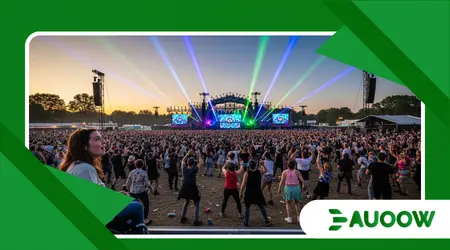
The promise that Music Festivals Are Becoming More Accessible is being tested in the muddy fields and sprawling concrete plazas of our collective summer rituals.
Imagine Clara standing at the edge of a massive, pulsating crowd in the California desert. The bass thumps in her chest, but her eyes are fixed on a small, raised wooden platform twenty yards away.
Clara uses a wheelchair, and between her and that platform lies a sea of loose gravel, tangled electrical cables, and several thousand dancing bodies.
For many fans like Clara, the festival experience has historically been one of “negotiated joy” a constant calculation of whether the music is worth the physical struggle.
Yet, as she notices a new path of interlocking high-density plastic tiles stretching toward the viewing area, the perspective shifts.
The barrier isn’t just being managed; it is starting to be removed, signaling a move toward true belonging rather than mere accommodation.
A Roadmap to Inclusivity
- The Sensory Shift: Moving beyond ramps to vibration and light.
- Economic Logic: Why accessibility is now a financial priority for promoters.
- Invisible Barriers: Addressing neurodiversity and sensory overload.
- The Legal Spark: How global mandates evolved into cultural standards.
Why did it take so long for live music to catch up?
For decades, the “rock and roll” ethos was built on a certain ruggedness. Festivals were often marketed as endurance tests involving long days in the sun and navigating uneven terrain.
This ruggedness was a choice that often excluded millions. Promoters frequently viewed accessibility as a bureaucratic burden a series of checkboxes required by law rather than a fundamental part of the fan experience.
When we observe these patterns, the focus was often on “minimum viable access.”
This might mean a lone ramp tucked in a distant corner or a viewing platform so far from the stage that the performers were barely visible.
We maintained a social hierarchy where “typical” fans occupied the pit and “accommodated” fans were pushed to the margins.
However, a significant change is taking hold as promoters realize that inclusive design opens the gates to a massive, untapped audience.
++ Accessible Navigation in Airports: Best and Worst Practices
How are digital tools transforming the gatekeeping of festivals?
Digital innovation is a primary reason why Music Festivals Are Becoming More Accessible in 2026.
In the past, an attendee with a disability often had to navigate complex phone systems, hoping to find a staff member who understood the specific needs of step-free access or service-animal zones.
Today, integrated apps allow for real-time navigation and haptic feedback to help blind attendees find essential stations independently.
Accessibility relies on transparent data. If an attendee cannot verify the height of a viewing platform or the texture of the terrain from their laptop, they may not feel confident enough to buy a ticket.
The festivals finding success are those that treat accessibility information as prominently as the lineup announcement.
They are moving away from a “medical model” where the person is a patient to be handled toward a “social model,” where the environment is redesigned to fit everyone.
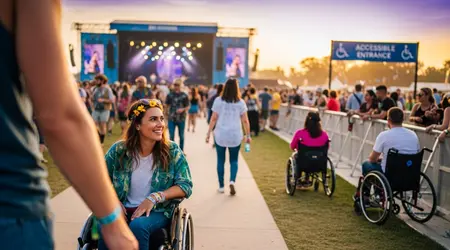
What is the “Silent Revolution” in sensory inclusion?
Live music is an intense sensory experience. While this is the draw for many, for neurodivergent individuals or those with PTSD, the flashing lights and extreme decibels can become overwhelming.
The introduction of “sensory sanctuaries” quiet, dimmed zones with weighted blankets and noise-canceling headphones represents a vital shift in event planning.
Consider a fan who loves music but lives with autism. In previous years, they might have avoided festivals entirely for fear of sensory overload.
Now, they know they can withdraw to a regulated space for twenty minutes to decompress without having to leave the event entirely.
This is an indicator of progress: when a specialized need is met by a thoughtful design that benefits the entire community.
Also read: Toothbrush Tech for Disabled Users: The Rise of Y-Brush and Alternatives
Why are haptic technologies the future of live sound?
The evidence that Music Festivals Are Becoming More Accessible is particularly clear in the advancement of haptic vests and vibration floors.
For the D/deaf community, music has always been a physical experience.
In recent years, high-fidelity haptic suits have allowed users to feel the separation of instruments the kick drum in the lower back, the snare in the shoulder blades, and the vocals in the chest.
These technologies are often spearheaded by engineers with lived experience. Sound is more than an auditory phenomenon; it is a physical force.
By haptically mapping a concert, promoters are not only supporting deaf attendees but are deepening the immersion for everyone in the crowd.
Read more: Cleaning Made Easy: Accessible Vacuum and Robot Solutions
Can a field ever truly be 100% accessible?
There is an honest debate regarding the limitations of geography. Can a festival held in a remote mountain range ever be fully inclusive?
Nature is inherently uneven, yet the shift we are seeing is a move from dismissing the challenge to actively solving it. True progress is measured by the proximity and interconnectedness of services.
A ramp is only effective if the accessible facilities are within a reasonable distance. We are currently retrofitting a world that was often built with a narrow body type in mind.
The work is ongoing and requires significant investment, but the cultural tide has turned. No major event can afford the reputational impact of being perceived as exclusionary.
A Pause for Reflection
When you walk through a festival gate, do you notice the height of the counters or the sign language interpreters on the screens? For some, these are background details. For others, they are the very things that allow them to participate in public life.
What is the role of the “Accessibility Consultant”?
A specialized profession has emerged: the accessibility coordinator. These experts often have lived experience and walk the festival grounds months before production begins.
They look for “micro-barriers,” such as bar counters that are too high or signage fonts that may be difficult for someone with dyslexia to read.
This is where granular change happens. It isn’t just about sweeping laws, but about specific adjustments. When a festival hires a consultant to map the sensory load of each stage, they acknowledge that the audience is not a monolith.
The most successful events now treat these consultants as essential as the sound engineers or the headliners.
What Actually Changed? (2016 vs. 2026)
| Feature | The 2016 Standard | The 2026 Standard |
| Viewing Areas | Remote or obstructed. | Integrated zones with clear sightlines. |
| Communication | Basic ASL for main stage. | Real-time captioning and haptic technology. |
| Ticketing | Manual phone verification. | Automated, accessible digital passes. |
| Terrain | Unprotected gravel and mud. | Modular, interlocking all-access pathways. |
| Sensory Needs | Often ignored. | Dedicated quiet zones and sensory kits. |
The reality that Music Festivals Are Becoming More Accessible is found in the presence of people who might have previously stayed home.
We are witnessing a deliberate dismantling of the idea that certain spaces are only for certain bodies.
While there is still work to be done regarding broken infrastructure or untrained staff, the ethical baseline has moved. We no longer ask if we should include everyone; we ask how we can do it better.
Frequently Asked Questions
How do I request assistance at a music festival?
Most festivals now provide a dedicated “Accessibility” section on their official websites.
It is advisable to contact their Access Coordinator at least 4 to 6 weeks before the event to arrange for specific needs like ASL interpreters or accessible campsite placement.
Are service animals allowed at festivals?
Under most global accessibility legislations, trained service animals are permitted.
However, emotional support animals (ESAs) are often excluded due to different legal definitions. Festivals typically provide designated relief areas for service animals.
What is a “Sensory Sanctuary”?
It is a climate-controlled, quiet space designed for people who feel overwhelmed by lights, noise, or crowds. These areas are stocked with tools to help individuals decompress and regulate their nervous systems.
Do I have to pay more for accessible tickets?
No. Legally and ethically, festivals do not charge more for accessible seating or viewing platforms. Most ticketing systems allow for one companion to join the attendee in these dedicated areas at the standard price.
