
Why Healthcare Accessibility Depends More on Zip Code Than Rights
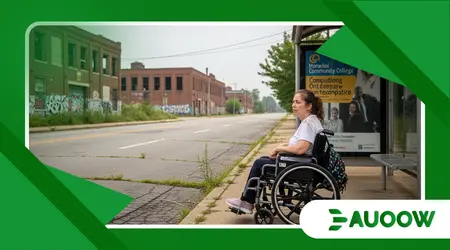
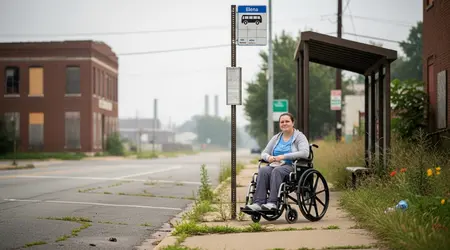
The reality that healthcare accessibility depends more on zip code than rights is often best understood not in a legislative chamber, but on a humid Tuesday morning at a bus stop in a deindustrialized corner of the Rust Belt.
Imagine Elena. She lives with a degenerative mobility condition and holds a stack of federally protected rights under the ADA.
On paper, her access to specialized care is guaranteed. In practice, the “accessible” clinic is two bus transfers and three miles of broken sensory environments away.
Her “right” to healthcare remains a static document; her zip code is a daily obstacle course of cracked sidewalks and transit deserts.
This quiet, geographic friction is the true arbiter of equity in 2026, defining who receives innovation and who receives an apology.
- The Geographic Determinant: Why physical location can override federal mandates.
- The Infrastructure Gap: How “medical deserts” are shaped by urban planning, not just a lack of clinicians.
- The Digital Divide in 2026: Why telehealth hasn’t fully solved the proximity problem for many.
- Economic Segregation: The link between property taxes and the quality of local assistive resources.
- The Policy Mismatch: Why national standards often fail to account for local environmental barriers.
Why does your address dictate your medical destiny?
When we discuss the failures of the medical system, the focus often lands on insurance costs or the complexity of specialized prescriptions.
However, a closer analysis suggests that the primary barrier is often simple, physical distance.
For many people, healthcare accessibility depends more on zip code than rights because the infrastructure of care is frequently clustered in high-wealth corridors.
If you live in a district with a robust tax base, your local clinic likely features universal design wide automated doors, height-adjustable exam tables, and staff trained in neurodiverse communication.
Move a few miles into a lower-income zip code, and those “rights” often encounter a sea of excuses regarding “reasonable accommodation.”
There is a structural detail that is sometimes overlooked: the Americans with Disabilities Act (ADA) provides a floor, not a ceiling.
It mandates that a clinic must be accessible, but it does not compel a clinic to open in a neighborhood where profit margins are slim.
This contributes to a landscape of “medical gentrification,” where advanced assistive technologies and specialized practitioners are effectively concentrated behind the invisible walls of affluent neighborhoods.
++ Public Tenders and Accessibility: Why Requirements Are Often Ignored
How did “Rights-Based” legislation lose its grip on reality?
There was a time when passing a law was seen as synonymous with solving a problem. The assumption was that by declaring a right to access, the physical world would eventually adapt.
In 2026, we see that healthcare accessibility depends more on zip code than rights because legal frameworks are often ill-equipped to address systemic environmental decay.
A “right” to an accessible doctor’s office is ineffective if the local municipality hasn’t funded the curb cuts on the blocks surrounding that office.
Accessibility is an ecosystem. High-functioning medical facilities in low-functioning neighborhoods do not allow people with disabilities to thrive.
We have spent decades litigating the interior of buildings while the crumbling social and physical infrastructure leading to their front doors has often been ignored.
Why hasn’t Telehealth closed the accessibility gap?
The surge of optimism regarding digital medicine suggested a simple narrative: if the patient cannot get to the clinic, the clinic will go to the patient via a screen.
But in 2026, the digital divide often mirrors the physical one. In many rural or neglected urban zip codes, high-speed fiber remains unreliable.
Furthermore, for many people with complex physical disabilities, a video call cannot replace the hands-on adjustment of a prosthetic or a physical therapy session requiring specialized equipment.
Telehealth can be a convenience for those who already have access, but it remains a compromise for those who do not.
When healthcare accessibility depends more on zip code than rights, a digital solution is often a temporary patch on a structural wound.
Health is inherently tied to the physical environment in which a person lives and moves.
Also read: Canada’s Accessible Canada Act: What Has Changed in 2025?
The persistent ghost of “Redlining” in modern medicine
Geographic inequity is deeply rooted in the history of urban planning. Decisions made decades ago regarding highway placement and neighborhood investment are still felt in exam rooms today.
Many areas classified as “medical deserts” correlate significantly with historical maps of systemic disinvestment.
This is often a matter of design. When a neighborhood lacks a grocery store with fresh produce, a pharmacy, and a reliable bus line, health outcomes decline.
This puts immense pressure on the few community health centers that remain. In these contexts, healthcare accessibility depends more on zip code than rights because the environment itself can be pathogenic.
We are asking clinicians to treat conditions such as respiratory issues or chronic stress that are being actively produced by the environments their patients inhabit.
What actually changed after the 2024 National Health Equity Standards?
The 2024 standards promised to tie federal medical funding to “geographic reach,” intending to incentivize hospital systems to serve low-income zip codes.
However, we have largely seen a shift toward “satellite clinics” offices that may meet the letter of the law but often lack the specialized equipment found at main campuses.
These satellites can sometimes act as a sorting mechanism.
They may provide basic care to the local population while referring complex cases back to central hubs that remain difficult to reach without private transport.
This reinforces the reality that healthcare accessibility depends more on zip code than rights, creating a tiered system where specialized care is contingent on navigating a fragmented landscape.
Read more: Disability Rights in Africa: Emerging Leaders in Inclusion
Can “Community-Led Innovation” break the cycle?
In some areas, grassroots organizations are moving care beyond the traditional clinic model by using mobile units and home-visit programs that prioritize the patient’s geography.
These programs recognize that for many, the journey is the primary barrier.
However, these initiatives often rely on temporary grants. There is a risk in depending on the local heroism of nonprofits to fill systemic gaps.
To reach a world where healthcare accessibility depends more on zip code than rights, geographic equity must be integrated into how we plan cities and fund medical systems.
Summary of Social Impacts: The Zip Code vs. The Law
| Factor | Rights-Based Expectation | Zip Code Reality (2026) |
| Physical Access | Universal design in all clinics. | Clustered in high-wealth urban centers. |
| Transportation | Reliable paratransit and accessible transit. | Frequent service gaps in peripheral areas. |
| Specialist Care | Available based on medical need. | Concentrated in “Innovation Districts.” |
| Emergency Response | Standardized response times. | Potentially slower in neglected zones. |
| Technology Access | Telehealth as a universal bridge. | Limited by local broadband infrastructure. |
The Quiet Evolution of Geographic Justice
True inclusion is not just about the interior of a doctor’s office; it is about the path that leads there.
When we acknowledge that healthcare accessibility depends more on zip code than rights, we admit that our current model of “rights” is incomplete. It is a sedentary concept in a world that requires movement.
Success in 2026 is not measured solely by flagship hospitals in affluent hubs. It is measured by the ease with which a person in a rural village or a neglected urban ward can reach a specialist.
Accessibility is not just a feature of a building; it is a quality of a community.
If we shift our focus from the individual building to the entire zip code, we might finally see a system where a person’s right to health is determined by the society they belong to, not the dirt they stand on.
Frequently Asked Questions (FAQ)
1. Can the ADA be used to sue for better access in my neighborhood?
The ADA is primarily effective against specific buildings or services. It is more challenging to use it to contest a general lack of service in a neighborhood.
Lawsuits usually require a specific instance of discrimination, whereas “medical deserts” are often the result of systemic neglect.
2. Is telehealth a valid legal substitute for physical access?
The law remains somewhat ambiguous. While telehealth is a recognized tool, it generally cannot be used to justify the removal of physical services.
However, some providers may use virtual availability to downplay the impact of closing physical locations in under-served areas.
3. Why do specialists cluster in wealthy areas?
It is often due to a “payer mix” (more patients with private insurance) and proximity to high-tech industries and research universities.
This creates a “hub” effect that can leave peripheral areas with limited specialized care.
4. How does property tax affect my local clinic?
In many regions, public infrastructure such as sidewalks and local transit is funded by local taxes.
If a zip code has a lower tax base, the “last mile” of accessibility between a transit stop and a clinic is often the first thing to be neglected.
5. What can I do if my zip code lacks accessible care?
Advocacy is often most effective at the municipal level. Joining local disability commissions or transit boards can help prioritize “corridors of care.”
National rights provide the foundation, but local planning is where physical access is realized.
