
Accessibility Accommodations as ‘Exceptions’: A Structural Policy Problem
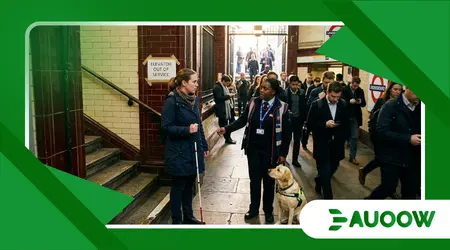
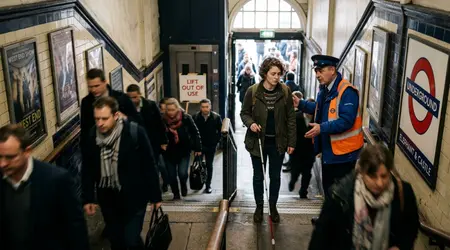
The morning light in a bustling London Underground station catches the edge of a folded white cane held by Sarah.
She stands at the top of a flight of stairs because the only elevator in this Victorian-era station is out of service.
A staff member, apologetic but rushed, explains that she’ll need to take a bus three stops in the opposite direction to find a “step-free” entrance.
In that moment, Sarah isn’t just a commuter; she is a logistical outlier.
Her right to move through the city is treated not as a baseline requirement of urban design, but as a secondary request a special case that the system failed to navigate today.
Treating Accessibility Accommodations as ‘Exceptions’ is a structural policy problem that persists across our digital and physical landscapes, framing inclusion as a polite favor rather than a fundamental design principle.
To understand how we move past this “exception-based” model, we will explore:
- The shift from charitable models toward rights-based frameworks.
- The hidden costs of “Retrofit Culture” in architecture and software.
- How the “Average User” myth continues to exclude millions.
- Practical shifts toward Universal Design in public policy.
Why does our society still view access as a “special request”?
There is a structural detail that often goes ignored in our discussions about civil rights: we have inherited a world built on the “Standard Man” archetype.
In the mid-20th century, urban planners, automotive designers, and even school curriculum developers leaned heavily on the idea of a central, “average” user typically a non-disabled, young, neurotypical male.
Anyone falling outside those biometric or cognitive lines was often handled through the lens of medical charity.
When we treat Accessibility Accommodations as ‘Exceptions’, we are essentially saying that the world was built for a specific “us,” and we are making a temporary, often expensive, modification for “you.”
This mindset creates a psychological and bureaucratic friction.
Whether it’s a student asking for a digital transcript or a wheelchair user looking for a ramp, the burden of proof frequently falls on the individual to justify why the standard environment isn’t sufficient.
The problem isn’t necessarily a lack of empathy; it’s a lack of integrated logic.
We often treat accessibility as an “add-on” feature, like a sunroof on a car, rather than the engine itself. When budgets are tightened, these “add-ons” are usually the first to be compromised.
++ Why Accessibility Is Rarely Included in Economic Recovery Plans
Is the “Retrofit Culture” holding back innovation?
There is a distinct difference between a building designed with a ramp at its heart and one where a metal lift was bolted onto the back entrance twenty years later.
The latter is a physical manifestation of seeing Accessibility Accommodations as ‘Exceptions’.
In the tech world, we see this constantly with “overlay” software those small widgets that promise to make a website accessible with one click. They often function as digital bandages for wounds caused by poor initial coding.
The pattern repeats: we build the “standard” version first, then try to patch it for everyone else. What rarely enters the debate is the sheer inefficiency of this approach.
Retrofitting is almost always more expensive, less durable, and aesthetically clunkier than inclusive design from day one. When we design for the margins, the center takes care of itself.
Captions on videos, originally intended for the Deaf community, are now used by millions of people in loud gyms or quiet offices.
Yet, we still frame the request for captions in a classroom as a “special accommodation” rather than a standard of quality.
This “Retrofit Culture” persists because it allows organizations to maintain the status quo until they face external pressure. It frames progress as a reaction to a complaint, rather than a proactive pursuit of excellence.
Also read: Disability Rights in Africa: Emerging Leaders in Inclusion
How did past legislation shape today’s “exception” mindset?
When we look at the history of disability rights, such as the Americans with Disabilities Act (ADA) or the UK’s Equality Act, we see a monumental shift toward justice.
However, these laws often rely on the concept of “Reasonable Adjustment” or “Reasonable Accommodation.”
While these terms were designed to provide flexibility, they can inadvertently reinforce the idea that access is something to be negotiated.
When a policy states that an organization must provide an adjustment unless it causes “undue hardship,” it can set up a confrontational dynamic.
It invites the institution to weigh the cost of a person’s inclusion against its bottom line. This is where the structural policy problem deepens.
By categorizing Accessibility Accommodations as ‘Exceptions’, the law sometimes allows for a “separate but equal” reality where the side door becomes the permanent solution.
Decisions made decades ago about how we define “reasonableness” still impact the student sitting in a lecture hall today.
If a professor’s slides aren’t compatible with a screen reader, the student must often register with a disability office, provide medical documentation, and wait for a “special” version to be produced.
The friction is the point it signals to the student that they are an interruption to the normal flow of education.
What actually changed after we moved toward Universal Design?
| Transition Phase | The “Exception” Model (Old) | The Universal Design Model (New) |
| Philosophy | Medical/Charity: “Fixing the individual.” | Social/Rights: “Fixing the environment.” |
| Implementation | Retrofitting after the project is finished. | Inclusive planning from the first sketch. |
| User Experience | Segregated (e.g., a separate freight lift). | Unified (e.g., a sloped entrance for all). |
| Cost Dynamics | High cost due to emergency fixes. | Low cost integrated into initial budgets. |
| Digital Policy | Manual transcripts upon request. | Live auto-captions and ARIA-compliant code. |
Can we imagine a workplace without “special” requests?
Imagine a software engineer named Julian who has ADHD and finds open-office plans paralyzing for his focus.
In a traditional corporate structure, Julian has to go to Human Resources, disclose a diagnosis, and formally request a “reasonable accommodation” to work in a quiet zone or have noise-canceling headphones reimbursed.
The process is clinical and often carries a subtle stigma. Now, consider a company that views focus as a universal human need.
They design their office with “library zones,” provide high-quality headsets to all staff, and allow flexible remote work as a standard policy.
In this second scenario, Julian doesn’t need an “exception” because the environment was built to be flexible for everyone.
When we stop viewing Accessibility Accommodations as ‘Exceptions’, we stop pathologizing human variety.
We recognize that everyone’s productivity and engagement fluctuate based on their environment.
A workplace that is accessible to a neurodivergent employee is usually a more pleasant, productive workplace for the neurotypical employee as well.
The rigid “standard” benefits very few; it only creates a false sense of order that breaks the moment a real human enters the room.
Read more: Accessibility Policies in India: Progress and Pitfalls
Why is the “Average User” a dangerous myth for policy?
The pattern of the “average” user reveals itself as a ghost in the machine of public policy.
Whether it’s the height of a ticket machine or the complexity of a tax form, these systems are often built for a fictional person who never tires, never ages, and never experiences a sensory barrier.
This myth is a form of cognitive laziness. It is easier to design for one type of person and treat everyone else as a “case study.” But our demographics tell a different story.
With an aging global population and a greater understanding of cognitive diversity, the “exception” is quickly becoming the majority.
If a public transit system in a major city only has 30% of its stations accessible, and those 30% are treated as “special features,” the system isn’t actually a network it’s a series of islands.
For the person using those stations, the world is a map of “no-go” zones punctuated by a few permitted spots.
This isn’t just a design flaw; it is a silent form of social editing. It decides who gets to be seen in the city center and who remains in the periphery.
Is it time to retire the word “Accommodation”?
There are good reasons to question the very language we use. The word “accommodation” implies a temporary housing of a guest.
It suggests that the person being accommodated doesn’t quite belong in the space. In inclusive environments, the focus shifts toward “features,” “options,” and “flexibility.”
Moving away from Accessibility Accommodations as ‘Exceptions’ requires us to bake these features into the DNA of our institutions.
It means that when a school buys new software, it simply doesn’t consider products that aren’t fully accessible.
It means when a city plans a park, the “sensory garden” isn’t a tiny corner at the back, but the organizing principle of the entire landscape.
This isn’t a radical demand. It is a call for professional rigor. An architect who builds a house that the owner cannot enter has failed a core tenet of their craft.
A developer who builds an app that a blind user cannot navigate is delivering an incomplete product. We need to stop rewarding “standard” designs that only work for a portion of the population.
Moving from reactive to proactive inclusion
The path forward isn’t found in more paperwork or longer lists of “special” rules. It’s found in changing the starting line.
When a policy is drafted, the first question should be: “How many different types of humans can use this without asking for permission?”
The goal is a world where Sarah doesn’t have to check a “broken elevator” app before she leaves the house, and Julian doesn’t have to navigate HR just to get his work done.
We are talking about a shift in the social contract moving from a society that “allows” people with disabilities to participate, to a society that is built by and for everyone.
Only when we stop seeing access as an exception can we begin to see it as a baseline of human dignity.
Frequently Asked Questions
What does it mean to treat accessibility as an exception?
It means the environment is designed for a “typical” person first, and any changes needed for people with disabilities are added later as a secondary fix. This usually requires the individual to formally ask for help or “accommodations.”
Why is Universal Design better than “reasonable adjustments”?
Universal Design creates things that work for everyone from the start like automatic doors or dark mode on your phone.
Reasonable adjustments are often reactive and help one person at a time, whereas Universal Design removes barriers for everyone before they even exist.
Is making everything accessible from the start too expensive?
Actually, the opposite is often true. Retrofitting a building or a piece of software after it’s built is significantly more expensive than including those features in the original design.
Integrated accessibility is a one-time investment that serves a larger demographic.
Does accessibility only benefit people with permanent disabilities?
No. Everyone experiences “situational” or “temporary” barriers.
A parent pushing a stroller benefits from a ramp, and someone with a temporary arm injury benefits from voice-to-text features. Accessible design makes life easier for everyone at different stages of life.
How can I advocate for this shift in my own workplace?
Start by asking about “inclusive defaults.” Instead of waiting for someone to request a transcript, suggest that all meetings are recorded and transcribed by default.
When the system is flexible for everyone, no one has to feel like an “exception.”
