
Accessibility in Infrastructure Megaprojects: Who Is Left Out?”
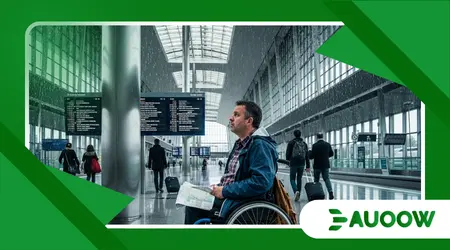
Accessibility in Infrastructure Megaprojects is often discussed in the hushed, sterile boardrooms of planning commissions, but its reality is best understood on a rainy Friday at a brand-new transit hub.
I recently watched a man named Elias attempt to navigate a massive, multi-billion-dollar terminal that had just opened to international fanfare.
The architecture was a marvel of glass and sweeping steel, yet Elias, who uses a manual wheelchair, found himself staring at a “temporary” plywood barricade blocking the only level-access route to the regional rail wing.
A small, handwritten sign directed him to a service elevator three blocks away. As the crowd flowed past him, effortlessly climbing the grand, sculptural staircases, Elias stayed behind.
His exclusion wasn’t an accident; it was a byproduct of a design that prioritized the aesthetic of “progress” over the lived experience of the citizen.
Inside the Concrete Promise
- The Compliance Gap: Why meeting the law isn’t the same as providing access.
- Value Engineering: How inclusive features often vanish during budget cuts.
- The Digital Mirror: The risks of over-relying on apps to solve physical barriers.
- Human-Centered Design: Redefining grandeur through the lens of dignity.
Does legal compliance guarantee actual inclusion?
When we talk about megaprojects those sprawling bridges, high-speed rails, and airport expansions we often assume that the existence of building codes means everyone is invited.
However, there is a detail that cost-benefit analyses usually ignore: the gap between “regulatory compliance” and “functional dignity.”
A project can pass every municipal inspection while remaining practically unusable.
If an elevator requires a staff member to unlock it, or if tactile paving leads into a structural pillar, the project has met the letter of the law but failed the person.
What rarely enters this debate is the psychological toll of being an afterthought in one’s own city.
In my analysis, we have spent decades perfecting a “checklist” approach. We ensure a ramp meets a specific slope, but we place it next to a loading dock, far from the main entrance.
This creates a segregated experience, reminding the user they are a guest in a space built for others.
++ Why Assistive Technology Funding Rarely Reaches End Users
Why are accessibility features often the first to be “value-engineered”?
In the life cycle of a megaproject, there is a phase known as “value engineering” a term often used for cutting costs when budgets swell.
I’ve noticed that features designed for the margins of society are frequently among the first to be reconsidered.
High-contrast lighting for the partially sighted or sensory-muted waiting rooms for neurodivergent travelers are sometimes labeled as “premium” additions.
In reality, these are fundamental navigation tools. Removing them saves a fraction of the total budget but permanently disenfranchises thousands of future users.
Accessibility in Infrastructure Megaprojects should be seen as a non-negotiable structural element, much like seismic bracing.
You wouldn’t remove safety bolts from a bridge to save money, yet we routinely remove the features that allow a person with a disability to cross that bridge independently.
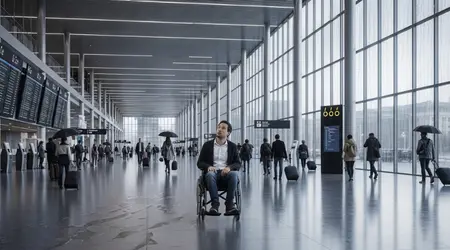
How do decisions from the past shape our modern barriers?
We often treat inclusion as a modern trend, yet it is an ongoing effort to address the physical biases of previous generations.
In the mid-20th century, urban planning was frequently dominated by an ideal of the “standard” body: young, fit, and mobile. Modern megaprojects are sometimes built upon these old prejudices.
Retrofitted subway systems or expanded historic bridges often fight against a skeleton of exclusion.
If we continue to view a person with a disability as a “special case” rather than a primary stakeholder, we risk replicating the errors of the past using the expensive materials of 2026.
Also read: Disability Rights in Africa: Emerging Leaders in Inclusion
Who is left out when we focus on “Smart” infrastructure?
Current trajectories suggest an over-reliance on digital solutions to fix physical problems. We see “Smart Cities” deploying apps that notify users when a ramp is broken.
While data is useful, an app cannot substitute for a functioning elevator or a level sidewalk.
There is also a digital divide within the disability community.
If a new project requires a smartphone to navigate its “accessible” features, we risk excluding those who find complex interfaces overwhelming or who lack access to the latest technology.
True accessibility should be analog, intuitive, and built into the physical stone.
When Accessibility in Infrastructure Megaprojects becomes “tech-first,” it risks alienating the people it claims to help.
I’ve spoken with commuters who feel more distanced by a touch-screen kiosk than by a flight of stairs. If the physical environment isn’t intuitive, technology is just a temporary fix.
Read more: Accessibility Policies in India: Progress and Pitfalls
What actually changed after the implementation of Universal Design?
For a long time, inclusion was an “add-on” a ramp bolted onto a finished building. Today, Universal Design seeks to make the most inclusive route the primary route.
When we observe megaprojects that succeed, the inclusive path is often the most efficient path for everyone.
| Feature | The Old “Add-On” Model | The Modern Universal Model |
| Philosophy | Compliance as a burden. | Inclusion as a design driver. |
| Elevators | Hidden in back corridors. | Central and high-capacity for all. |
| Wayfinding | Jargon-heavy signage. | Intuitive, multi-sensory cues. |
| Outcome | Creates a segregated experience. | Creates a seamless, shared journey. |
Can we build empathy into the concrete?
Imagine a traveler with a visual impairment trying to find a gate in a terminal that spans several miles.
In many projects, acoustics are designed for aesthetic grandeur, creating echoes that mask audio announcements and confuse service animals.
The lack of acoustic dampening can be as much a barrier as a flight of stairs. It reflects a narrow vision of how people experience a space.
When we listen to the community, we learn that a quiet, well-lit corner is not a luxury; it is a requirement for many to participate in public life.
Is the cost of inclusion truly prohibitive?
There is a recurring myth that making a megaproject accessible is too expensive.
The reality suggests the opposite. The cost of retrofitting a multi-billion dollar project years after completion due to lawsuits or lack of use is often higher than doing it right from the beginning.
Moreover, the “hidden” return on investment is significant. An accessible transit hub serves parents with strollers, travelers with heavy luggage, and an aging population.
When we design for the edges of humanity, we create a better experience for the entire population. The cost is not in the inclusion, but in the exclusion that renders public works less useful to the public.
How can we stop the cycle of exclusion in future projects?
A critical missing piece is the consistent involvement of “user-experts” people who navigate the world with a disability every day.
When they are absent from the planning table, the project is more likely to encounter avoidable hurdles. We need more than a consultant who checks boxes at the end of the design phase.
Accessibility in Infrastructure Megaprojects requires hiring disabled engineers, architects, and project managers.
There is no substitute for the lived experience of someone who knows that a one-inch lip on a doorway can end a journey. For infrastructure to last a century, it must be welcoming to everyone from day one.
Why does the “Last Mile” break the promise of the megaproject?
Often, a megaproject is a marvel of inclusion, but the surrounding neighborhood remains disconnected.
You might have a state-of-the-art accessible train station, but if the sidewalks leading to it are broken or streetlights are missing, the station is effectively unreachable for many.
Infrastructure is an ecosystem. When we silo accessibility away from the surrounding urban fabric, we create “islands of access.”
This fragmented approach limits independence and forces reliance on specialized services rather than the public systems taxes helped build. The station is only as accessible as the sidewalk three blocks away.
Are we ready to redefine “Grandeur”?
True grandeur should not be measured solely by the height of a spire or the curve of a roof.
It is better measured by the ease with which a grandparent, a student who is blind, and a tourist with a temporary injury can all move through a space simultaneously.
We have the technology and the capital to make every megaproject a triumph of inclusion. What is often needed is the collective will to treat accessibility as a fundamental right rather than a budget line item.
The next time we see a ribbon-cutting ceremony, we should look past the dignitaries and see if the Elias of that city can actually reach the stage.
Há bons motivos para questionar a falta de transparência nas parcerias público-privadas quando se trata desses direitos. To build a world that lasts, we have to build it for everyone.
Frequently Asked Questions about Infrastructure Inclusion
Does Universal Design mean every building has to look the same?
Not at all. Universal Design is about functionality, not a specific aesthetic.
It encourages architects to be more creative with how people move through a space, often leading to more open, light-filled, and intuitive designs that benefit everyone.
Is it really more expensive to build accessibly from the start?
Evidence suggests that incorporating high-level accessibility from the beginning typically adds less than 1% to the total construction budget.
The perception of high cost usually stems from poor initial planning and the need for expensive “fixes” late in the process.
What are some examples of invisible barriers in megaprojects?
Beyond stairs, barriers include poor acoustics (which affect people with hearing aids or sensory processing differences), inadequate lighting for low-vision users, and signage that doesn’t account for cognitive impairments.
How can citizens influence these large infrastructure projects?
Most megaprojects have public comment periods and community advisory boards.
Participating in these and specifically asking for the Universal Design plan is an effective way to ensure accessibility remains a priority throughout the project’s life.
Who benefits from an accessible transit hub?
Nearly everyone. Parents with strollers, travelers with suitcases, the elderly, and people with temporary injuries all rely on the same features originally designed for people with permanent disabilities.
What should I look for in a truly accessible project?
Look for independence. A truly accessible project doesn’t require a user to ask for help, use a special key, or wait for an attendant. It allows every citizen to navigate the space autonomously and with dignity.
