
Accessible Gaming: Top 5 Titles Setting Standards in 2026
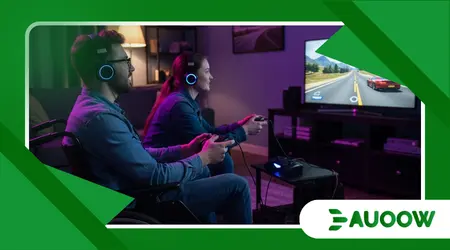
Exploring the Top 5 Titles Setting Standards in 2026 reveals how the digital frontier is finally beginning to mirror the diverse reality of its inhabitants.
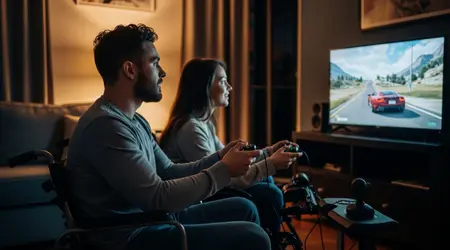
I remember sitting in a dimly lit living room three years ago with a friend named Marcus, who has limited mobility in his hands due to a spinal cord injury.
We were trying to play a high-octane racing game. Marcus had the spirit of a champion, but the game demanded a “claw” grip on the controller a physical impossibility for him.
The frustration wasn’t just about losing a race; it was the silent rejection built into the software. The game was essentially saying, “this world wasn’t built for you.”
But as we move through 2026, the landscape is shifting.
Interactive entertainment is moving away from the “one-size-fits-all” hardware philosophy toward a more fluid, adaptive software architecture that prioritizes the player’s dignity over a rigid development vision.
The Invisible Gatekeepers of Play
For decades, the gaming industry operated on an unspoken assumption: the “standard” player possessed ten nimble fingers, 20/20 vision, and typical hearing.
This wasn’t necessarily a malicious choice, but a byproduct of a lack of representation within development studios.
When the people making the games navigate the world in similar ways, they naturally design for that specific experience.
Digital barriers are often more persistent than physical ones.
You can retrofit a building with a ramp, but if a game’s code doesn’t allow for remappable keys or high-contrast UI, a person with a disability is effectively locked out.
There is a detail that cost-benefit analyses usually ignore: the immense psychological value of play. For many, gaming is a space where physical limitations can be transcended if the software allows it.
++ How Music Festivals Are Becoming More Accessible
Why is 2026 a turning point for inclusive design?
The current year represents the culmination of years of legislative pressure and grassroots advocacy.
The European Accessibility Act and updated CVAA (Communications and Video Accessibility Act) standards in the US have encouraged major publishers to move accessibility from an “afterthought” to a core pillar.
We are seeing a transition away from “accessibility menus” that only feature a few font-size toggles.
Instead, the Top 5 Titles Setting Standards in 2026 are integrating these features into the initial setup. There is a significant move toward “intentional redundancy.”
This means providing information through multiple sensory channels simultaneously visual cues for sound, haptic feedback for visual changes, and audio descriptions for spatial movement.
Which titles are leading the vanguard of access?
When we observe the industry today, the standard-bearers are often triple-A titles that define the cultural zeitgeist. These games prove that complexity does not have to result in exclusion.
1. Apex Legends: Vanguard (Respawn/EA)
Respawn has evolved the “ping” system into a robust haptic and audio-described navigation system.
For a player with low vision, the game provides spatial audio “beacons” that describe terrain and enemy distance with rhythmic pulses. It is a masterclass in sensory translation.
Also read: Hotel Accessibility Standards: What Travelers Should Check Before Booking
2. The Last of Us: Part III (Naughty Dog)
Naughty Dog continues to offer a “Blind Play” mode so comprehensive it allows players with zero sight to navigate the narrative using audio cues and haptic feedback.
When you build a game that truly welcomes everyone, you create a deeply dedicated community.
3. Forza Motorsport: Horizon 7 (Turn 10/Xbox)
Turn 10 has introduced “Blind Driving Assists” that go beyond simple steering help.
The game uses AI to communicate track geometry through pitch and tone in the player’s headset. This bridges the gap between intent and execution.
4. Echoes of the Void (Independent)
This indie title was built using Universal Design principles. It features a “Variable Input Speed” system, allowing players with motor fatigue to adjust the game’s clock without losing the challenge of combat.
It acknowledges that “skill” is often about strategy rather than just speed.
Read more: Cruises for All: How the Industry Is Opening Up for Disabled Tourists
5. Starfield: Odyssey (Bethesda)
Bethesda implemented a “Cognitive Ease” mode. For neurodivergent players who might find massive open worlds overwhelming, adjustable sensory filters reduce visual “noise,” simplify menus, and provide clearer quest markers.
How does the “Accommodation Tax” impact the player experience?
Even with these Top 5 Titles Setting Standards in 2026, there is often a “tax” of time spent in configuration menus.
Marcus often spends the first hour of a new game just trying to make it playable.
The industry is currently experimenting with “Cloud Accessibility Profiles.”
This allows a player’s specific needs high contrast, remapped buttons, audio descriptions to follow them across different games.
If you set your preferences once, the software should adapt automatically, eliminating the gate that exists before the game even begins.
Is the industry finally listening to disabled consultants?
In 2026, we are seeing “Accessibility Leads” who are present during the concept phase rather than being brought in at the end to “check boxes.”
When a studio listens to a blind gamer during level design, they don’t just add a cue; they design the level’s architecture to have unique “sound signatures.”
A stone hallway sounds different from a wooden porch. This adds a layer of immersion that benefits all players.
Comparison of Accessibility Standards in 2026
| Game Title | Primary Innovation | Sensory Impact |
| Apex Legends: Vanguard | Haptic/Audio Navigation | High (Vision/Hearing) |
| The Last of Us: Part III | Full Blind Play Mode | High (Vision) |
| Forza Horizon 7 | Audio Track Geometry | High (Vision) |
| Echoes of the Void | Variable Input Speed | High (Motor/Cognitive) |
| Starfield: Odyssey | Cognitive Ease Filters | High (Neurodiversity) |
What actually changed after the implementation of the CVAA?
Legislation acted as a catalyst for innovation. In the early 2010s, accessibility was often treated as a charitable endeavor. Today, it is recognized as a market expansion strategy.
By making games accessible, publishers open their doors to the nearly 20% of the population that was previously sidelined.
This is the “Curb-Cut Effect” in action. Just as sidewalk ramps help people with strollers or delivery workers, gaming accessibility features help the broader public.
Subtitles assist those in loud environments, and simplified UIs help aging players whose reflexes might be changing.
Can we build empathy into the code?
Imagine a young girl with a hearing impairment playing a horror game. In the past, “jump scares” relied almost entirely on sudden loud noises.
Today’s titles use screen-shaking, color shifts, and specific haptic patterns to build that same tension.
When a person with a disability can share the same plot twists and boss fights as their peers, the “digital divide” shrinks. Gaming becomes a bridge rather than a wall.
Why are “Smart” controllers not the only solution?
While hardware like the Adaptive Controller is vital, it is not a panacea. The real revolution is happening in the API the language the game speaks to the hardware.
Software-based accessibility ensures that a player can use standard, affordable controllers and still have a meaningful experience, which is an important matter of economic equity.
Who is still being left behind in this digital revolution?
Despite progress, intellectual and cognitive disabilities are still frequently overlooked. The “logic” of games can still be a barrier when systems are opaque.
The goal isn’t a single “accessible mode,” but a suite of modular options that the player can mix and match. The Top 5 Titles Setting Standards in 2026 succeed because they offer choice.
The measure of progress isn’t just in technical specs, but in the width of our digital doors. As I watch Marcus now, playing Apex Legends with a custom setup and full haptic feedback, the focus has replaced the frustration.
He isn’t a “disabled gamer”; he’s just a teammate. When we design for the edges, we better support the center. What do you think is the next big hurdle for digital inclusion?
Navigating the New Era of Accessible Play
Does “accessible” mean the game is easier?
Not necessarily. Accessibility is about removing barriers to entry, not removing the challenge.
A blind player can still face a difficult boss; they simply need the information about that boss’s attacks to be presented in a way they can perceive.
Are these features only for people with permanent disabilities?
No. If you have a sleeping baby and need to play with the sound off, or if you have a temporary wrist injury, these features serve you as well.
Accessibility makes games more flexible for various life circumstances.
How do I find out if a game has the features I need?
Most digital storefronts now have standardized “Accessibility Tags.” You can filter searches by “Text-to-Speech,” “Colorblind Modes,” or “Single-Stick Gameplay” before purchasing.
Why do some developers still struggle to implement these changes?
It often comes down to legacy code and production cycles. Implementing deep accessibility mid-way through a project is significantly more difficult than planning for it from the first line of code.
