
Africa’s Innovative Approaches to Inclusive Learning
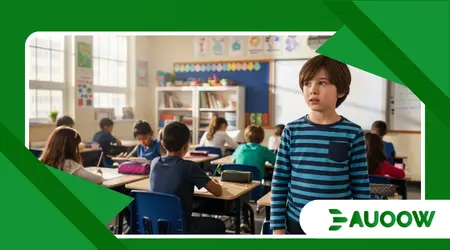
When Leo walks into his third-grade classroom in a suburb of Lyon, he isn’t looking for a desk. He is looking for a sensory anchor.
Leo is autistic, and for him, the traditional classroom a fluorescent-lit rectangle filled with the rhythmic scraping of chair legs and the unpredictable hum of thirty other children can feel less like a place of learning and more like an environment of neurological siege.
Recently, during a standard group reading exercise, the overlapping whispers triggered a sensory overload that left Leo seeking refuge under a table.
His teacher felt a sense of failure, yet the issue wasn’t a lack of commitment; it was a structural dead end. Leo’s story is a quiet, daily signal of a tectonic shift.
We are witnessing Inclusive Education and the Collapse of a model designed for an imaginary “average” child.
For over a century, many school systems functioned on the logic of the factory line: input, standardize, and output. As we move through 2026, that line is snapping under the weight of human complexity.
What We Are Exploring Today
- The Sensory Wall: Why physical architecture often remains a silent enemy of inclusion.
- The Policy Mirage: Comparing the “Right to Enroll” with the “Right to Belong.”
- Historical Echoes: How 19th-century concepts of normalcy still dictate modern desks.
- The Tech Paradox: Can AI bridge gaps without isolating the student?
- The Way Forward: Moving beyond physical ramps toward cognitive universal design.
Why is the “standard” classroom becoming obsolete?
The modern school was largely born out of a desire for efficiency. It was built for a specific profile: the student who could sit still and process information in a high-stimulus environment for six hours.
What rarely enters the debate is how “standardization” historically functioned as a tool of exclusion.
By creating a narrow definition of the “ideal student,” systems automatically cast those with different needs as “problems” to be managed.
We often treat inclusion as a generous addition to a pre-existing system. We take a rigid building and try to soften its edges with a ramp or a single headset.
When we observe this with more attention, a pattern repeats: we are trying to fit the reality of human diversity into a framework of Victorian infrastructure.
The “collapse” in question isn’t the end of schools, but the end of the illusion that one single environment can serve everyone effectively.
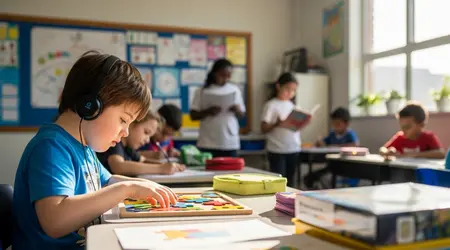
How did the “Average Student” myth begin?
The ghost of 19th-century statistics still haunts our hallways. Early concepts suggested that deviation from the “mean” was a flaw.
Schools adopted this perspective early on. If a child couldn’t hear the teacher from the back row, the system often viewed the problem as the child’s hearing, rather than the room’s poor acoustics.
A candid analysis suggests that we have spent decades expecting students to adapt to hostile environments.
Today, there is a growing realization that disability is frequently a function of design.
When a student who is blind cannot access a digital portal, the barrier is located in the software’s lack of accessible features, not in the student’s lack of sight.
Inclusive Education and the Collapse of these old barriers requires us to stop focusing on “fixing” the student and start redesigning the space.
++ The Hidden Costs of Inclusive Education: Who Pays?
The Participation Tax on Students with Disabilities
We often talk about “accommodations” as if they are extra perks. In reality, they are corrections of a systemic deficit.
Consider a student with ADHD who requires frequent movement. In a traditional school, that student might be penalized for “disruptive behavior.”
They pay a “participation tax” in the form of disciplinary action or lower grades, simply because the school environment cannot accommodate a biological need for movement.
Also read: Inclusive Education in the Middle East: Emerging Opportunities
What changes with Universal Design?
The transition from “integration” to “universal design” is transformative. Integration was about letting the student in the door. Universal design ensures the door was never a barrier to begin with.
| Feature | The Integration Model (Traditional) | The Universal Design Model (Inclusive) |
| Focus | Adapting the student to the school. | Designing the school for all students. |
| Environment | Standard desks and rigid schedules. | Flexible zones and modular timing. |
| Technology | Segregated “Special Ed” tools. | Assistive tech integrated for everyone. |
| Assessment | One test format for all learners. | Multiple ways to demonstrate mastery. |
| Social Impact | Students may feel separate. | Diversity is the baseline norm. |
Why does technology fail to solve the problem alone?
There is a tempting narrative that AI and tablets will resolve every barrier. If Leo has a device that translates speech to text, he should be fine, right? Not necessarily.
Technology can inadvertently become a “gilded cage.” If we move every student with a disability onto a private screen, we risk a new era of digital segregation.
We must be careful not to use 21st-century tools to maintain 20th-century hierarchies. A truly inclusive school uses technology to facilitate human connection, not to replace it.
Additionally, the cognitive load of these tools matters. For a student with sensory processing sensitivities, a buzzing laptop can be as distracting as a loud classmate.
We need a nuanced, ethical approach to how tech enters the classroom.
Read more: Africa’s Innovative Approaches to Inclusive Learning
Can we afford to move beyond the factory model?
The most common argument against Inclusive Education and the Collapse of traditional schooling is cost. Critics argue that we cannot afford to redesign every classroom.
However, when we fail to educate a child because the environment is inaccessible, the long-term social and economic cost is far higher.
Inclusive schools often produce students who are better at problem-solving and empathy. Neurotypical students also benefit from quiet zones and clear visual instructions. Inclusion is not a zero-sum game.
When we make the world accessible for those facing the most barriers, we improve it for everyone.
This is the “curb-cut effect”: ramps built for wheelchairs eventually benefit parents with strollers and travelers with luggage.
Navigating the “Invisible Barriers”
Sometimes barriers aren’t made of brick or bad software; they are made of low expectations.
In listening to families, a frequent pain point is the “pity gaze” the assumption that a physical disability implies a cognitive one, or that a neurodivergent student doesn’t value social connection.
Our grading systems often represent another structural detail that goes ignored. We frequently grade for speed and conformity.
A student who processes information deeply but slowly might be labeled as “behind.”
Inclusive Education and the Collapse of the traditional bell curve is necessary to value the unique trajectory of each learner. Without this change, we are simply maintaining a more polite version of the old factory.
A Case of Success: The “Quiet School” Approach
In certain districts in Northern Europe, some schools have moved away from traditional bells. They recognized that the shrill sound was a source of significant anxiety for many.
By using soft visual cues instead, they saw lower stress levels for all students and a drop in behavioral incidents.
This wasn’t a high-tech fix; it was a human one an admission that the “standard” way was causing unnecessary harm.
The Role of the Teacher in a New Era
Teachers are often caught in the crossfire, asked to practice inclusion while working in buildings and with curriculums that remain exclusive.
We cannot expect a single educator to manage diverse profiles without radical changes in support.
The most successful inclusive schools often use a “co-teaching” model, pairing general educators with specialists in the same room.
This breaks the “us vs. them” mentality. If we don’t support the teachers, the transition won’t be an evolution; it will simply be a breakdown of the system.
How Urban Planning Impacts Education
The school day doesn’t begin at the classroom door; for a student using a wheelchair, it begins at the curb. If a city’s transit system is inaccessible, the student arrives at school already exhausted.
An inclusive school in an inaccessible city is an incomplete solution. True Inclusive Education and the Collapse of isolation requires a holistic approach.
We need to look at how we build our neighborhoods as much as our classrooms. Education happens within a community, not a vacuum.
Why “Choice” Can Be Deceptive
“School choice” is often presented as a solution, suggesting that if a school doesn’t fit, parents should find another.
Yet this is a privilege many cannot afford. For a family in a rural area or a low-income neighborhood, there is often no “other” school.
Choice is only meaningful if every local school is a viable, high-quality option. We shouldn’t have “the inclusive school” and “the regular school.”
Every school should be inclusive by default. Anything else maintains a tiered system of citizenship. We are currently deciding if education is a right for all or a luxury for those who fit a “standard” mold.
The shift toward Inclusive Education and the Collapse of rigid schooling is an evolution.
We are admitting that the “One-Size-Fits-All” model was a suit that never truly fit it just forced many to hold their breath. As we loosen the seams, we find there is room for Leo, and for everyone else, to finally learn and thrive.
Frequently Asked Questions
Does inclusive education slow down other students?
Research consistently shows that students perform as well or better in inclusive settings.
Learning alongside diverse peers builds essential skills like collaboration and adaptability, which are increasingly valuable in the modern world.
Is inclusive education just about putting everyone in the same room?
No. That is integration. True inclusion requires changing teaching methods, the physical environment, and assessment styles so that every student can participate meaningfully.
What should I do if a school says they “cannot meet my child’s needs”?
In many regions, schools are legally required to provide reasonable accommodations. A collaborative “needs assessment” is often the best first step to identify specific barriers whether physical, sensory, or instructional.
Are specialized schools going to disappear?
While the trend moves toward full inclusion, some students may still benefit from highly specialized, temporary support. The goal is to make mainstream schools flexible enough that the need for separate buildings becomes rare.
How does Universal Design for Learning (UDL) help?
UDL provides a framework to create lessons with “low floors” (easy to start) and “high ceilings” (no limit to growth). It reduces the need for constant individual tweaks because the lesson is designed for diversity from the start.
