
Assistive Tech Lock-In: When Accessibility Becomes a Subscription
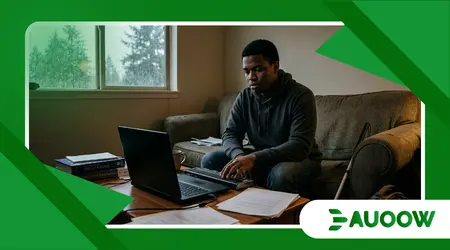
The concept of Assistive Tech Lock-In is perhaps best understood through the quiet frustration of a living room in Seattle, where a college student named Elias sits staring at a darkened screen.
Elias is blind, and for the last three years, he has relied on a specific, high-end screen reader integrated with his braille display to navigate his engineering coursework.
Last Tuesday, a software update arrived. It wasn’t a feature expansion or a security patch; it was a transition to a “Pro” subscription model.
Suddenly, the fluid, nuanced voice synthesis he relied on the one that allowed him to code for hours without auditory fatigue was locked behind a $40 monthly paywall.
The hardware he owns, a device that cost his family thousands of dollars, is now a tethered hostage to a cloud-based license.
If he doesn’t pay, the device reverts to a robotic, laggy version of itself that makes complex data structures nearly impossible to parse.
Contents
- The Shift: Physical Tools to Digital Services
- The Economics of Dependency and Business Strategy
- Legal Loops: SaaS vs. Disability Rights
- The Human Cost: Renting Independence
- Future Resilience: Open-Source Standards
- Conclusion: Reclaiming the Infrastructure of Inclusion
- Editorial FAQ
The Shift: How physical tools became digital services
What rarely enters the debate about modern inclusion is the subtle transition from “ownership” to “licensing.”
For decades, assistive technology was a one-time, albeit expensive, investment. You bought a wheelchair; you owned the chair.
You bought a hearing aid; it was yours to repair. Today, the most transformative tools AI-driven visual interpreters, predictive text for non-verbal users, and smart prosthetic controllers exist in a state of perpetual debt.
When we analyze the current market, a pattern repeats: companies offer life-changing functionality, only to shift the goalposts once a user’s entire professional and social life is built around that specific interface.
This creates a profound Assistive Tech Lock-In where the cost of switching to a different platform isn’t just financial it’s a loss of personal autonomy and hard-earned proficiency.
++ Closed Ecosystems vs Open Standards in Accessibility Innovation
The Economics of Dependency: Why “Lock-In” is a deliberate business strategy

Why do companies favor proprietary ecosystems over open standards? The analysis most honest observers suggest is that the assistive tech market is small and “sticky.”
Because the user base is a fraction of the general population, companies argue that high subscription fees are necessary to fund R&D.
But there is a structural detail that is often ignored: by making their software incompatible with competitors’ hardware, they ensure that once a person is trained on their “language,” they are unlikely to leave.
I’ve watched this play out in the realm of AAC (Augmentative and Alternative Communication) devices. A child learns to speak using a specific grid of symbols.
That “vocabulary” becomes their voice. If the company decides to sunset that app or move it to a high-tier monthly plan, they aren’t just changing a software preference; they are essentially taxing the child’s ability to say “I love you” or “I’m hungry.”
Also read: AI in Speech Therapy: How Adaptive Systems Boost Progress
Legal Loops: Why current disability rights laws struggle with software-as-a-service (SaaS)
Decisions made in the late 1990s and early 2000s regarding digital rights management (DRM) continue to haunt us.
Originally designed to stop people from pirating movies, these laws now prevent independent shops from repairing “smart” wheelchairs or developers from creating open-source drivers for proprietary eye-trackers.
We are seeing a collision between 20th-century property laws and 21st-century digital interests. We once fought for curb cuts and ramps physical changes that, once built, belonged to the public.
Now, the “ramps” are made of code, and the owner of the building can choose to delete the ramp at any time if a payment fails.
This Assistive Tech Lock-In means that the infrastructure of inclusion is no longer a public good, but a private, revocable lease.
What actually changed after the “Software Revolution”?
| Feature | The Analog Era | The SaaS Era (2026) |
| Ownership | Perpetual. You owned the hardware. | Conditional. You lease the “experience.” |
| Repairability | Local tech shops or DIY. | Encrypted; requires “authorized” keys. |
| Longevity | Lasted until the gears wore out. | Ends when the server is shut down. |
| Data Privacy | Local and private. | Often harvested for AI training. |
| Cost | High upfront, low maintenance. | Moderate upfront, infinite maintenance. |
The Human Cost: The psychological weight of “renting” your independence
Suppose an accountant uses a specialized AI to “read” complex spreadsheets via tactile feedback.
If that AI’s parent company is acquired by a larger tech conglomerate that decides to “pivot” or increase the API costs, that person’s productivity vanishes overnight. This creates a “new-age” poverty trap.
A person can be gifted a $5,000 piece of technology but remain “disabled” by the environment because they cannot afford the $50-a-month “connectivity fee” required to keep the sensors active.
The social safety nets in many countries are often designed to help with the purchase of a device, but they are notoriously slow at covering monthly subscriptions.
This leaves the user in a state of constant anxiety, knowing their independence is tied to a credit card statement.
Future Resilience: Toward open-source and interoperable assistive standards
There are good reasons to question the current trajectory. We are seeing the birth of a movement focused on “Open Assistive” standards.
This isn’t just about being “nice”; it’s about survival. If we don’t demand that assistive tools be interoperable, we are essentially allowing a handful of corporations to own the “senses” of millions of people.
To break the Assistive Tech Lock-In, we need policy shifts that treat assistive software APIs as essential infrastructure, similar to electricity or water.
If a company goes bankrupt, their “voice” code should, by law, enter the public domain so that users aren’t left literally speechless.
Read more: Wearable Health Monitors for Chronic Conditions
Why “interoperability” is the most important word in 2026
When we observe the market more closely, we see that the most resilient users are those who use “platform-agnostic” tools.
These are systems that work across different operating systems. But these are becoming rarer.
The industry is pushing for “Vertical Integration” buying the hearing aid, the phone it connects to, and the translation service all from one brand.
This is a deliberate choice to ensure that the Assistive Tech Lock-In is absolute. True accessibility requires the freedom to leave one provider for another without losing your history or your “voice.”
Reclaiming the Infrastructure of Inclusion
Accessibility is not a feature to be toggled on and off based on quarterly earnings. It is the fundamental floor upon which human dignity is built.
When we allow that floor to be replaced by a subscription-based trapdoor, we aren’t just failing a specific demographic we are eroding the very idea of a shared, accessible society.
The next time you see a “smart” solution for disability, look past the sleek design and ask who really owns the “off” switch.
If it isn’t the user, it isn’t truly assistive; it’s just another form of control. Public policy must catch up.
If governments used their buying power to demand perpetual licenses and data portability, the market would shift.
Instead of subsidizing a cycle of dependency, we should be investing in permanent, digital curb cuts that belong to the people who use them.
Editorial FAQ
What exactly is “Lock-In” in the context of disability?
It refers to a situation where a person becomes so dependent on a specific, proprietary piece of technology that they cannot switch to a competitor without significant loss of function, data, or a massive reinvestment in training.
Is it illegal for a company to turn off an assistive feature?
Currently, in most jurisdictions, it is legal if it’s outlined in the Terms of Service. This is why “ownership” of software is a major battleground for civil rights in the digital age.
How can I avoid getting trapped in a subscription cycle?
Whenever possible, look for tools that support “Open Standards” or have a one-time purchase option. Ask the manufacturer: “If your company closes tomorrow, will this device still work?”
Are there open-source alternatives to big-brand assistive tech?
Yes. Projects like NVDA (for screen reading) and various open-source AAC apps exist. They often lack the “polish” of paid versions, but they offer something more valuable: the certainty that no one can take your “voice” away because of a declined credit card.
Should the government regulate the price of assistive software?
The debate isn’t just about price; it’s about the persistence of the service. Regulation should focus on ensuring that once a tool is integrated into a person’s life, the “access” to that tool cannot be arbitrarily revoked.
