
Police Training and Disability Rights: Policy vs Practice
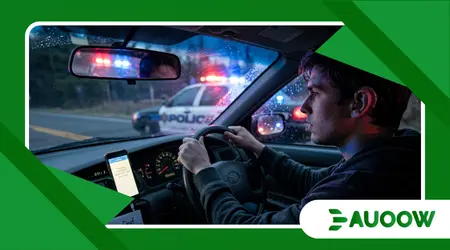
The flashing blue and red lights in a rearview mirror trigger a universal spike in adrenaline. For Ethan, a young man with profound hearing loss, that flicker of light represents a high-stakes gamble with misunderstanding.
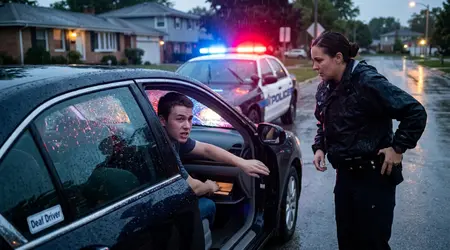
When he was pulled over on a rainy Tuesday in a quiet Chicago suburb, Ethan did what he had been taught: he reached for his glove compartment to find the visor card explaining his deafness.
To the officer on the passenger side, however, that sudden movement looked like a reach for a weapon.
The intersection of Police Training and Disability Rights is often where tragedy meets a lack of preparation, turning a routine traffic stop into a life-altering confrontation.
The disconnect isn’t usually born of malice, but of a systemic failure to bridge the gap between high-level policy and the split-second reality of the street.
We see it in the way a “failure to comply” charge is often leveled against someone experiencing a grand mal seizure or a non-verbal autistic person in sensory overload.
As we peel back the layers of how law enforcement interacts with the one-in-four adults in the U.S. who live with a disability, we find a landscape where the legal “right” to accommodation is frequently sidelined by the tactical “need” for control.
Inside This Exploration
- The widening gap between legislative mandates and street-level execution.
- The psychological “Default Settings” of modern policing.
- How historical de-institutionalization reshaped the role of the patrol officer.
- Structural shifts: What actually changes when training moves beyond the classroom?
- Commonly asked questions regarding rights and law enforcement.
Why does the gap between policy and practice remain so wide?
On paper, the Americans with Disabilities Act (ADA) provides a robust framework for protection. It dictates that public entities including police departments must provide “reasonable modifications” to avoid discrimination.
Yet, when we analyze the training cycles of major metropolitan forces, a recurring pattern emerges: disability training is often treated as a “check-the-box” annual seminar, squeezed between firearms qualification and physical fitness tests.
The problem with Police Training and Disability Rights at the policy level is that it assumes a sterile environment.
A policy might state that an officer should recognize signs of a mental health crisis, but the practice often defaults to the “Command Presence” model.
This model teaches officers to take immediate, total control of a scene through loud, verbal commands and physical dominance.
If you are a person with a processing disorder or a hearing impairment, Command Presence isn’t just ineffective; it can be a physical threat that triggers a fight-or-flight response.
What rarely enters this debate is the sheer exhaustion of the modern officer’s mandate.
We have effectively asked police to be social workers, de-escalation experts, and medical first responders, often without the foundational shift in culture that these roles require.
When training focuses heavily on tactical survival, that specific muscle memory tends to take over during a midnight call in a dark alley.
++ Why Accessibility Is Rarely Included in Economic Recovery Plans
The hidden history of the “First Responder”
To understand why the current friction exists, we have to look at the shift that occurred in the late 20th century.
With the de-institutionalization movement of the 1970s and 80s, thousands of individuals with psychiatric and intellectual disabilities moved back into their communities.
While this was a victory for civil rights, it wasn’t met with a corresponding investment in community-based support systems.
Consequently, the police became the de facto frontline of the mental health system. Decisions made decades ago to close hospitals without funding clinics created a reality where a 911 call is often the only available resource for a family in crisis.
In this context, Police Training and Disability Rights isn’t just a legal requirement; it’s an attempt to patch a hole in a social safety net that was never meant to be handled by handcuffs.
There is a structural detail often overlooked: the “warrior” versus “guardian” mindset. If a training curriculum views every civilian interaction as a potential ambush, the nuances of disability become invisible.
A tremor is seen as nervousness; a lack of eye contact as deception; a slow response to commands as defiance.
What actually changed after these reforms?
Over the last decade, various cities have implemented “Crisis Intervention Teams” (CIT). But did the needle move?
| Reform Element | Theoretical Goal | Real-World Result |
| CIT Training | To divert individuals with mental health needs to treatment. | High success in specialized units, but often fails when “General Patrol” arrives first. |
| Body Cameras | To provide an objective record of interactions. | Increased accountability, but doesn’t always prevent the initial sensory-overload conflict. |
| Co-Responder Models | Pairing officers with social workers. | Highly effective in reducing arrests, but limited by staffing and “office hours” constraints. |
| Registry Programs | Voluntary databases of residents with disabilities. | Mixed results; relies on the officer checking the computer before the interaction begins. |
How does sensory processing change the “Standard” interaction?
Imagine a scenario where a young woman with Down Syndrome is lost and agitated in a crowded transit hub.
When an officer approaches and places a hand on her shoulder a gesture meant to be grounding it triggers a sensory “short circuit.”
She pulls away. In the framework of traditional Police Training and Disability Rights, that pull-away is categorized as “resisting.”
In this scenario, the failure isn’t necessarily in the officer’s intent, but in a lack of “sensory literacy.”
We have taught officers how to spot a concealed weapon, but we haven’t always taught them how to spot a sensory meltdown. The latter requires a stillness that is often antithetical to traditional tactical training.
The system rewards “closing the call” quickly. Deeply inclusive policing requires time time to wait for a response, time to find a non-verbal way to communicate, time to let the adrenaline subside.
In a world of high call volumes, time is the one luxury most officers feel they don’t have.
Also read: Disability Rights in Africa: Emerging Leaders in Inclusion
Can technology bridge the communication gap?
There is a growing movement toward using assistive technology to mitigate these risks.
Some departments have begun using tablets with on-demand American Sign Language (ASL) interpreters or picture-based communication boards for non-verbal individuals.
These tools are vital, yet they are only as effective as the officer’s willingness to reach for them.
The most honest analysis suggests that technology cannot override a culture that prioritizes compliance over comprehension.
There are good reasons to question the approach of “adding more gear” to a belt that is already heavy.
True progress in Police Training and Disability Rights happens when training moves from a lecture hall into the community where officers meet people with disabilities in non-emergency settings, breaking the cycle of seeing disability only through the lens of a “crisis.”
Read more: Accessibility Policies in India: Progress and Pitfalls
The ethics of the “Compliance” mandate
In many jurisdictions, the law protects an officer’s use of force if they “reasonably believe” they are in danger.
But what is “reasonable” when the officer doesn’t understand the person’s disability? If a man with autism doesn’t drop a sensory toy because he doesn’t process the command, is the use of force reasonable?
This is the ethical crux of the matter. We are operating within a legal framework that often excuses the lack of disability knowledge as a “split-second mistake.”
However, for the family of a person with a disability, that mistake is a systemic failure.
The evolution of Police Training and Disability Rights must move toward a standard where “disability competence” is as fundamental as knowing how to read someone their Miranda rights.
It’s not about being “soft” on crime; it’s about being accurate in assessment. If an officer can’t distinguish between a neurological tick and a threat, the training for the modern street remains incomplete.
Frequently Asked Questions
What are my rights if I am stopped by police and have a disability?
Under the ADA, you have the right to reasonable accommodations and effective communication. If you are deaf, you can request an interpreter.
If you have a cognitive disability, you have the right to ask for a support person or for commands to be slowed down. In practice, it is often safer to keep movements slow and disclose the disability as early as possible.
Does every police officer receive training on how to handle autism or mental health?
Not universally. While many states now mandate some form of “Mental Health First Aid” or CIT training, the depth varies wildly between departments.
Some receive only a few hours during their academy days, while others have ongoing, specialized training.
Can I put my disability in a police database for safety?
Many cities offer “Vulnerable Resident” or “Smart911” registries. You can provide information such as “Non-verbal child in home” or “Deaf driver.”
Dispatchers can then relay this to responding officers, though it is not a 100% guarantee the officer on the scene will see the information immediately.
What should a family do if they need to call 911 for a disability-related crisis?
When calling, explicitly state: “This is a mental health or disability crisis, not a crime. Please send a Crisis Intervention Trained (CIT) officer or a co-responder.” This helps the dispatcher categorize the call correctly.
Are police departments legally required to accommodate people with disabilities?
Yes. The ADA applies to all local and state law enforcement agencies.
This means they must ensure people with disabilities are not excluded from services or subjected to discrimination, ranging from accessible facilities to providing communication aids during interactions.
