
Public Health Emergencies and Disabled People: Policy Lessons From Recent Crises
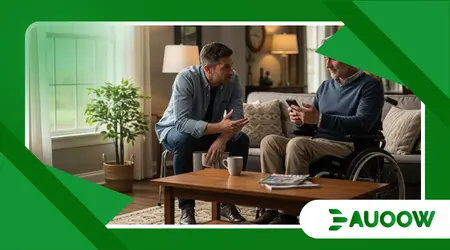
Reflecting on the early days of 2020, I recall a conversation with a colleague in Madrid who uses a wheelchair.
As the city shuttered, he found that the digital “lifelines” everyone praised were designed for a world that assumed he didn’t exist.
Public Health Emergencies and Disabled People are often discussed in the abstract, but for him, the crisis was found in the silence of a grocery app that didn’t support screen readers or a government broadcast where the sign language interpreter was cropped out of the frame.
It was a moment where the thin veneer of “progress” peeled away, revealing that our emergency protocols were often built for a standardized human being who simply does not represent the breadth of our communities.
- The Visibility Gap: Why emergency protocols often default to a “one-size-fits-all” model that excludes millions.
- Triage and Ethics: A look at structural biases that surface when resources become scarce.
- Digital Acceleration: How the shift to remote life both assisted and hindered accessibility.
- Legislative Evolution: What the 2024 Global Health Accord changed for disability rights.
Why does a crisis make accessibility feel like an “extra”?
There is a recurring pattern in how state agencies handle sudden shifts in safety: they move fast and break things, and the things they break are almost always the hard-won paths of inclusion.
During recent outbreaks and environmental shifts, the immediate response was to centralize information. However, the medium was often the barrier.
If a health mandate is issued via a PDF that a screen reader cannot parse, or a mandatory testing site is only reachable by stairs, the policy effectively suggests to a segment of the population that their safety is a secondary concern.
What rarely enters this debate is the concept of “administrative burden.” In a calm environment, a person with a disability might navigate a complex system with significant effort.
In Public Health Emergencies and Disabled People, that effort can become an impossibility.
When we observe the landscape more closely, the pattern repeats: accessibility is treated as a “Phase 2” feature, something to be retrofitted once the “real” emergency is over.
But for those waiting for accessible, life-saving information, there is no Phase 2.
++ Why Healthcare Accessibility Depends More on Zip Code Than Rights
Are we still using 20th-century ethics for 21st-century crises?
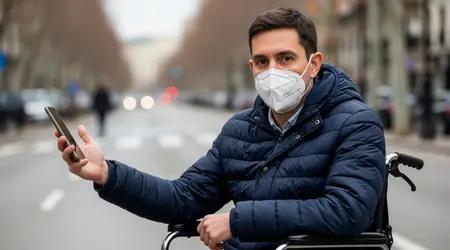
One of the most unsettling aspects of the last decade has been the resurgence of “triage ethics.”
In moments of peak hospital capacity, several jurisdictions faced lawsuits because their protocols for ventilator allocation used “pre-existing conditions” as a tie-breaker.
This is where the medical model of disability clashes violently with human rights.
To suggest that a life is less worth saving because of a long-term impairment is not a medical necessity; it is a social judgment cloaked in clinical language.
A more honest analysis suggests that these clinical decisions are often rooted in a lack of data.
If a medical board doesn’t understand how a person with a specific condition thrives and contributes, they may default to a narrative of “low quality of life.”
This structural detail usually remains hidden until ICU beds are full.
The transition from a rights-based society to a utility-based one happens in a heartbeat during a pandemic, and the disabled community is usually the first to feel the chill of that shift.
What actually changed after the 2024 Global Health Accord?
Following the systemic failures seen in the early 2020s, the international community attempted to codify “inclusive resilience.” The table below outlines the shift from reactive to proactive policy.
| Feature | Pre-2024 Approach | 2026 Integrated Standard |
| Communication | Ad-hoc sign language/Captions | Mandatory multi-modal broadcasting |
| Data Collection | Disability status often ignored | Real-time tracking of support needs |
| Triage Rules | Quality Adjusted Life Years (QALY) | Non-discrimination based on disability |
| Supply Chain | General medical supplies | Prioritized assistive device repair/power |
While the legal language in Public Health Emergencies and Disabled People has matured, implementation remains a patchwork.
We moved from “forgetting” the disabled community to “mentioning” them in documents, but the physical infrastructure the accessible ambulances and oxygen delivery systems compatible with home ventilators is still playing catch-up with the rhetoric.
Also read: Australia’s Disability Strategy: Successes and Shortcomings
Why is “digital first” a dangerous mantra for inclusion?
Imagine a student with a sensory processing disorder being told that for the next six months, her entire social and educational world will happen through a flickering blue-light screen with distorted audio.
For many, the digital shift was a miracle of convenience; for others, it was an exhausting, overstimulating wall.
We often celebrate the “pivot to remote,” but we can ignore the cognitive tax it placed on neurodivergent individuals who rely on physical cues and structured environments.
There is an economic inertia here that is rarely discussed. It was often cheaper for institutions to use off-the-shelf software than to invest in truly accessible, custom platforms.
In this scenario, the “market” for emergency tech frequently values speed over reach.
We saw apps for vaccine booking that required high-dexterity “drag and drop” features, effectively locking out many elderly users and those with motor impairments.
It wasn’t necessarily a lack of technology; it was a lack of instructional imagination.
How do past policies shape our current view of “vulnerability”?
There is a historical weight to the word “vulnerable.” For decades, public health policy has grouped disabled people with the elderly and the chronically ill under this single label.
While it sounds protective, it can function as a form of erasure. It frames the person as a passive recipient of care rather than an active citizen with specific rights.
This “protectionist” stance is a primary reason why Public Health Emergencies and Disabled People often results in isolation rather than targeted support.
During recent lockdowns, those labeled “vulnerable” were told to stay home for their own safety.
However, little thought was given to the home-care workers who are the literal hands and feet of independent living.
When those workers weren’t prioritized for PPE or vaccines, the “safe” home became a place of risk. Our policies sometimes protect the idea of a person, but fail to support the network that allows that person to live.
Read more: Canada’s Accessible Canada Act: What Has Changed in 2025?
Case Study: The “Invisible” Logistics of the 2025 Power Grid Failures
Think of a worker who uses a power wheelchair and an electric hospital bed at home.
When the localized climate crises of last year caused rolling blackouts, the “emergency alerts” told residents to “stay tuned to the radio.”
They didn’t account for the fact that a dead battery in a wheelchair is not just a nuisance it is a total loss of autonomy.
In some cities, community-led initiatives created “plug-in maps,” identifying houses with solar backups where neighbors could charge medical devices.
This was a bottom-up solution to a top-down failure.
It highlights that the most effective “policy” is often just community proximity, yet our urban planning continues to favor isolation and centralized grids that fail the most dependent users first.
Why are we still afraid to talk about the cost of inclusion?
There is a profound economic incentive to keep emergency training generic.
Customizing a response for every type of body and mind is often seen as an “uniqueness tax” that overstretched health departments feel they cannot afford.
But this is a false economy. The cost of a person ending up in the ICU because they couldn’t access a health alert is far higher than the cost of making that alert accessible in the first place.
We should question why we don’t treat accessibility as a national security issue. If a segment of the population is systematically left behind during a crisis, the entire social fabric is weakened.
The pattern of “cutting corners” during a rush is not just an error in judgment; it is a reflection of whose lives we consider “standard” and whose we consider “custom.”
How can we bridge the gap between “access” and “quality”?
The goal for the next decade of Public Health Emergencies and Disabled People must be the move from “reasonable accommodation” to “universal design.”
We shouldn’t be asking how to fix a broken system during a fire; we should be building a system that doesn’t catch fire for certain people.
This means having disabled leaders in the rooms where the emergency plans are drafted, not just as consultants, but as architects.
We are at a crossroads. We can continue to treat disability as a niche edge-case that we “deal with” during disasters, or we can recognize that a society that works for a person with a complex disability is a society that is more resilient for everyone.
When a sidewalk has a ramp, the person with a stroller and the person with a suitcase benefit too.
When an emergency alert is clear, visual, and simple, the person in a panic and the person who doesn’t speak the local language benefit too.
The Ethics of the Next Horizon
The true test of a civilization is not how it behaves when the sun is shining, but how it protects its members when the lights go out.
As we face a century that promises more frequent disruptions climatic, biological, and technological the lessons of our recent past are clear.
We cannot afford to leave the “human element” of the disabled experience for the post-crisis report.
True resilience is not found in the strength of our walls, but in the reach of our empathy.
By integrating the needs of the disabled community into the very DNA of our public health strategies, we create a world that is not just safer for some, but truly accessible for all.
FAQ: Inclusive Emergency Response
1. Does “prioritizing” disabled people mean others get less care?
No. It means removing the barriers that prevent disabled people from accessing the same level of care.
It is about equity ensuring that the starting line is the same for everyone, regardless of their physical or cognitive makeup.
2. Why is digital accessibility so critical in a health crisis?
In an emergency, information is as vital as medicine. If the only way to get a test, a vaccine, or a shelter location is through an inaccessible app, you have effectively been barred from the healthcare system.
3. Can small communities really implement these complex policies?
Often, small communities are better at this because they know their neighbors.
The “policy” can be as simple as a registry of who needs power for medical devices or ensuring the local town hall has a working ramp and an FM loop system.
4. What is the biggest lesson from the COVID-19 era for disability rights?
The biggest lesson is that “business as usual” was the primary barrier. When the world needed to change overnight to accommodate the non-disabled (remote work, telehealth), it did.
This proved that the “impossibility” of previous requests for accommodation was actually just a lack of will.
