
Public Tenders and Accessibility: Why Requirements Are Often Ignored
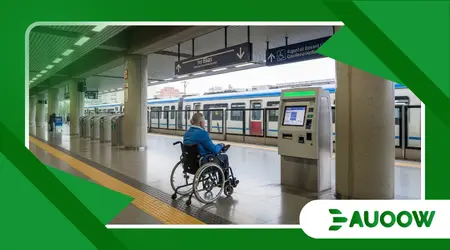
The complex relationship between Public Tenders and Accessibility often begins not in a courtroom or a government office, but on a rainy Tuesday morning at a newly renovated metropolitan train station.
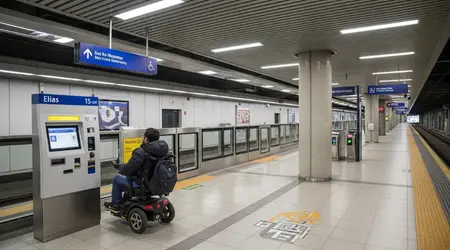
Imagine a commuter named Elias, who uses a motorized wheelchair. He arrives at the platform of a multi-million dollar transit hub, completed just months ago following a rigorous government bidding process.
The station is gleaming, modern, and ostensibly “compliant.”
Yet, when Elias reaches the ticket kiosk, the touchscreen is six inches too high, and the tactile paving designed to guide people with visual impairments leads directly into a structural pillar.
This is the silent friction of modern governance. On paper, the project met every regulatory checkbox required by the state. In reality, the architecture remains a series of hurdles.
We are living in an era where the law has never been clearer about the rights of disabled people, yet the execution of these rights through public procurement remains remarkably fragile.
The disconnect between what is promised in a contract and what is built on the street is where the true struggle for inclusion is lost or won.
The 2026 Accessibility Procurement Landscape
- The Compliance Gap: Why “legal on paper” frequently fails the “functional in person” test.
- Economic Misconceptions: Challenging the myth that accessible design is a budgetary burden.
- The Human Factor: How the lack of disabled representation on procurement boards leads to systemic failure.
- Technological Latency: The slow adoption of inclusive digital standards in government software tenders.
- Accountability Models: New strategies for ensuring that accessibility requirements are actually enforced post-award.
Why does the gap between policy and reality persist?
When we examine the mechanics of government spending, we find that Public Tenders and Accessibility are frequently treated as parallel tracks rather than an integrated vision.
Most procurement officers are trained to prioritize the “lowest responsible bid.”
In this high-pressure environment of fiscal austerity, accessibility is often viewed as a “premium” feature rather than a baseline requirement.
The reality is that making a building or a digital platform accessible from the start adds negligible costs often less than 1% of the total budget.
However, when these requirements are ignored during the tender phase, the subsequent retrofitting costs can be ten times higher.
What rarely enters the debate is the institutional inertia that permeates the drafting of these contracts.
Specifications are often repurposed from outdated templates, failing to account for modern Universal Design standards that have evolved significantly by 2026.
++ Railway Accessibility Laws vs Reality: A Global Comparison
How do structural decisions keep barriers in place?
There is a structural detail that often goes ignored: the lack of lived experience in the room where decisions are made.
When a government body issues a tender for a new public school or a digital voting system, the committee evaluating those bids is rarely composed of people who actually use assistive technology.
Without that perspective, a bidder can promise compliance with ADA or European Accessibility Act standards without ever explaining how their solution works for a real person.
This pattern repeats because there is often no immediate penalty for mediocrity. If a contractor fails to meet a deadline, they are fined.
If they fail to make a doorway wide enough for a specific class of wheelchair, the oversight is sometimes dismissed as a minor technicality that can be solved with a portable ramp later.
This “temporary fix” mentality is the enemy of genuine civil rights.
What is the history behind our current failures?
It is a mistake to treat the integration of Public Tenders and Accessibility as a new or isolated challenge. This is a story of social continuity.
The first wave of disability legislation was won through hard-fought protest, yet the administrative systems designed to implement these laws remained rooted in an old-world view of charity rather than entitlement.
Even today, past decisions about urban planning and software architecture impact us. When a city tenders for a new fleet of buses, they are often constrained by the height of curbs built forty years ago.
Instead of demanding that the buses adapt to the people, we wait for the infrastructure to catch up a process that moves at a glacial pace.
There is an institutional memory that still occasionally views the disabled citizen as an outlier, an “edge case” handled through exceptions rather than the rule.
Also read: Disability Rights in Africa: Emerging Leaders in Inclusion
The Digital Divide in Public Procurement
The problem has migrated from the physical to the digital realm.
As governments move services online, the tenders for these platforms often overlook the Web Content Accessibility Guidelines (WCAG) 2.2 or higher.
This creates barriers that aren’t always visible in a set of blueprints but are just as exclusionary.
A deaf professional attempting to access a mandatory government training portal might find no closed captioning on the videos.
The tender likely mentioned “accessibility,” but the developers interpreted that as simply having a high-contrast mode.
We are building digital walls just as we are tearing down physical ones. This happens because the oversight mechanisms for digital tenders are even less robust than those for construction.
Why are requirements often ignored during execution?
The most direct analysis of why Public Tenders and Accessibility requirements are sidelined points toward the inspection vacuum.
Once a contract is awarded, the government’s focus tends to shift toward completion speed. Inspectors check for fire safety, electrical stability, and structural integrity.
Accessibility, however, is rarely treated as a “critical path” item. If a ramp is slightly too steep, or a website’s screen-reader compatibility is buggy, the project is still allowed to go live.
There is a lingering sense that these flaws are forgivable.
This creates a moral hazard: contractors learn that they can underbid by cutting corners on inclusive features, knowing that payment is unlikely to be withheld for a lack of Braille signage.
Read more: Accessibility Policies in India: Progress and Pitfalls
What actually changed after the 2025 Reform Act?
In the wake of recent global shifts toward social equity, several regions have attempted to tighten the screws on procurement.
The results have been mixed, highlighting that legislation is only as good as its enforcement.
| Policy Area | Before 2025 | After 2025 Reforms | Social Impact |
| Bid Evaluation | Price was 80% of the score. | Accessibility is now a 20% mandatory “gatekeeper” score. | More specialized firms are winning contracts over generalist low-bidders. |
| Project Oversight | Self-certification by contractors. | Third-party audits by disabled-led organizations. | Higher rates of functional compliance in new builds. |
| Digital Standards | Basic WCAG 2.1. | Mandatory WCAG 2.2 with real-user testing. | Reduction in “dead-end” government web forms. |
| Sanctions | Rare and symbolic fines. | Immediate “Stop-Work” orders for accessibility violations. | Contractors are finally treating inclusion as a financial risk. |
The Power of Local Accountability
There are valid reasons to question centralized approaches. In some municipalities, we’ve seen a shift toward “Social Value Procurement.”
Here, a company’s track record in hiring people with disabilities and their history of building accessible environments are given actual weight in the scoring.
Imagine a local community where the tender for a park renovation wasn’t just about the grass and the swings, but about a sensory-first design that included children with autism.
When the community is involved in the drafting of the tender, the requirements become harder to ignore because the people who need them are watching every brick being laid.
How can we bridge the gap moving forward?
The intersection of Public Tenders and Accessibility requires a fundamental change in the procurement mindset. We must move away from the idea that accessibility is an act of kindness.
It is a legal and ethical obligation that, when fulfilled, benefits everyone from the parent with a stroller to the elderly person with declining mobility.
Government agencies need to hire accessibility leads within their procurement departments. These individuals should have the power to veto any bid that does not meet functional standards.
Furthermore, we need to normalize the inclusion of disabled experts in the handover phase of any public project.
No project should be considered complete until it has been navigated and approved by those it was intended to serve.
Why is transparency the ultimate solution?
Transparency in government spending is often discussed in the context of corruption, but it is equally vital for inclusion.
When the details of Public Tenders and Accessibility audits are made public, it allows civil society to act as an unofficial inspector.
If the public can see that a contractor was paid for accessible restrooms that turned out to be storage closets, the resulting pressure can force corrections that a quiet administrative note never could.
The sunlight of public data remains one of the best tools against the “technicality” excuse. It forces the government to admit that if a service isn’t accessible to everyone, it isn’t truly public.
A Future Built for Everyone
The path toward a truly inclusive society is paved with the mundane details of government contracts.
When we demand that Public Tenders and Accessibility become inseparable, we are doing more than just helping a specific group of people; we are strengthening the democratic promise that public resources belong to all citizens.
The failures we see today are not inevitable; they are the result of choices made in quiet rooms. It is time we made different choices ones that prioritize human dignity over the path of least resistance.
Editorial FAQ: Understanding Public Tenders
1. Why don’t governments just fine companies that fail accessibility tests?
Fines do exist, but they are often so small that companies treat them as a “cost of doing business.” It is often cheaper to pay a fine than to fix a major architectural error.
The real solution is withholding final payment until the work is fully corrected.
2. Is it true that making things accessible is much more expensive?
No. This is a persistent myth. If you plan for accessibility from day one, the cost is usually less than 1% of the total project.
The “expensive” reputation comes from the high cost of fixing mistakes after construction is finished.
3. How can a regular citizen help improve public accessibility?
Most government tenders have a public comment period. Citizens can review these and ask specific questions about inclusion requirements.
Reporting barriers to local ombudsmen also creates a paper trail that is hard to ignore.
4. What is “Universal Design” and why is it better than “Compliance”?
Compliance is about doing the bare minimum to avoid a lawsuit. Universal Design is about creating something that is naturally usable by everyone, regardless of age or ability.
A ramp that is integrated into the main stairs is Universal Design; a shaky metal lift in the back alley is just compliance.
5. Do digital websites really need the same level of tender oversight as buildings?
Absolutely. In 2026, a government website is as essential as a physical office.
If a citizen cannot pay taxes or apply for a permit online because of a disability, their civil rights are being restricted just as much as if they were barred from entering a building.
