
Special Education vs Inclusive Education: Can They Coexist?

The tension surrounding Special Education vs Inclusive Education often reveals itself in the quiet moments of a school hallway, far from the polished rhetoric of legislative chambers.
Imagine a ten-year-old boy named Leo, who uses a wheelchair and a high-tech communication device, sitting in a sunny Third Grade classroom.
His peers are vibrant and loud, but Leo is often accompanied by a dedicated support professional who helps him navigate the environment.
In the room next door, a specialized resource center hums with the focused energy of therapists and adaptive equipment.
Leo’s parents face a recurring choice: do they prioritize the mainstream room where he gains social fluency, or the specialized wing where the support is intensive but the social circle feels smaller?
This isn’t just a logistical dilemma; it is the central friction of modern pedagogy.
A Roadmap of Educational Evolution
- The Historical Shift: Moving from institutionalization to the fundamental right to belong.
- Resource Allocation: How budgets frequently dictate the practical philosophy of a school.
- The Educator’s Balance: Managing individualized support alongside whole-class dynamics.
- Societal Outcomes: How early classroom experiences shape the quality of adult citizenship.
Why does the debate persist in 2026?
The conversation regarding Special Education vs Inclusive Education has shifted from whether we should include students to how we sustain that inclusion effectively.
For decades, the medical model dominated, treating disability as a condition to be “fixed” in a separate, quiet room.
What rarely enters this debate is the fact that “special” often became a synonym for “isolated.” While specialized settings offer incredible expertise, they can inadvertently create a parallel society.
When we observe the current landscape, the pattern repeats: we provide the physical ramp but sometimes neglect to adapt the curriculum.
Inclusive education suggests the classroom should be a microcosm of a diverse world, placing the responsibility for adaptation on the institution rather than the child.
++ Africa’s Innovative Approaches to Inclusive Learning
Is inclusion a right or a secondary service?
In many districts, inclusion is treated as a premium service available only when staffing levels are high. When budgets tighten, specialized classrooms are often the first to be siloed under the guise of “concentrating resources.”
This economic lens often overlooks the long-term social cost of segregation. Inclusive education isn’t just about the student with a disability; it teaches every student how to live in a world where everyone moves and communicates differently.
Also read: Gamification and Accessibility: Designing Play for Learning
Structural barriers to a unified system
A significant detail remains: teacher training is still largely bifurcated.
Many general education teachers feel they lack the tools to handle complex neurodiversity, leading to a culture where a student might be physically present but pedagogically excluded.
Conversely, special educators often feel isolated, called in only during moments of crisis. This lack of collaborative planning time ensures that the two models remain in competition rather than working in symphony.
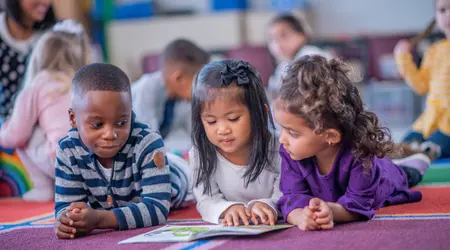
Can these two models coexist?
On the surface, Special Education vs Inclusive Education appear as opposing forces, but they are often two ends of a necessary spectrum.
While the “Full Inclusion” movement advocates for the removal of all segregated settings, many families argue that their children particularly those with profound medical needs or intense sensory sensitivities thrive in specialized environments that mainstream schools may struggle to replicate.
The goal may not be the removal of specialized support, but its integration. Imagine a “Fluid Model” where the resource room is a hub of support that radiates into the general classroom.
In this scenario, Leo doesn’t leave for speech therapy; the therapist brings the tools into the room, benefiting Leo and other students who might struggle with phonetics.
The shift in policy and philosophy
To understand the current state, we must look at how social expectations have evolved.
| Period | Dominant Philosophy | Primary Setting | Social Impact |
| Pre-1970s | Exclusion/Medical | Institutions | Erasure from public life |
| 1980s-1990s | Integration | Special Classrooms | Physical presence, social gap |
| 2000s-2015 | Inclusion Rights | General Classrooms | Legislative progress, resource strain |
| 2020-2026 | Universal Design | Hybrid/Adaptive | Focus on belonging and tech-equity |
How technology bridges the gap
Assistive technology has revolutionized this coexistence. AI-driven captioning and real-time cognitive supports now allow students with various learning styles to access the same text as their peers simultaneously.
When technology handles the “translation” of the curriculum, educators can focus on the human elements of emotional and social support.
This reduces the need for physical segregation because specialized education becomes portable.
Read more: Teacher Burnout and Inclusive Classrooms: How to Prevent It
Challenges in the “inclusion” rush
There are reasons to examine the “one-size-fits-all” approach.
Consider the experience of a parent who sees their child struggle in a loud, overcrowded classroom because a school refuses to offer a smaller, more controlled environment.
For some, the mainstream classroom can be a sensory minefield. Without adequate funding and staffing, “inclusion” can become a form of neglect.
The persistence of labels and stigma
Stigma remains because we often view “special” as a detour from the standard path. As long as we measure students by narrow metrics, specialized support may feel like a “lower” tier.
Schools that successfully merge these worlds often change their language; they stop talking about “special kids” and focus on “specific supports.”
This removes the identity of being “disabled” and replaces it with the reality of being “supported.”
The role of Universal Design for Learning (UDL)
UDL is a potent tool in resolving the Special Education vs Inclusive Education conflict.
It suggests that if you design a lesson for the “edges” the student who cannot see the board or the student who needs to move you create a better lesson for everyone.
It functions like a curb cut in a sidewalk. Originally designed for wheelchairs, it now benefits parents with strollers, travelers with luggage, and cyclists. Inclusion, when executed correctly, is a “curb cut” for the mind.
The Path Toward Educational Synergy
The tension between these models isn’t a problem to be solved with a single law, but a relationship to be managed with empathy.
We must stop treating the general classroom as a sacred, unchanging space and start viewing it as a flexible workshop.
Specialized expertise is a vital resource that should be uncoupled from segregated rooms. When specialized knowledge flows freely through a school, the “vs” disappears.
We are no longer choosing between two systems; we are building one that is wide enough for everyone.
Leo’s journey shouldn’t be defined by which door he enters, but by the quality of the welcome he receives. The future of education lies in our ability to be as diverse in our teaching as our students are in their learning.
Frequently Asked Questions
Is Inclusive Education more expensive than Special Education?
Initially, it requires investment in lower student-to-teacher ratios and training. However, the long-term societal benefits such as higher employment rates and social independence often outweigh the initial costs.
Does inclusion impact the learning of neurotypical students?
Research suggests that neurotypical students in inclusive classrooms often develop higher levels of empathy and social communication skills, performing as well as or better than those in segregated settings.
When is a specialized setting appropriate?
A specialized setting might be chosen when a student requires intensive 1:1 medical support, experiences severe sensory distress in large groups, or when a mainstream environment cannot yet provide necessary safety protocols.
Can a student move between both models?
Yes. A modern school should allow for “fluid placement,” where a student might join a mainstream setting for social subjects and use a specialized center for intensive skill-building.
What should parents look for in an inclusive school?
Look for co-teaching models, evidence of Universal Design for Learning (UDL) in lesson plans, and a school culture that values social belonging as much as academic scores.
