
The impact of edtech regulation schools on inclusive education access
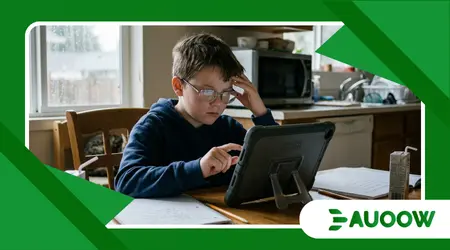
A ten-year-old boy sits at his kitchen table, staring at a tablet screen that has suddenly frozen during a timed reading assessment.
For his classmates, the software is a seamless, gamified exercise. For him, as a student with a mild visual impairment and processing differences, a sudden shift in the app’s background contrast introduced in a silent overnight software update means the text has dissolved into a gray blur.
His school district adopted this platform precisely because it checked every box on a state procurement checklist.
Yet, in this quiet moment at home, the rigid enforcement of tech procurement rules has achieved the exact opposite of its intent. It has locked him out.
When we evaluate the impact of edtech regulation schools navigate today, we often look at compliance, data privacy, and municipal budgets.
We rarely look at the child at the kitchen table. The intersection of rapidly evolving educational software and slow-moving public sector bureaucracy has created a unique friction point in inclusive education.
To understand where this friction hurts the most, we need to examine three distinct areas of this digital ecosystem:
- The Procurement Paradox: How strict security and privacy mandates accidentally narrow the marketplace, eliminating specialized tools designed for neurodivergent learners.
- The Compliance Gap: The widening divide between software that is legally accessible on paper and software that is genuinely usable in a chaotic, real-world classroom.
- The Human Toll: The unseen administrative burden placed on special education teachers who must find workarounds when approved tech fails to deliver.
Why are well-intentioned classroom technology rules missing the mark?
The classroom has fundamentally changed over the last decade, moving from a physical space supplemented by computers to a digital environment occasionally anchored by a blackboard.
In analyzing this landscape, the rules designed to govern this transition are suffering from a profound crisis of purpose.
When a state or national legislative body passes a law regulating digital tools in classrooms, the primary drivers are almost always data privacy and cyber security.
These are noble, deeply necessary goals. No parent wants their child’s behavioral data or reading scores leaked or monetized by third-party advertisers.
However, a structural detail that often escapes notice is how these monolithic compliance frameworks inadvertently smother the small-scale innovation that inclusive education relies upon.
To be approved for use in a major school district today, an educational technology provider must navigate a labyrinth of security audits, legal indemnifications, and costly certification processes.
For a multi-billion-dollar educational publishing conglomerate, this is simply the cost of doing business. They hire teams of lawyers and compliance officers to clear the hurdles.
For a small team of developers creating a highly specialized, niche piece of assistive technology such as an AI-driven gaze-tracking tool for non-verbal students or a unique spatial audio app for blind learners the cost of this regulatory compliance is prohibitive.
When we look closer, a troubling pattern repeats: the regulations meant to protect students wind up starving the market of the diverse, creative tools that outliers need to survive in a mainstream classroom.
The impact of edtech regulation schools must enforce means that procurement officers routinely reject superior, highly accessible niche apps simply because the vendor lacked the capital to secure a specific data-handling certification.
++ How AI curriculum integration 2026 impacts inclusive education
What actually changed after this shift toward hyper-regulation?
To appreciate how we arrived here, we have to look back at the early optimism of the digital classroom movement.
There was a widespread belief that software would be the great equalizer, an infinitely adaptable canvas that could adjust to any learning style or physical limitation.
The table below outlines how the shifting regulatory landscape has fundamentally altered the operational reality of inclusive classrooms over the last several years.
| Regulatory Focus Area | The Intended Outcome | The Real-World Friction for Inclusive Education |
| Data Privacy & Student Record Security | Protecting sensitive student profiles, diagnostic data, and behavioral tracking from commercial exploitation. | Specialized assistive apps are locked out of districts because small developers cannot afford enterprise-grade security audits. |
| Monolithic Web Accessibility Standards | Ensuring all software meets baseline legal checklists (like WCAG guidelines) before purchase. | Compliance becomes a “box-checking” exercise. Software passes technical audits but remains functionally unusable for complex learning needs. |
| Centralized District Procurement | Streamlining budgets and ensuring uniform software deployment across all regional schools. | Special education teachers lose the autonomy to quickly adopt and test emerging tech tailored to an individual student’s IEP. |
What this structural evolution reveals is a shift from pedagogical flexibility to administrative risk mitigation.
On paper, the software is safer and more uniform; in practice, the digital environment has become rigid, leaving little room for the personalized adjustments that define successful special education.
Also read: Inclusive Education in the Middle East: Emerging Opportunities
How do rigid corporate software audits create barriers for individual students?
Consider a documented scenario from a mid-sized suburban school district. A middle school student with severe dysgraphia a neurological condition that impairs writing ability had spent two years successfully using a specialized voice-to-text application that recognized his specific speech patterns and vocabulary.
The tool allowed him to compose essays at the same speed as his peers, fundamentally altering his academic trajectory.
Over a single summer, the district implemented a sweeping new vendor vetting policy to comply with updated state privacy laws.
The small developer of the voice-to-text app could not provide the required legal indemnifications within the district’s strict sixty-day window. The app was stripped from all district-issued devices.
In its place, the student was given a mass-market word processor with a built-in, generic dictation feature that met all regulatory standards.
But this corporate alternative lacked the granular phonetic sensitivity of his previous tool. It consistently misidentified his words, leading to intense frustration, emotional outbursts, and a decline in his written output.
When analyzing the deep impact of edtech regulation schools grapple with, this case shows how systemic decisions privilege institutional safety over individual dignity.
The district’s legal liability was reduced to zero, but the student’s functional access to his education was dismantled in the process.

The hidden difference between technical compliance and functional usability
There is a massive difference between software that is legally compliant and software that is actually usable.
A product can pass an automated accessibility scan with flying colors, ensuring that every image has alt-text and every button is keyboard-navigable.
Yet, when a student with a cognitive disability attempts to navigate the actual interface, they might find a chaotic visual hierarchy, confusing terminology, and counterintuitive workflows that make independent learning impossible.
When regulatory frameworks focus entirely on static checklists, they incentivize developers to build for the regulators rather than the children. The honest reality is that true accessibility cannot be automated or captured entirely in a legal brief. It requires continuous, qualitative feedback from actual students with diverse bodies and minds.]
Read more: Africa’s Innovative Approaches to Inclusive Learning
Why does the administrative burden of tech rules fall squarely on teachers?
We must also look at the silent crisis unfolding among special education staff. When a piece of approved classroom software fails to meet a child’s specific needs due to regulatory limitations, the responsibility to bridge the gap does not fall on the district’s legal team or the software company’s executives. It falls on the teacher.
Teachers are forced to spend hours printing out digital materials, manually reformatting text, or building analog workarounds because the certified, locked-down district tablet cannot interface with an uncertified braille display or a custom switch interface.
The compounding impact of edtech regulation schools enforce is a driving factor behind educator burnout.
We are asking teachers to be creative, adaptive healers within a digital infrastructure designed by risk-averse bureaucrats.
Shifting the focus toward human-centered procurement models
The solution is not to abandon regulation, dissolve privacy protections, or allow a wild-west approach to classroom data.
Rather, the analysis suggests we need a fundamental shift in how these regulations are framed and executed.
Regulatory bodies can create “safe harbor” provisions for assistive technologies. If a tool is explicitly required by a student’s Individualized Education Program (IEP), districts should have a streamlined, low-barrier pathway to vet and approve that software without forcing a tiny development team through a corporate procurement gauntlet.
Furthermore, accessibility audits must evolve to include mandatory user testing with disabled students. We must stop treating accessibility as an administrative footnote and start treating it as a foundational human right.
Only then can we ensure that the digital architecture of our schools serves to expand the horizons of every child, rather than drawing a boundary line around the students who are easiest to accommodate.
Frequently Asked Questions
How do modern classroom tech rules accidentally hurt disabled students?
Regulations often demand expensive data security and privacy certifications that small, specialized assistive technology companies cannot afford.
As a result, schools are forced to drop highly effective, niche accessibility apps in favor of generic software from large corporations that meets the legal paperwork requirements but lacks specific features for diverse learners.
Can software be legally compliant but still impossible for a child to use?
Yes. Automated compliance tools only check for basic technical markers, like whether an image has a text description or buttons can be clicked without a mouse.
They do not measure cognitive load, intuitive navigation, or how a child with multiple disabilities experiences the interface in a busy, real-world classroom environment.
What is the relationship between student privacy laws and inclusive education?
While student privacy laws are essential for protecting sensitive diagnostic and behavioral data, their strict implementation often leaves no room for flexibility.
When a district completely locks down its digital ecosystem, it frequently prevents students from connecting external hardware devices, like specialized communication boards or custom eye-gaze systems, to their school-issued computers.
How can school districts balance data safety with classroom accessibility?
Districts can create fast-track, low-barrier approval processes specifically for assistive technologies written into a student’s legal education plan.
By separating high-risk, system-wide administrative software from low-risk, individualized learning tools, schools can maintain high privacy standards without cutting off vital access for students who rely on specialized apps.
