
The reality of metro accessibility audits in major cities today
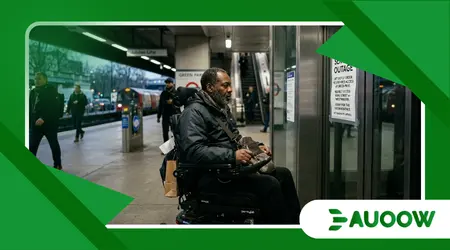
The reality of metro accessibility audits in major cities today is often found in the agonizing three-minute wait for a station agent who may or may not have the key to a platform lift.
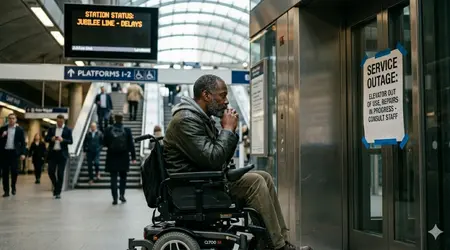
Imagine a commuter in London or New York, someone who uses a motorized wheelchair, staring at a “Service Outage” sign taped to an elevator door.
They aren’t just looking at a mechanical failure; they are looking at a collapsed promise.
This person must now navigate back two stations, find an alternative bus route in the rain, and arrive an hour late for work.
It is a quiet, daily exhaustion that rarely makes the evening news but defines the urban experience for millions.
- The Compliance Gap: Why a station can pass a legal audit while remaining practically unusable for a person with a disability.
- Legacy Infrastructure: The structural conflict between century-old tunnel designs and modern inclusivity standards.
- The Maintenance Crisis: How the shift from “building” to “upkeeping” accessibility features is the new frontier of civil rights.
- Data vs. Experience: The growing disconnect between official city transit reports and the lived reality of commuters.
Why do “accessible” stations still fail the people who need them?
When we look at official transit reports, the numbers often look encouraging, suggesting a steady upward trajectory of inclusion.
However, the reality of metro accessibility audits in major cities today suggests that “accessibility” is frequently treated as a binary checklist rather than a functional flow.
A station is marked “accessible” because it has an elevator, but the audit might ignore that the elevator is located half a mile from the primary transfer tunnel.
What rarely enters this debate is the distinction between architectural compliance and operational reliability.
In my reading of recent urban audits, there is a systemic tendency to celebrate the installation of a resource while neglecting the budget required to keep it running 24/7.
When an elevator in a deep-level station goes down, that station effectively ceases to exist for a segment of the population.
The audit captures the presence of the machine, but it often fails to capture the frequency of its failure.
++ Why accessible bus stops still fail disabled commuters in cities
How does legacy architecture dictate modern exclusion?
There is a structural detail that costumers and planners often ignore: our great metropolitan subways were designed as catacombs of efficiency for the able-bodied.
In cities like Paris or Boston, the original engineers prioritized narrow footprints and steep staircases to navigate dense subterranean utility lines.
Today, we are trying to retrofit 21st-century ethics into 19th-century brick and mortar.
This creates a “geography of exclusion” where certain neighborhoods remain inaccessible simply because the cost of widening a tunnel is deemed politically “too high.”
In my observation, the pattern repeats across global hubs: accessibility is added as an afterthought, a literal attachment to the side of a building.
This creates a secondary, often slower path for people with disabilities. When we observe with more attention, we see that this reinforces a social hierarchy.
The able-bodied move through the spine of the city, while those with mobility aids are relegated to the periphery, searching for the one specific entrance that accommodates their needs.
What actually changed after the implementation of the ADA and similar global acts?
The passage of the Americans with Disabilities Act (ADA) in 1990, and subsequent European and British equivalents, forced a massive wave of station renovations.
However, the reality of metro accessibility audits in major cities today reflects a period of “stalling.” The “low-hanging fruit” the easy stations have been converted.
We are now left with the “hard” stations, the deep-level transfers and complex hubs where engineering challenges are used as shields against legal mandates.
| Period | Primary Focus | Social Impact | Audit Focus |
| 1990s – 2000s | Physical Barriers | Initial entry into the transit system. | Ramp and elevator installation. |
| 2010s – 2020s | Digital Information | Real-time status of lifts via apps. | Integration of tech-assistive data. |
| 2026 – Present | Functional Reliability | Seamless, independent urban navigation. | Maintenance uptime and user experience. |
Why is digital data becoming the new barrier?
We often assume that technology solves accessibility hurdles, but it can also create a false sense of security.
A transit app might report that an elevator is “operational,” but it doesn’t mention that the tactile paving on the platform has eroded, making it dangerous for a person with visual impairments.
The data is often too thin to reflect the actual safety of the environment.
Also read: Accessible Office Tools: Top 10 Apps for Disabled Professionals
Who is truly benefited by these audits?
Often, these audits serve the transit authorities more than the passengers. By achieving a certain percentage of “accessible stations,” a city can ward off lawsuits and secure federal funding.
Yet, if that accessibility doesn’t translate to a reliable commute, the benefit to the citizen is marginal.
We need to move toward audits that measure “successful journey completion” rather than just “hardware presence.”
The human cost: A day in the life of the “uncounted”
Consider the case of a paralegal in Chicago who uses a white cane. On paper, her local station is fully compliant.
But the reality of metro accessibility audits in major cities today doesn’t account for the “ghost obstacles” she faces daily.
These include poorly placed ticket kiosks that protrude into walking paths and ambient noise levels that drown out the essential audio cues of the train arrivals.
On one rainy Tuesday, a simple change in the station’s cleaning schedule left wet, slick floors without adequate warning markers at the base of the stairs.
For a sighted person, it’s a minor inconvenience; for her, it’s a high-risk hazard.
When we analyze these scenarios honestly, we see that accessibility isn’t a project you finish. It is a state of constant vigilance that most audits are too rigid to see.
Read more: Toothbrush Tech for Disabled Users: The Rise of Y-Brush and Alternatives
How do we bridge the gap between policy and platform?
The analysis most honest analysts suggest is that we must involve the disability community in the auditing process itself.
Currently, most audits are performed by able-bodied engineers with clipboards.
They check for the correct height of a handrail but might not notice that the handrail becomes scalding hot in the summer or freezing in the winter, making it unusable for someone with sensory sensitivities.
There are good reasons to question the current approach of “one-size-fits-all” accessibility. A ramp that is too steep for a manual wheelchair user might be perfectly fine for someone with a stroller.
We need a more nuanced, multi-layered approach to urban design. This involves shifting the focus from “compliance” to “dignity.”
A dignified commute is one where the passenger doesn’t have to ask for help or plan their route three days in advance.
What will the metro of 2030 look like?
As we look toward the next decade, the reality of metro accessibility audits in major cities today provides a roadmap for necessary agitation.
We are seeing a slow but steady shift toward universal design, where features like level-boarding and wide-aisle gates are becoming the standard for everyone, not just a special accommodation.
This “curb-cut effect” shows that when you design for the most vulnerable, you improve the experience for the parent with a pram and the traveler with heavy luggage alike.
The most profound changes are often the ones that happen silently. Better lighting, clearer acoustics, and intuitive wayfinding systems are being integrated into new builds from the start.
This suggests a maturing of the architectural mind.
We are finally moving away from the idea that accessibility is a “burden” on the budget and toward the realization that an accessible city is a more profitable, vibrant, and humane city.
A New Frontier for Digital Dignity
The conversation about our subways is shifting from “where can we go?” to “how can we all get there together?”
By looking past the checkboxes and focusing on the lived experience of the commuter, we can begin to build a transit system that doesn’t just move bodies, but respects them.
The work is far from over, but the direction of travel is finally becoming clear.
FAQ: Navigating the Urban Underground
Why are so many elevators in metro stations out of service?
Elevators in public transit face heavy use, vandalism, and exposure to the elements.
However, the deeper issue is often a lack of dedicated maintenance staff and a supply chain that struggles to provide parts for older, specialized lift models.
How do I know if a station is truly accessible before I travel?
Most major cities now offer real-time “elevator status” on their official apps.
However, seasoned commuters also recommend checking community-led social media groups where users report outages faster than the official systems often do.
What is “level boarding” and why does it matter?
Level boarding means the train car floor is exactly flush with the platform.
This eliminates the “gap” that is a major hazard for wheelchairs, walkers, and even people who are distracted or walking in low light.
Are audits legally required to be public?
In many jurisdictions, like the U.S. and the UK, transit authorities must provide accessibility data under freedom of information laws. However, the clarity of that data varies wildly from city to city.
Can a station be “accessible” but not “ADA compliant”?
Technically, no, but a station can have accessible features that don’t meet every specific legal measurement.
Conversely, a station can be legally compliant but practically difficult to use due to poor layout or broken equipment.
