
The Rise of Electric Wheelchair Bikes for Urban Commuting
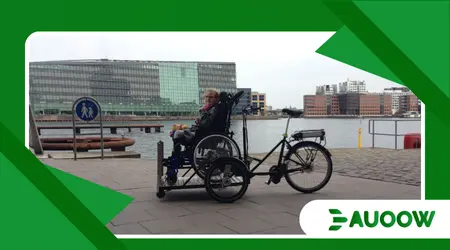
The Rise of Electric Wheelchair Bikes for Urban Commuting represents a major breakthrough in how we design inclusive cities in 2026.
This trend combines advanced pedal-assist technology with specialized wheelchair platforms to grant unprecedented freedom of movement to mobility-impaired residents.
Urban planners are finally noticing that accessibility isn’t just about ramps; it’s about active participation in the micromobility revolution.
As battery density improves, the Rise of Electric Wheelchair Bikes for Urban Commuting is fast becoming the preferred choice for eco-conscious travel.
What are Electric Wheelchair Bikes and How Do They Function?
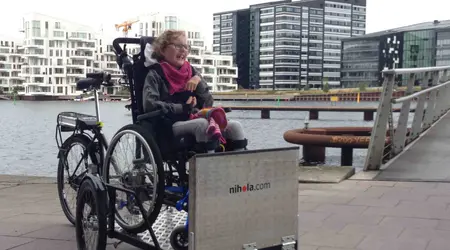
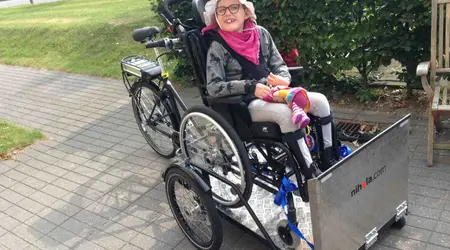
At their core, these vehicles are hybrid tricycles or front-loading cargo bikes where the traditional box is replaced by a wheelchair ramp.
A companion or family member usually pedals from behind, assisted by a high-torque electric motor that handles steep city inclines effortlessly.
Modern units often feature a “roll-on, roll-off” mechanism that secures a standard manual or power wheelchair in seconds without requiring the user to transfer.
This seamless integration is driving the Rise of Electric Wheelchair Bikes for Urban Commuting across North American and European capitals.
How Does the Electric Drive System Support Accessibility?
The electric motor is the true hero of this technology, providing varying levels of assistance based on the weight of the passenger.
High-capacity lithium-ion batteries now allow for ranges of up to 80 kilometers on a single charge, making cross-town trips viable.
Mid-drive motors are particularly effective here because they leverage the bike’s internal gearing to provide maximum torque at low speeds.
This ensures that starting from a complete stop at a busy intersection is safe, smooth, and perfectly controlled for the operator.
++ Inclusive Fashion Brands: Clothing Designed for Every Body
Why is the Front-Loading Design Superior for Safety?
Placing the wheelchair passenger at the front of the vehicle allows the pilot to maintain constant eye contact and verbal communication.
This configuration provides the passenger with a panoramic view of the city, rather than staring at the back of a cyclist.
Front-loading bikes also offer better stability due to their low center of gravity, which is crucial when navigating uneven urban pavement.
The Rise of Electric Wheelchair Bikes for Urban Commuting relies heavily on this design to instill confidence in both users during transit.
Also read: How Smartwatches Are Saving Lives for Epileptic and Cardiac Patients
What is a Practical Example of this Tech in Action?
Consider the “Van Raam VeloPlus,” a popular model in 2026 that allows a person to stay in their own wheelchair.
A family in Vancouver now uses this to commute to the seawall, avoiding the delays of specialized van transit.
Another example is the “Huka Duet,” which features a detachable front part that functions as a manual wheelchair once you reach your destination.
These practical innovations show why the Rise of Electric Wheelchair Bikes for Urban Commuting is gaining such rapid traction among urbanites.
Read more: Accessible Office Tools: Top 10 Apps for Disabled Professionals
How Does Regenerative Braking Improve Urban Safety?
In the hilly terrain of many cities, regenerative braking acts as a safety anchor while simultaneously recharging the battery during long descents.
It reduces the physical strain on the pilot and prevents the mechanical brakes from overheating under the weight of two adults.
This technology provides a layer of redundancy that is essential for vehicles carrying passengers with high support needs.
Safety features like these are a pillar in the Rise of Electric Wheelchair Bikes for Urban Commuting throughout our busy metropolitan streets.
Why is Urban Infrastructure Pivoting Toward Accessible Micromobility?
Cities like Amsterdam and Copenhagen have set the standard, but now New York and Toronto are widening bike lanes to accommodate tricycles.
This infrastructure shift acknowledges that a diverse range of vehicles, not just two-wheeled bicycles, belongs in the protected lanes.
The Rise of Electric Wheelchair Bikes for Urban Commuting is forcing a rethink of “last-mile” logistics for people with disabilities.
When bike lanes become inclusive corridors, the reliance on expensive, slow-moving paratransit vans begins to decrease significantly.
How Do Widened Bike Lanes Benefit Everyone?
Wider lanes allow for the safe overtaking of slower vehicles, which is vital when mixing wheelchair bikes with fast electric commuters.
This creates a “multi-speed” environment that accommodates cargo bikes, strollers, and specialized mobility vehicles without creating congestion or dangerous bottlenecks.
Inclusive design in bike lanes also encourages elderly citizens to remain active for longer by using stable, three-wheeled electric options.
This demographic shift is a key driver in the Rise of Electric Wheelchair Bikes for Urban Commuting in aging urban populations.
What Statistics Support the Shift Toward Inclusive Cycling?
A 2025 study by the Institute for Transportation and Development Policy (ITDP) found that cities with inclusive bike lanes saw a 40% increase in micro-mobility use among people with disabilities.
This data proves that demand for accessibility is high whenever the infrastructure feels safe.
The report highlights that the Rise of Electric Wheelchair Bikes for Urban Commuting directly correlates with the installation of protected, curb-separated lanes.
Investment in hardware must be met with investment in the physical space to operate it.
How Does This Technology Compare to Traditional Paratransit?
Traditional paratransit often involves long wait times and rigid scheduling that strips individuals of their spontaneity and personal agency.
In contrast, an electric wheelchair bike offers the freedom to leave whenever you want and take any accessible route.
Think of it like the difference between a bus and a pair of shoes; one is a service you wait for, the other is a tool you control.
The Rise of Electric Wheelchair Bikes for Urban Commuting turns users from passive passengers into active explorers of their environment.
Why Are Corporate Subsidy Programs Targeting These Bikes?
Major employers are beginning to include accessible electric bikes in their green-commute benefit packages to meet diversity and inclusion goals.
These subsidies can cover up to 50% of the purchase price, making high-end models more accessible to average families.
Government grants in 2026 also categorize these as “medical-mobility hybrids,” allowing for tax rebates that were previously reserved only for cars.
This financial support is accelerating the Rise of Electric Wheelchair Bikes for Urban Commuting across the middle class.
What are the Social and Environmental Benefits of Accessible Commuting?
Beyond the hardware, the Rise of Electric Wheelchair Bikes for Urban Commuting is fostering social inclusion by removing the “medical” look of mobility.
These bikes look like modern, sleek pieces of tech, which helps reduce the stigma often associated with traditional wheelchairs.
Environmentally, replacing a gas-guzzling specialized van with a zero-emission electric bike significantly reduces a household’s carbon footprint.
If we want a truly green city, shouldn’t every citizen have an equal opportunity to choose a sustainable commute?
How Does Fresh Air Impact Mental Well-being?
Regular exposure to nature and fresh air during a commute has been linked to lower cortisol levels and improved mental health.
For those who spend much of their time in clinical or indoor settings, the bike offers a vital sensory connection.
The rhythmic nature of cycling, even with electric assist, provides a physical engagement that improves circulation and mood for the pilot and passenger.
This holistic benefit is a quiet but powerful factor in the Rise of Electric Wheelchair Bikes for Urban Commuting.
What is the Role of Community Cycling Clubs?
In 2026, “Adaptive Cycling Clubs” are popping up in parks, offering rentals and group rides for families using wheelchair bikes.
These clubs create a support network where users can share tips on the best accessible routes and charging locations.
This social infrastructure builds a sense of belonging that transcends the commute itself, turning a utility into a community-building activity.
It is the final piece of the puzzle in the Rise of Electric Wheelchair Bikes for Urban Commuting.
Can These Bikes Handle All-Weather Urban Conditions?
Modern designs include “rain canopies” and heated seats for the wheelchair passenger, ensuring the bike is a year-round transportation solution.
High-grip tires and disc brakes provide the necessary safety for navigating slushy or wet roads during autumn and winter.
As these vehicles become more “all-weather,” they move from being a weekend toy to a reliable daily vehicle for work or school.
This reliability is essential for sustaining the Rise of Electric Wheelchair Bikes for Urban Commuting in colder climates.
What is the Future of Self-Driving Wheelchair Bikes?
Prototypes in late 2026 are already testing autonomous steering assist to help pilots navigate tight corners and avoid obstacles in crowded lanes.
This AI integration could eventually allow for “solo” wheelchair bikes where the user operates the entire vehicle alone.
While still in the testing phase, this represents the next frontier of independence for the mobility-impaired community.
The Rise of Electric Wheelchair Bikes for Urban Commuting is only the beginning of a larger, tech-driven liberation of our streets.
Commuting Comparison: Paratransit vs. Electric Wheelchair Bike (2026)
| Feature | Specialized Van Transit | Electric Wheelchair Bike |
| Wait Time | 30 – 60 Minutes (Scheduled) | 0 Minutes (On-demand) |
| Cost per Trip | High (Subsidized or Out-of-pocket) | Low (Electricity only) |
| Emissions | High (Usually Diesel/Gas) | Zero (Battery Electric) |
| Flexibility | Poor (Door-to-door only) | High (Can stop anywhere) |
| Health Benefit | Sedentary | Active (For pilot and passenger) |
| Independence | Low (Dependent on Driver) | High (Self-governed) |
In conclusion, the Rise of Electric Wheelchair Bikes for Urban Commuting is a transformative movement that proves accessibility and sustainability are two sides of the same coin.
By blending high-torque electric motors with front-loading inclusive designs, these vehicles are breaking down the physical and social barriers of our cities.
As infrastructure continues to evolve and subsidies make this technology more affordable, the sound of a silent electric motor will become the new anthem of urban freedom.
The future of the city is inclusive, active, and electric.
How would a more accessible bike lane change the way your family explores the city this weekend? Share your experience in the comments below!
Frequently Asked Questions
Are these bikes legal to ride on standard sidewalks?
Generally, no. Because of their speed and size, electric wheelchair bikes are classified as e-bikes and should stay in bike lanes or on the road.
Always check your local 2026 municipal bylaws, as some cities allow them on sidewalks in specific “slow zones.”
Can a standard wheelchair fit on any electric wheelchair bike?
Most “platform-style” bikes are designed to accommodate a wide variety of manual and power wheelchairs.
However, very large bariatric or specialized tilt-in-space chairs may require a specific custom ramp width, so always check the platform dimensions.
How long does it take to charge the battery?
Using a standard 110V household outlet, a full charge typically takes between 4 and 6 hours. Many 2026 models now support “Fast Charging,” which can give you a 50% boost in about 45 minutes at public charging stations.
Do I need a special license to operate one?
In most jurisdictions, no license or insurance is required as long as the motor is capped at the standard e-bike limit (usually 250W to 500W depending on the region). They are legally treated the same as a standard electric bicycle.
What happens if I get a flat tire while commuting?
Most high-end wheelchair bikes come with “puncture-resistant” tires as standard.
If a flat does occur, many modern e-bike roadside assistance programs now include specialized wheelchair bike support to ensure you and your passenger get home safely.
