
Why Most Assistive Hardware Never Makes It Past the Pilot Phase
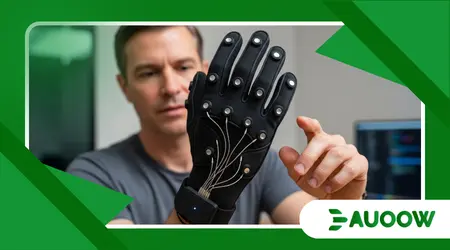
The reason Most Assistive Hardware Never Makes It Past the Pilot Phase is often found in a desk drawer, tucked away between old charging cables and forgotten gadgets.
I recently met David, a software engineer who experienced a significant shift in his physical dexterity following a neurological illness.
He showed me a sleek, 3D-printed glove equipped with haptic sensors designed to help him navigate digital interfaces.
It was a sophisticated piece of engineering, the result of a high-profile university pilot program he participated in two years ago.
Today, that glove sits idle. The startup could not secure Series A funding, the proprietary software lacks updates for current operating systems, and David has returned to using a mouth-stick a solution decades old that remains functional because of its simplicity.
- The Funding Gap: Why venture capital often overlooks specialized disability technology.
- The Reimbursement Barrier: The disconnect between innovative prototypes and prescribed medical devices.
- The Impact of Abandonment: The emotional and practical cost of losing access to independence-building tools.
- Infrastructure for Maintenance: How a lack of repair networks stalls long-term innovation.
- Policy and Implementation: Why legislative progress does not always result in accessible products.
Why does sophisticated engineering struggle to reach the market?
On the surface, we are in an era of rapid prototyping. A dedicated team can develop a bone-conduction interface or an AI-powered exoskeleton in a remarkably short timeframe.
Yet, Most Assistive Hardware Never Makes It Past the Pilot Phase because the transition from a “proof of concept” to sustainable mass production is a frequent point of failure.
In the broader tech sector, investors prioritize “scalability” products intended for millions with minimal overhead.
Assistive technology is often highly personalized, serving specific communities with unique requirements.
What rarely enters this debate is the “uniqueness tax.”
When a developer creates a tool for a specific visual impairment, the potential market is frequently viewed as a limitation rather than a specialized opportunity.
There is a structural detail that is often ignored: the cost of clinical trials and regulatory approval remains high regardless of whether a device serves 5,000 people or 5,000,000.
Without the promise of massive financial returns, private capital often retreats just as the pilot phase concludes, leaving users with a prototype that lacks a future.
++ Why accessible travel design is still rare in tourism today
How do traditional insurance policies impact new ideas?
A detail that usually remains hidden from the consumer is the rigid architecture of the “Coding and Reimbursement” system.
In many regions, for a person to access life-changing hardware, the device must be covered by insurance or a national health service.
However, these systems can be slow to adapt to innovation. They rely on “codes” pre-defined categories of what constitutes a medical device.
If new assistive hardware does not fit into a category established years ago, it effectively remains inaccessible for the people who need it most.
The analysis suggests that many startups realize too late that their target audience may not be able to afford high out-of-pocket costs.
If insurance providers do not “code” the device, the sales volume remains stagnant. This is a primary reason why Most Assistive Hardware Never Makes It Past the Pilot Phase.
We see a recurring cycle where a device receives design awards and positive press coverage, only to disappear because administrative systems do not recognize its clinical value over cheaper, dated alternatives.
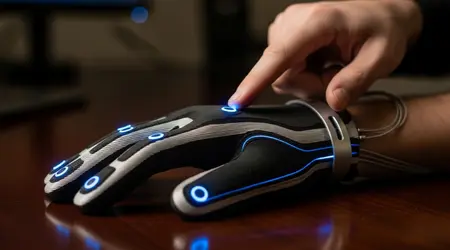
What is the human impact of “pilot phase” abandonment?
Consider Maya, a student whose learning disability makes traditional reading difficult. She is provided a pilot version of an “intelligent lens” that translates text into spatial audio in real-time.
For six months, her academic engagement increases significantly. She experiences a sense of agency that was previously out of reach.
Then, the pilot concludes. The research grant ends. The device is reclaimed, or it requires a repair that is no longer available.
This scenario represents more than a business failure; it is a breakdown in the social contract of innovation.
Providing a glimpse of autonomy and then removing it when financial projections fluctuate is a heavy burden for the user.
When we observe with more attention, the pattern repeats: the experience of disability is used as a compelling narrative for a pitch deck, but the long-term support required to keep that hardware functional is frequently treated as a secondary concern.
Also read: Toothbrush Tech for Disabled Users: The Rise of Y-Brush and Alternatives
Why is “repairability” a critical link in assistive tech?
There is a vast difference between a consumer gadget and a piece of assistive hardware. If a smartwatch fails, it is a minor inconvenience.
If a speech-generating device or a smart-orthotic fails, a person’s ability to communicate or move is compromised.
Most Assistive Hardware Never Makes It Past the Pilot Phase because creators often focus on the invention rather than the maintenance network.
A pilot program usually has a dedicated engineer to manage the prototype, but the real world requires a more robust infrastructure.
In this context, the “right to repair” is a vital issue of equity. Many high-tech prototypes are built with proprietary parts that cannot be serviced by local technicians.
When a startup ceases operations, the hardware often becomes unusable.
We are left with a landscape of sophisticated but non-functional technology because the infrastructure of maintenance was not prioritized alongside the initial invention.
Read more: Cleaning Made Easy: Accessible Vacuum and Robot Solutions
How can we bridge the gap between innovation and reality?
The most honest analysis suggests that we should move toward rewarding durability over “newness.”
We need “Agnostic Hardware” tools built on open-source platforms that can be maintained by community-led initiatives rather than depending on a single manufacturer.
What has changed with the shift toward Open Standards?
In recent years, some regions have begun prioritizing “Open Standards” in public procurement for assistive technology to ensure long-term viability.
| Feature | The Closed “Silo” Model | The Open Standard Model |
| Software | Proprietary; risks obsolescence. | Open-source; community-maintained. |
| Hardware | Custom, non-standard components. | Modular; 3D-printable or off-the-shelf. |
| Funding | Dependent on traditional venture capital. | Supported by social impact bonds. |
| Repair | Manufacturer-dependent. | Local repair hubs and open documentation. |
Is the “medicalization” of hardware a barrier?
There is reason to question why all assistive technology is treated as a medical intervention rather than a tool for daily living.
When hardware is labeled “medical,” costs often rise due to liability and specialized manufacturing requirements.
However, many tools such as smart-home controllers or basic haptic devices could function effectively as general consumer electronics.
The pattern is clear: Most Assistive Hardware Never Makes It Past the Pilot Phase when it becomes trapped in the high-cost, low-speed world of medical regulation.
By lowering barriers for tools that assist with daily accessibility, we could allow for a more sustainable industry where products are judged by their utility to the user rather than their compliance with dated insurance manuals.
Why is user-led design still the exception?
The principle of “nothing about us without us” is fundamental to the disability community.
Yet, many pilot programs are led by engineers who may not have lived experience with the challenges they are attempting to address.
They might build a complex exoskeleton when a user requires a more reliable, lightweight wheelchair. These projects often struggle because they are solutions seeking a problem.
When we observe with more attention, the pattern repeats: the most successful, long-lasting assistive tools are often those designed by the people who use them every day.
These inventors are not looking for a “disruptive exit” from the market; they are looking for reliable ways to navigate their world, maintain their careers, and connect with their families.
What is the future for these prototypes?
Thousands of promising designs reside in university archives, representing significant research and human ingenuity.
To ensure that Most Assistive Hardware Never Makes It Past the Pilot Phase does not remain the norm, we should consider assistive technology as a form of public infrastructure.
Just as we maintain roads and bridges, we should support the physical and digital pathways that allow everyone to participate in society.
This requires a shift in how we value inclusion. It is not a niche market; it is the foundation of universal design.
Most people will require some form of assistive hardware at some point in their lives.
When we build a sustainable, repairable, and funded ecosystem for these tools, we are building the infrastructure for our future selves.
Building a Legacy of Utility
The history of innovation is filled with promising starts that did not lead to long-term use.
If we want to move past the reality where Most Assistive Hardware Never Makes It Past the Pilot Phase, we must establish a new approach between designers, funders, and users.
We should value the fundamental aspects maintenance, documentation, and accessible insurance coding as much as the initial invention.
True inclusion is found not in the pilot program, but in the years of reliable service that follow.
FAQ: Understanding the Tech Gap
1. Why can’t I buy the cool assistive tech I see in viral videos?
Most of those videos are “concept pieces” or early-stage pilots.
The companies often lack the manufacturing partners or the insurance “codes” required to actually put the product on the market at a price point that makes sense.
2. Is 3D printing helping to solve this problem?
Yes, but with caveats. While it allows for cheap prototypes, “medical-grade” 3D printing for long-term use is still expensive and requires specialized materials that are safe for prolonged skin contact or internal use.
3. Does the government provide grants for these companies?
Many governments provide “Seed” grants for research, but there is very little “Scale-up” funding.
This creates the “Valley of Death” where a company has a working product but no money to build a factory or a distribution network.
4. How can I support better assistive tech?
Support “Right to Repair” legislation and look for companies that use “Universal Design” principles.
The more we normalize accessibility in everyday consumer tech, the less “specialized” and expensive the hardware becomes.
5. What is “abandonware” in the context of disability?
It refers to hardware that still works but whose software is no longer supported.
For a disabled user, this can mean losing the ability to control their home or communicate simply because a company went bankrupt or stopped updating an app.
