
Why Traditional Startup Accelerators Still Exclude Disabled Founders
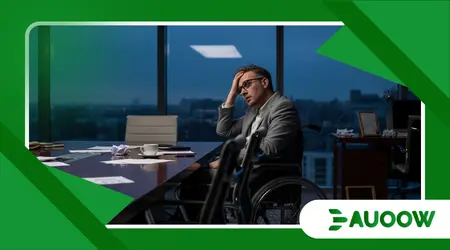
The friction within Traditional Startup Accelerators becomes palpable the moment a founder with a spinal cord injury tries to navigate a “demo day” stage that lacks a ramp, or a neurodivergent CEO realizes the mandatory 18-hour-a-day “hustle culture” is incompatible with their biological needs.
I recently spoke with Julian, an engineer who developed a haptic interface for blind navigators.
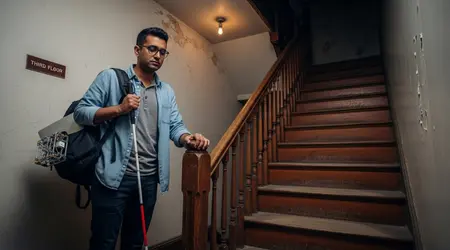
He had been accepted into a prestigious Silicon Valley program, only to find the “hacker house” accommodation was on the third floor of a walk-up building.
The organizers were apologetic, but their solution offering to carry him up the stairs revealed a misunderstanding of dignity.
Julian didn’t need a favor; he needed an environment designed with the assumption that he belonged there.
This isn’t just an isolated failure of architecture. It is a systemic exclusion that treats disability as a logistical “edge case” rather than a demographic reality.
The Invisible Barriers to Venture Capital
- The “Hustle” Myth: How rigid, high-intensity schedules filter out founders with chronic health needs or disabilities.
- Physical vs. Digital Inaccessibility: The gap between inclusive software and exclusive networking events.
- The Bias of “Body Language”: How traditional pitching metrics disadvantage those with non-typical speech or movement.
- Structural Capital Gaps: The reality behind why disabled founders receive less than 1% of venture funding.
Why does the “move fast and break things” mentality fail founders?
The tech industry prides itself on being a meritocracy, but Traditional Startup Accelerators often operate on a narrow definition of merit that values physical stamina over strategic depth.
The three-month “sprint” model characterized by late-night networking and relentless travel is a structural barrier.
These schedules are often performative, designed to signal “commitment” to investors, but they inadvertently screen out anyone whose life requires a predictable routine, medical management, or sensory regulation.
A detail often ignored is the assumption that a founder has no “maintenance” time. For a founder with a disability, the time spent managing accessibility or personal care is a non-negotiable part of the day.
When an accelerator treats every minute not spent on a laptop as “wasted,” it implies that founders with disabilities are less dedicated.
In reality, navigating a world not built for you requires a level of problem-solving and resilience that is the very definition of entrepreneurial spirit.
++ Gig Work in 2026: Independence or Policy Failure?
How has the legacy of “Normalcy” shaped modern investment?
The venture capital model was largely refined in an era when social safety nets and disability rights were an afterthought.
The Americans with Disabilities Act (ADA) changed the law in 1990, but it didn’t automatically shift the subconscious “ideal founder” profile held by many investors.
The pattern persists: the ideal candidate is often seen as a young, able-bodied person with no family or health obligations someone who can “exhaust” themselves for the sake of the company.
This outdated archetype impacts how Traditional Startup Accelerators evaluate risk.
Investors often mistake disability for a lack of scalability, fearing that a founder’s health might become a “liability.” This is a significant analytical failure.
A founder who has spent their life hacking their way through an inaccessible world knows how to pivot and optimize limited resources.
These are the exact traits of a successful CEO, yet the old guard continues to favor the “safe” appearance of traditional vigor.
Why is “Demo Day” often a site of systemic exclusion?
Consider a qualified founder who masters their market but whose pitch is hindered by sensory biases. Imagine a founder who uses an AAC (Augmentative and Alternative Communication) device.
In a traditional pitch competition, where speed and “charisma” are measured by vocal inflection and rapid-fire responses, that founder is at an immediate disadvantage.
The clock is ticking, and the judging criteria rarely account for the time it takes to input a response.
We have come to value the “aesthetics” of entrepreneurship as much as the viability of the business.
If a stage isn’t prepared for a wheelchair user, or if the strobe lights of a networking event trigger sensory distress, a message of exclusion is sent before the pitch even begins.
Traditional Startup Accelerators are not just failing to be inclusive; they are missing their fiduciary obligation to find the best companies by filtering talent based on physical conformity.
What actually changed after the push for “Diversity, Equity, and Inclusion”?
| Traditional Accelerator Feature | Stated Purpose | Impact on Disabled Founders |
| High-Intensity Sprints | Measure founder resilience. | Excludes those with chronic illness or fatigue. |
| Hacker House Living | Foster collaboration. | Often involves inaccessible housing. |
| Unstructured Networking | Build industry connections. | Sensory-heavy environments exclude many. |
| Speed Pitching | Test clarity of thought. | Disadvantages those with speech or processing differences. |
Most DEI initiatives in accelerators have focused on gender and race, often leaving disability as a secondary thought.
People with disabilities represent a significant portion of the global population.
By overlooking them, Traditional Startup Accelerators are ignoring a massive market and pool of talent. This isn’t just about social justice; it’s about basic economic competence.
Why is the “Accommodation” model insufficient?
When a founder asks for an accommodation, they are often met with a “we’ll figure it out” attitude.
The problem with this approach is that it places the emotional and administrative labor on the disabled person.
They essentially become an unpaid accessibility consultant for the program mentoring them.
True inclusion isn’t about adding a ramp as an afterthought; it’s about “Inclusive Design” building the program so that accessibility and flexibility are part of the original blueprint.
The power dynamic here is delicate. A founder in an accelerator is in a vulnerable position. Asking for accommodations can feel like a “risk” to their reputation.
Will they be seen as “difficult” or “expensive” to support?
In the high-stakes world of venture capital, many founders choose to hide their disabilities or push through pain, leading to burnout that could have been avoided with a more flexible structure.
Also read: Digital Freelancing: A Game-Changer for Disabled Professionals?
How can accelerators move toward a truly inclusive model?
Real change begins when accelerators stop seeing accessibility as a cost and start seeing it as a motor of innovation.
Promising examples are emerging, such as accelerators focused on “Accessibility Tech” or virtual programs that allow founders to work in their own controlled environments.
However, the goal shouldn’t be segregation into “niche” programs, but the reform of mainstream spaces.
Traditional Startup Accelerators should adopt “Universal Design for Learning and Work.”
This means offering multiple ways to participate: asynchronous pitches, recorded workshops with high-quality captions, and networking events that don’t depend on loud, crowded spaces.
When a program is made accessible for a blind or neurodivergent founder, it often becomes more efficient for everyone, including parents or those in different time zones.
Read more: Robotics and Automation: Threat or Opportunity for Disabled Workers?
Is the “Remote” revolution a permanent solution?
The shift to remote work during the early 2020s proved that the “presence equals productivity” myth was just that a myth.
However, as many Traditional Startup Accelerators push for a return to “in-person only” cohorts, those walls are going back up.
There is a sense of nostalgia for a “garage culture” that ignores who was excluded from that garage in the first place.
The future is likely hybrid, but that hybridity must be intentional. If in-person sessions are the only place where “real business” happens, remote founders remain marginalized.
We need a model where virtual participation carries the same weight and prestige as physical presence. Only then can we democratize access to capital for founders who cannot travel easily or who live outside major tech hubs.
Beyond the Ramp: A Vision for 2026
The evolution of the startup ecosystem depends on its ability to embrace the full spectrum of human experience.
We are at a point where old models of “the grind” are being challenged by a demand for sustainability and equity.
Inclusion is not a charitable act; it is a strategic imperative.
When Traditional Startup Accelerators remove the barriers that keep disabled founders out, they unlock a reservoir of innovation that has been waiting at the door.
We must move beyond the ramp toward a philosophy of belonging.
The next major breakthrough might be held by someone who requires a different sensory environment or uses non-traditional tools to communicate.
It is time for the gatekeepers of capital to realize that the person they are excluding is exactly the person the market needs.
Frequently Asked Questions (FAQ)
Why are disabled founders sometimes perceived as “higher risk” by investors?
This is often due to unconscious bias.
Some investors assume health issues will impede growth, overlooking that founders with disabilities frequently possess high retention rates and advanced problem-solving skills developed by navigating an inaccessible world.
Are there laws requiring accelerators to be accessible?
In many regions, such as the US (ADA) and the UK (Equality Act), entities offering public-facing services or educational programs are required to provide reasonable accommodations.
However, enforcement within the private venture capital sector remains inconsistent.
What does “Assistive Technology” look like for a founder?
It ranges from screen readers and AI-driven speech-to-text tools to organizational software that helps neurodivergent founders manage workflow and focus.
How can an accelerator begin to improve inclusion today?
A practical first step is an accessibility audit of both physical spaces and digital curricula. Engaging disabled consultants to lead this process ensures that changes are functional and meaningful rather than symbolic.
Do disabled founders only work on “Disability Tech”?
No. Founders with disabilities are building fintech, edtech, climate solutions, and consumer goods. Their lived experience provides a unique lens for solving problems across every sector.
