
AI Hiring Tools in 2026: Are Disabled Candidates Filtered Out by Design?
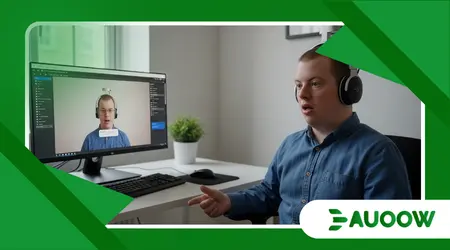
The widespread adoption of AI Hiring Tools in 2026 has transformed the resume pile into a data stream, but for David, a software engineer with cerebral palsy, it felt like hitting a digital glass wall.
Sitting in his home office in Manchester, David watched the “Interview Simulation” software track his eye movements and facial expressions.
Because of his condition, David’s speech has a distinct rhythm and his facial muscles don’t always align with the “standard” expressions of enthusiasm or confidence that the software was trained to recognize.
Within four minutes, the screen blinked: “Application Unsuccessful.” No human had seen his code, which was flawless; no recruiter had heard his ideas, which were brilliant.
The machine had simply decided his “affect” didn’t match the winning profile. This scene is playing out across the globe.
As companies race to automate efficiency, we are witnessing a quiet crisis in the labor market.
The tools designed to remove human bias are, in many cases, codifying a new, more impenetrable form of exclusion.
Summary of the 2026 AI Recruitment Landscape
- The Scale: Over 85% of Fortune 500 companies now use AI-driven video analysis and gamified testing.
- The Barrier: Algorithms often equate “standard” neurological and physical behavior with “productivity.”
- The Regulation: The EU AI Act and new NYC transparency laws are forcing audits, but enforcement often lags behind technical innovation.
- The Human Cost: Qualified candidates are being “ghost-screened” out before ever reaching a human decision-maker.
Why does “optimization” lead to exclusion?
When we look at AI Hiring Tools in 2026, we see a pursuit of the “Ideal Candidate” that is mathematically narrow.
Efficiency has become the primary metric of modern HR departments. To process 10,000 applications for a single role, algorithms are trained on historical data the traits of people who were successful in the past.
What rarely enters this debate is that “success” in the past was often built on a foundation of privilege and physical uniformity.
If the data used to train the machine comes from a workforce that was never accessible to begin with, the AI simply learns to replicate that exclusion.
It looks for “assertive” speech patterns, “steady” eye contact, and “seamless” career paths.
For someone with an intermittent chronic illness or a speech impediment, these metrics aren’t just high hurdles; they are rigged sensors.
There is a fundamental disconnect between a standardized data set and the reality of human diversity.
++ Productivity Metrics vs Accessibility: Who Defines ‘Performance’ at Work?
Are we measuring skills or conformity?
There is a structural detail that often goes unnoticed: the “gamification” of hiring. Many companies now use neuro-games to measure cognitive flexibility or risk appetite.
Imagine a candidate with ADHD or someone on the autism spectrum.
Their brain may process the game’s stimuli in a way that is highly innovative but falls outside the “bell curve” the AI recognizes as a “good fit.” The machine doesn’t see a creative problem-solver; it sees a data outlier.
In many scenarios, we have outsourced our judgment to tools that prioritize predictability over potential.
When we observe with more attention, the pattern repeats: the more we try to quantify “culture fit,” the more we accidentally define it as “people who look and act exactly like the current management.”
This isn’t optimization; it’s digital cloning that stifles innovation by removing different ways of thinking and being.
How do past labor laws connect to today’s digital barriers?
It is tempting to treat the issues with AI Hiring Tools in 2026 as a brand-new phenomenon, but the roots are old.
Decades ago, the fight for disability rights was about physical ramps and Braille menus.
Legislations like the Americans with Disabilities Act (ADA) or the UK’s Equality Act were designed to stop employers from looking at a disability and seeing a liability. Today, the “ramp” is digital, and it is frequently broken.
Decisions regarding “essential job functions” are being misinterpreted by algorithms.
If an AI decides that “high-speed typing” is a proxy for “intelligence,” it effectively disqualifies brilliant thinkers with motor impairments.
We haven’t moved past the biases of the 1970s; we have just laundered them through a “neutral” algorithm.
The technological veneer makes the discrimination harder to point out, but the result remains the same: a talent pool that is artificially limited.
Also read: Wearables for Workplace Accessibility: Innovation That Matters
What actually changed after the 2025 AI Audits?
| Feature | Pre-Audit AI Tools (2022-2024) | Post-Audit AI Hiring Tools in 2026 |
| Transparency | Black-box algorithms; no explanation given. | Mandatory “Reason for Rejection” summaries. |
| Bias Testing | Focused primarily on race and gender. | Inclusion of disability-specific bias testing. |
| Candidate Rights | No right to request a human review. | Right to “Alternative Assessment” for disabled users. |
| Data Privacy | Biometric data stored indefinitely. | Strict 30-day deletion for facial/voice data. |
Can an algorithm learn to be empathetic?
Empathy is not a programmable trait. There are good reasons to question the industry’s rush toward “Emotion AI.”
These systems claim to detect a candidate’s “passion” or “honesty” by analyzing micro-expressions.
But for a person with Parkinson’s or someone who has had a stroke, these micro-expressions are not mirrors of their soul they are biological realities.
If a machine is told that “enthusiasm” looks like a wide smile and raised eyebrows, it will systematically fail candidates with facial paralysis or those from cultures where such expressions are discouraged.
We are essentially automating a very specific, Western, non-disabled definition of “personality.” It is a rigid mold that ignores the vast spectrum of human expression.
Why are “Alternative Assessments” failing in practice?
Under the AI Hiring Tools in 2026 framework, most platforms are legally required to offer an “alternative” for those with disabilities.
Imagine a qualified worker seeking a role in finance. He sees the “AI Video Interview” requirement and clicks the “Request Accommodation” button. In theory, he should be diverted to a human recruiter.
However, there is a “stigma tax” at play here. When a candidate asks for an alternative, they are immediately flagged as “different” before the interview even begins.
In many corporate environments, “different” is still coded as “difficult.”
As long as the AI is the “default” and the human is the “exception,” disabled candidates will always face a psychological and procedural disadvantage. True inclusion requires a system where multiple pathways are valued equally.
Read more: Inclusive Incubators: How Startup Hubs Are Supporting Disabled Founders
Is the “Inclusive AI” movement just marketing?
Tech developers often talk about “inclusive design.” Usually, they mean adding screen-reader compatibility or high-contrast modes.
These are necessary, but accessibility is not just about whether someone can use the software; it is about whether the software understands that person’s value.
The pattern repeats: we build the center and then try to “fix” the edges. What we need is a fundamental redesign of what “merit” looks like.
If a hiring tool cannot value a candidate who processes information differently or speaks with a different cadence, then that tool isn’t “optimizing” a workforce it is shrinking the talent pool.
Inclusion is not a feature you add at the end; it must be the foundation.
Toward a Human-Centered Digital Future
The AI Hiring Tools in 2026 are here to stay, but they are not unchangeable. Efficiency cannot become a synonym for exclusion.
In some tech circles, there is a glimmer of hope: “Human-in-the-loop” systems where the AI only flags strengths, leaving the rejections to be double-checked by a person trained in disability awareness.
Inclusive education and inclusive hiring are two sides of the same coin.
If we teach that there is only one “right” way to think, speak, or move, we shouldn’t be surprised when we build machines that believe the same thing.
The real innovation of the next decade won’t be a smarter algorithm; it will be the wisdom to know when to turn the algorithm off and simply listen to the person on the other side of the screen.
Shattering the silicon ceiling is a prerequisite for a global economy that truly values human potential.
Frequently Asked Questions
Can I refuse an AI-led interview if I have a disability?
Yes. In most jurisdictions, including the US (under ADA) and the EU, you have the right to request a “reasonable accommodation.”
This usually means a human-led interview or a different format of assessment that bypasses the algorithm.
How do I know if an AI filtered me out because of my disability?
In 2026, many regions require companies to provide a “Notice of Automated Decision.”
If you feel the rejection was based on a biometric trait related to your disability, you can request a formal review and an explanation of the criteria used.
Are companies legally allowed to use facial recognition in hiring?
This is becoming highly regulated. Some jurisdictions have restricted its use, while others require explicit, written consent. Always check the “Privacy Policy” and the “Terms of Use” before starting an AI-led assessment.
What is a “Bias Audit” in 2026?
It is an independent review of a company’s hiring software to ensure it doesn’t disproportionately reject candidates based on protected traits, including disability.
Many companies now publish these results to demonstrate their commitment to fair hiring practices.
