
Why Disabled Workers Are Overrepresented in Precarious Work
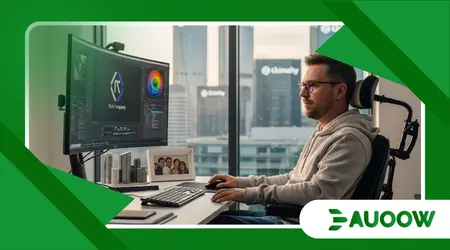
The fact that Disabled Workers Are Overrepresented in Precarious Work is a reality often hidden behind the sleek glass of modern corporate lobbies and the optimistic language of diversity quotas.
Consider Elias, a highly skilled graphic designer with a mobility impairment living in a city with a growing tech sector.
After dozens of interviews where the conversation drifted toward his wheelchair rather than his portfolio, Elias eventually stopped applying for full-time roles.
Today, he manages a string of short-term, gig-economy contracts that offer no health benefits, no job security, and no clear path to seniority.
His story is not an isolated glitch in the labor market; it is the manifestation of a systemic friction that often filters people with disabilities out of standard employment relationships.
While corporations celebrate inclusion initiatives, the data suggests a bifurcated workforce where one group enjoys the stability of salaries while another is relegated to the fringes of the economy.
Analytical Roadmap
- The Structural Gap: Examining why traditional employment models often fail to accommodate diverse physical and cognitive needs.
- The Gig Trap: How the flexibility of precarious work is often a necessity rather than a preference.
- Policy Echoes: Investigating the disconnect between disability rights legislation and day-to-day hiring.
- Invisible Barriers: Identifying the “soft” discrimination that prevents professional advancement.
- Economic Consequences: The long-term impact of underemployment on financial independence.
Why does the formal labor market still exclude qualified disabled talent?
When we analyze the architecture of modern recruitment, we see a system frequently built on the myth of the “universal worker” someone with no complex care needs, no medical appointments, and a body that fits into a standardized workspace.
For decades, the metric of a reliable employee has been physical presence and uninterrupted stamina.
What rarely enters this debate is the fact that many office environments are designed for a narrow definition of productivity.
When a candidate requires a modified schedule or a specific ergonomic setup, some managers perceive this as a disruption to the team’s rhythm rather than a minor logistical adjustment.
This perception gap is a primary reason why Disabled Workers Are Overrepresented in Precarious Work across various sectors.
Instead of redesigning the core of the workplace, many institutions move these individuals toward the outskirts into freelance pools or temporary agencies where the firm has fewer social and legal obligations toward the worker.
++When Automation Replaces Jobs That Were Already Hard to Access
How does precarious work masquerade as “flexibility”?
There is a pervasive narrative that the gig economy is a benefit for those with disabilities because it allows for working from home and flexible hours.
On the surface, this sounds like a victory for accessibility, but a closer look reveals a recurring pattern: the burden of accommodation is shifted entirely onto the individual.
In a traditional office, the employer is responsible for providing the tools for work.
In the precarious model, the worker must often fund their own assistive technology, pay for private insurance, and manage medical leaves without pay.
The analysis more honest about this scenario suggests that “flexibility” can be a polite term for the lack of a safety net.
For many, this isn’t a chosen lifestyle of digital nomadism; it is a frequent fallback when the front door of formal employment remains difficult to access due to cultural bias or rigid HR software.

What structural details are often ignored in the inclusion debate?
One detail frequently overlooked is the “benefit trap” created by certain government policies. In many regions, receiving disability support is tied to having an income below a specific threshold.
If a worker takes a stable, well-paying job, they risk losing healthcare subsidies that are essential for their independent living.
This creates a perverse incentive to stay in low-paying, precarious roles to keep income under the limit.
It is a legislative fossil from an era when policymakers often viewed people with disabilities as either unable to work or not in need of a career path.
When Disabled Workers Are Overrepresented in Precarious Work, we see the result of these conflicting forces.
The worker is caught between a labor market hesitant to commit and a social safety net that may penalize professional growth.
This isn’t a lack of ambition; it is often a calculated survival strategy in a system that hasn’t fully updated its logic.
Also read: Digital Freelancing: A Game-Changer for Disabled Professionals?
How do past legislations influence today’s accessibility failures?
The Americans with Disabilities Act (ADA) and similar international frameworks were revolutionary, focusing largely on physical access like ramps and elevators.
However, these laws have been less effective at dismantling the psychological barriers that govern hiring and promotion.
There is a documented phenomenon where “reasonable accommodation” is viewed by some employers as a potential legal liability rather than a human right.
This can lead to a defensive hiring posture where it feels “safer” to hire a temporary contractor with a disability than to bring them onto the permanent payroll.
This historical baggage means that while the physical office might have a ramp, the corporate ladder remains difficult to climb.
My reading of this scenario is that we have optimized for entry but sometimes failed at integration.
People are allowed into the building, but they aren’t always given a clear path into the future of the company, leaving them in a cycle of short-term roles.
Read more: Robotics and Automation: Threat or Opportunity for Disabled Workers?
Why does algorithmic bias exacerbate precarious employment?
In the current landscape, many hiring processes are mediated by AI tools designed for “efficiency.”
If an algorithm is trained on historical data of “successful” employees most of whom were non-disabled it may naturally filter out anyone whose career path looks different, such as those with gaps for medical recovery or rehabilitation.
These efficiency filters act as silent gatekeepers. When a person is repeatedly rejected by an algorithm, they may gravitate toward platforms where the barrier to entry is lower, such as micro-task websites or delivery apps.
This technological shift contributes to why Disabled Workers Are Overrepresented in Precarious Work.
The “front gate” of the formal economy is increasingly guarded by code that may equate disability with a lack of productivity.
It is a modern form of exclusion that happens in milliseconds, often leaving no paper trail of discrimination.
What actually changed?
| Period | Legislative/Social Focus | Impact on Stability |
| Late 1990s | Focus on physical architectural barriers. | Increased office presence, but often limited to entry-level roles. |
| 2010s | Rise of digital accessibility and quotas. | Higher visibility, yet frequent placement in diversity-specific contracts. |
| Early 2020s | Remote work revolution. | Proven ability to work from home, but also a surge in gig-based freelancing. |
| 2026 (Current) | AI recruitment and gig dominance. | Algorithmic bias in hiring can funnel disabled talent into precarious platforms. |
Bridging the gap between precariousness and stability
Solving this issue requires more than sensitivity training. It requires a fundamental decoupling of essential healthcare from specific employment contracts.
If a person could move between jobs without fearing for their life-sustaining medication or support, they would have more leverage to seek better working conditions.
Furthermore, we need to rethink the “all-or-nothing” approach to disability benefits.
A tapered system that supports people as they climb the income ladder would remove the fear of the “benefit cliff” and encourage long-term career planning.
There are reasons to question the approach of celebrating employment rates without looking at the quality of that employment.
A job that offers no security, no growth, and no dignity is not a true example of inclusion.
The measure of progress is not found in how many people we can “fit” into a rigid system, but in how we redesign that system to value every worker.
Moving beyond the ramp and looking at the contract is essential. When we prioritize stability over mere activity, disability is no longer a precursor to financial fragility. That is the kind of inclusion that truly counts.
FAQ Editorial: Understanding the Disability Employment Gap
Why is it called “precarious work” instead of just “freelancing”?
Precarious work refers to employment that lacks security, predictable hours, and benefits.
While some choose to freelance for high pay, many disabled workers are funneled into these roles because they cannot find stable, permanent positions that accommodate their needs.
Do quotas for hiring disabled people help reduce precariousness?
Quotas can assist with initial hiring, but they often focus on “headcounts.”
Some companies meet these requirements through low-level, temporary positions, which doesn’t solve the underlying problem of job insecurity.
How does remote work impact this situation in 2026?
Remote work is a double-edged sword. It removes physical office barriers, but it also makes it easier for companies to categorize disabled people as “remote contractors” rather than full employees, potentially perpetuating the precarious cycle.
Is it actually more expensive for a company to hire someone with a disability?
Research consistently shows that most accommodations cost very little, and many cost nothing at all. The perceived “expense” is often a myth based on a misunderstanding of an employee’s actual needs.
What can an individual do if they feel stuck in the gig economy?
Seeking out “Disability Confident” employers and working with vocational rehabilitation agencies can provide paths to stable roles.
However, the broader solution lies in policy changes that make permanent employment more accessible.
