
Gig Work in 2026: Independence or Policy Failure?
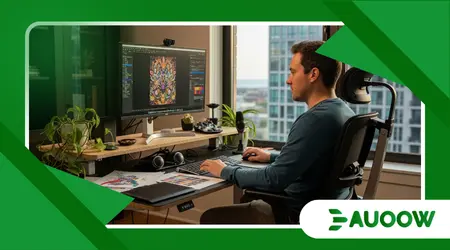
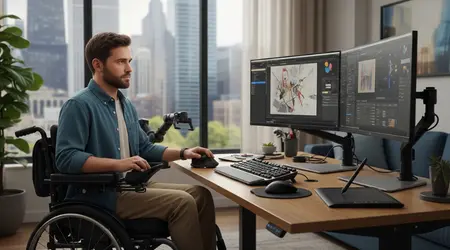
The landscape of Gig Work in 2026 is best understood through Julian, a graphic designer in Chicago living with a progressive neuromuscular condition.
For him, the traditional office was a physical impossibility; the energy required for the commute left nothing for the work itself.
Today, Julian uses decentralized platforms to pick up projects that fit his physical stamina.
However, the “freedom” of the nomad feels thin when his health insurance premiums double and the algorithm lowers his visibility simply because he took a three-day medical rest.
This is the central paradox of our current labor market. For millions of people with disabilities or chronic illnesses, the platform economy offers a bridge to participation that the corporate world refused to build.
Yet, that bridge lacks a safety net. Technology has solved the “where” we work, but it has intensified the question of how we protect the people behind the screen.
The Pulse of the Platform Economy
- The Accessibility Bridge: How flexible scheduling acts as a functional accommodation.
- The Benefit Gap: The struggle for healthcare and retirement in a decentralized market.
- Algorithmic Ableism: Why performance metrics often punish those with fluctuating health.
- Policy at a Crossroads: Comparing the European “Platform Work Directive” with North American shifts.
Is the platform economy a genuine tool for social inclusion?
In 2026, we see a labor force that is diverse but increasingly precarious. Historically, the disability employment gap was blamed on logistics if you couldn’t get to the office, you couldn’t do the job.
The gig model shattered that excuse, proving that roles could be performed asynchronously from a bedroom or a quiet home office.
For many disabled workers, gig work isn’t a “choice” between a stable job and a flexible one; it is often the only door left open.
Traditional employers still frequently view “reasonable accommodations” as a legal hurdle to be minimized.
The platform, in its data-driven neutrality, doesn’t care if you work at 2:00 AM. In that sense, it is an accessible model.
But there is a structural detail that is easily overlooked: that same neutrality focuses only on output. It ignores the human need for recovery and security.
++ Why Disabled Workers Are Overrepresented in Precarious Work
How do past labor laws impact the gig worker today?
The friction we feel today results from trying to fit 21st-century labor into a 20th-century legal framework.
Most social safety nets unemployment insurance, workers’ compensation, paid sick leave were designed for the “factory floor.”
These laws assumed a long-term relationship between one boss and one worker. The law protects the “employee,” but offers little to the “independent contractor.”
Decisions made decades ago to tie health insurance to full-time employment have created a tiered society. In one tier are protected, “standard” workers.
In the other are gig workers, many of whom are people with disabilities paying what feels like a “flexibility tax.” They work on their own terms but lose the right to fall ill without facing financial instability.
What actually changed after the 2024 Platform Work Directive?
The last two years have seen a push to reclassify gig workers to ensure they receive benefits. However, for many disabled professionals, this has been a complex shift.
| Policy Approach | Impact on Disabled Workers | Result in 2026 |
| Strict Reclassification | Provides benefits but may reduce flexibility. | Some lost “independent” status and the ability to set their own hours. |
| Portable Benefits | Benefits follow the worker, not the job. | High success; workers maintain a health plan while mixing multiple gigs. |
| Algorithmic Transparency | Reveals how “rest” affects rankings. | Increased trust, though platforms still prioritize high consistency. |
| Universal Basic Income Trials | Decouples survival from labor output. | Trials show increased productivity when workers aren’t in “survival mode.” |
The shift toward “Portable Benefits” is where the future likely lies.
If health insurance and pension contributions were tied to the individual rather than the employer, the precarity of Gig Work in 2026 would diminish.
This would allow Julian to work when he is able without fearing that a flare-up will result in a total loss of medical coverage.
Why is “Algorithmic Ableism” the new hidden barrier?
Imagine a worker who uses a voice-to-text interface. They are highly skilled, but perhaps not as fast as the “top 1%” of able-bodied workers used as a benchmark.
In the gig economy, if your response time is slightly slower, you might be pushed to the third page of search results. You haven’t been “fired,” but you have been effectively disappeared.
This is the “Black Box” of modern employment. It automates discrimination under the guise of “efficiency.”
Algorithms reward consistency above all else, but disability is often characterized by fluctuations flares, fatigue, and necessary recovery periods.
By punishing the “inconsistent” worker, platforms re-erect the same walls the physical office once held. The barrier has simply moved from the stairs at the front door to the code in the app.
Also read: Why the Post-Remote Work Backlash Is Hitting Disabled Workers First
Is independence worth the cost of precarity?
We are at a point of no return. We cannot force everyone back into the office, nor should we. For many, the autonomy of gig work is a genuine quality-of-life improvement.
They can manage symptoms in private and work when their bodies allow. This level of control is something previous generations could only dream of.
However, independence without security is often just another form of neglect. There is a fine line between a society that allows you to work on your own and one that leaves you to struggle on your own.
Most platforms operate on a “take it or leave it” basis. When a worker has a problem, they don’t talk to a manager; they talk to a chatbot.
For someone with complex needs, this lack of human empathy is a significant failure.
Read more: Boardroom Diversity: How Disability Inclusion Impacts Corporate Decisions
Redesigning the gig economy for true inclusion
The solution isn’t to dismantle the gig economy, but to humanize it. Platforms have the data to be the most inclusive employers in history.
They know when a worker is struggling. Instead of using that data to rank or penalize, they could use it to offer support.
Imagine a platform that adjusts expectations during a known health flare or provides “micro-insurance” for every hour worked.
It is often cheaper to treat workers as disposable units, but in 2026, as the gig force grows, this approach is becoming unsustainable. We are wasting talent by letting it burn out in the “gig churn.”
The Human Bottom Line
The debate over Gig Work in 2026 must move beyond the “independence vs. failure” binary. It is both an incredible independence for the body and a policy failure for financial security.
We have built a world where Julian can work, but we haven’t yet built a world where he can thrive without constant anxiety.
True accessibility is not just the ability to log in; it is the ability to log out without fear. It is the assurance that a life lived with a disability still warrants a pension and a doctor’s visit.
The technology has done its part. Now, it is up to lawmakers and CEOs to decide if they are ready to support a truly inclusive labor market.
Frequently Asked Questions
Is gig work legally considered “employment” in 2026?
It varies by region. In the EU, there is a strong presumption of employment. In the US, it remains a patchwork of state-level battles.
The trend is moving toward a “third category” of worker—one with flexibility and core protections.
Can disabled workers get “reasonable accommodations” on a gig platform?
Most platforms argue they are “marketplaces,” not employers, so they aren’t bound by laws like the ADA.
While workers use their own assistive tech, the real accommodation needed is an algorithmic shift to stop punishing medical breaks.
How do gig workers handle health insurance?
This remains a challenge in many countries. Most rely on subsidized plans or family coverage. “Portable benefits” are being tested, where platforms pay into a central fund that covers the worker regardless of the app they use.
Does gig work help with “gap years” on a resume?
Yes. It allows people to maintain a verifiable work history even when they cannot hold a full-time position. It demonstrates that skills remain current.
