
Why Big Tech Dominates Assistive Innovation—and What That Means for Users
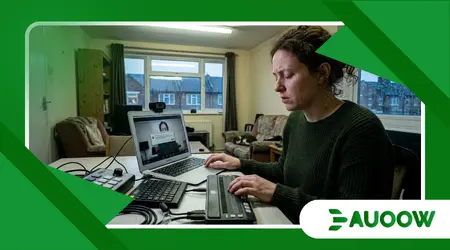
Sitting in a small, fluorescent-lit apartment in South London, Sarah prepares for a video interview.
She is blind, and her setup isn’t just a laptop and a webcam; it is a delicate ecosystem of screen readers, braille displays, and specialized software.
For years, she relied on niche hardware developed by small, dedicated disability-tech firms tools built by people who knew her specific struggles intimately.
But today, those tools are glitching. They haven’t been updated to match the latest operating system patch.
Sarah sighs, closes the bespoke software, and switches to the built-in accessibility features of her MacBook.
It works instantly, it’s sleek, and it’s free. Yet, as she navigates the interface, she feels a familiar pang of unease.
The tools that once belonged to her community now belong to a trillion-dollar corporation, a shift that explains why Big Tech dominates assistive innovation in our current decade.
What lies beneath the surface of this shift?
- The transition from specialized, expensive hardware to “baked-in” digital features.
- The economic gravity that pulls innovation away from startups and toward Silicon Valley.
- The trade-off between immediate convenience and long-term community agency.
- The subtle ways corporate roadmaps now dictate the pace of inclusion.
Why has the specialized market moved toward the giants?
There was a time, not long ago, when assistive technology was a lonely island. If you needed a device to help you speak or a tool to navigate a city, you looked to medical supply companies or small engineering firms.
These devices were often clunky, resembled clinical equipment, and carried price tags comparable to a used car. The barrier to entry was high, but the focus remained singular: the user’s specific need.
The landscape shifted when smartphones became our primary interface with the world. Suddenly, the processing power required for high-level assistive tasks lived in everyone’s pocket.
For a small firm, competing with the R&D budget of a global titan is a losing game.
When a massive tech company integrates high-quality OCR (Optical Recognition) for visually impaired users into its standard OS, the $3,000 standalone device becomes obsolete overnight.
This isn’t just about engineering prowess. It’s about data. Training an AI to recognize a doorway or a flight of stairs requires millions of images. Only a handful of entities possess that kind of data.
We are witnessing a shift where Big Tech dominates assistive innovation largely because they own the “fuel” the massive datasets that modern assistive AI requires to function reliably.
++ Assistive Tech Lock-In: When Accessibility Becomes a Subscription
Is “Built-In” always better for the user?

On the surface, the democratization of these tools is a triumph. A student in a rural school who could never afford a specialized speech-to-text device now has one built into their tablet.
This lowers the “stigma of the gadget,” allowing a person with a disability to use the same sleek hardware as their peers.
However, a structural detail is often overlooked: the loss of the “bespoke” soul. When a small company builds a tool for the deaf-blind community, that tool is their entire world.
If a feature breaks, it is a crisis for both the maker and the user. For a global tech giant, an accessibility feature is one of ten thousand line items. If a software update breaks a screen reader’s compatibility with a banking app, the fix must wait to clear a corporate pipeline that prioritizes the majority.
We have traded specialized, high-touch support for mass-market convenience. There is a quiet danger in becoming a “subset” of a larger consumer base.
When the primary goal of a company is to sell a billion devices, the nuanced needs of specific disability groups can fall through the cracks of a quarterly update.
How does economic power reshape the “Right to Access”?
Historically, disability rights were driven by grassroots activism that forced legislative change think of the ADA in the US or the Equality Act in the UK.
These laws mandated that the physical world adapt to people. In the digital age, however, the “world” is increasingly owned by private entities.
The power dynamic has flipped. Instead of activists demanding changes from the government, we find ourselves hoping for the benevolence of product managers in California or Seattle.
Because Big Tech dominates assistive innovation, these companies have effectively become the unofficial regulators of digital accessibility.
They decide which languages their AI supports and which legacy devices are left behind.
The pattern is clear: tools are often provided as a feature, not a right. This creates a precarious situation.
If a company decides a certain accessibility API (Application Programming Interface) is no longer profitable to maintain, they can sunset it.
For the average user, this is an inconvenience; for a user who relies on that API to work or communicate, it is a loss of autonomy.
Also read: Self-Healing Materials in Medical Devices: A Innovation to Watch
Can small innovators still survive in this ecosystem?
It is tempting to view the current state as a total eclipse of small-scale invention, but the reality is more nuanced.
The role of the startup has shifted from being a provider of hardware to being a provider of niche software layers that sit on top of the giants’ platforms.
- The “Exit Strategy” Mindset: Many engineers now develop assistive apps with the goal of being acquired rather than building a long-term company.
- Platform Dependency: Innovation now happens within the “walled gardens” of existing operating systems.
- The Cost of Compliance: Small firms struggle to keep up with the rapid-fire security and privacy updates required by major platforms.
This creates a “trickle-down” innovation model. The giants provide the foundation voice recognition, haptic feedback, computer vision and small players find the specific “last mile” use cases.
But the foundation is where the power lies. The scale of cloud computing ensures that Big Tech dominates assistive innovation for the foreseeable future.
Read more: Why Are Prosthetics Still So Expensive? Breaking Down the Costs
What actually changed after this shift?
| Feature | The “Niche” Era (Pre-2010) | The “Big Tech” Era (Post-2020) |
| Cost | Extremely high | Often free or included in device cost |
| Design | Medicalized and stigmatizing | Sleek and indistinguishable from consumer tech |
| Updates | Slow hardware replacements | Frequent software patches |
| Data Privacy | High (local processing) | Complex (cloud processing) |
| Support | Personal, direct contact | Algorithmic help centers and forums |
Will the future of accessibility be a monoculture?
There is a legitimate concern that as giants consolidate their hold, we will see a “standardization” of disability.
AI is built on averages. It learns from the most common speech patterns and the most common ways of seeing.
There is a risk that those with “outlier” disabilities rare conditions or unique ways of interacting with the world will be filtered out by algorithms that don’t recognize them.
We are at a crossroads. We have more access than ever before, but less control over the tools of that access.
To prevent a total monoculture, accessibility shouldn’t be a “perk” of a premium smartphone; it should be an interoperable standard that isn’t tied to a single corporate ecosystem.
We must ask: what happens if the next great breakthrough in assistive tech doesn’t fit into a smartphone’s business model?
If it doesn’t help sell more ads or cloud storage, will it ever see the light of day?
The convenience is undeniable, and the progress is visible, but the concentration of power remains a structural barrier we are only just beginning to name.
Frequently Asked Questions
Why are specialized assistive devices so expensive compared to mainstream tech?
Specialized devices are produced in smaller quantities for a specific market, meaning R&D and manufacturing costs are shared by fewer users.
Mainstream companies offset these costs by selling millions of units, allowing them to integrate accessibility features as standard.
Does the domination of large companies help or hurt the disability community?
It is a double-edged sword. It increases affordability and reduces stigma, but it centralizes power. This can lead to the neglect of rare disabilities and makes users dependent on corporate roadmaps that can shift without notice.
Can I still find independent assistive technology today?
Yes, though it is changing. Most independent tech now exists as apps or browser extensions. There is also a vital open-source movement creating free tools that operate independently of corporate ecosystems.
What should I look for when choosing an assistive tool from a large company?
Prioritize interoperability the tool’s ability to work across different apps and devices. It is also worth investigating a company’s history of long-term support to ensure a vital feature won’t be discontinued in the next update cycle.
Is my data safe when using AI-based accessibility features?
This is a significant consideration. Many AI features process voice or imagery in the cloud.
Review privacy settings to see if the company offers “on-device” processing, which keeps your personal data on your hardware rather than sending it to a server.
