
How Public Policy Can Reduce Everyday Accessibility Barriers
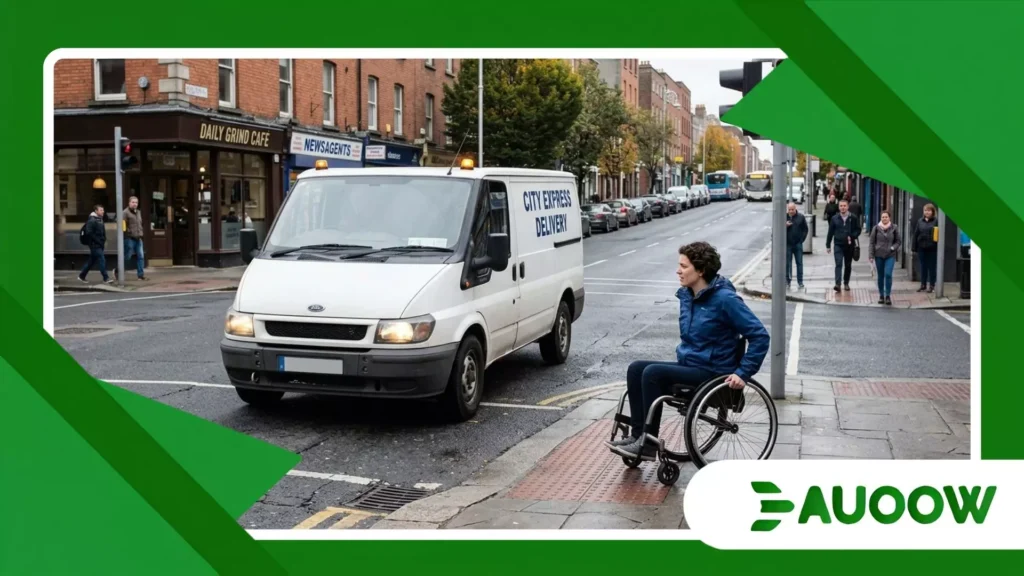
Every Tuesday morning, Elena stands at the corner of 4th and Elm, watching the digital countdown timer on the pedestrian signal tick down from fifteen seconds to zero while she is still only halfway across the street.
She moves with a manual wheelchair, navigating a subtle incline that urban planners call minor, but her shoulders know as an exhausting uphill struggle.
A delivery van occupies half of the curb ramp a brief, two-minute stop for the driver, but a complete blockade for her.
A few yards away, a newly installed tactile paving strip leads directly into the base of a freshly erected digital advertising kiosk.
Public policy can reduce everyday accessibility barriers, yet situations like Elena’s happen constantly in towns and cities everywhere.
None of these obstacles exist because someone set out to exclude Elena or anyone else with a disability.
They persist because the rules governing urban design, civic enforcement, and public infrastructure were written in isolated pieces.
When cities treat access as a simple compliance checklist rather than an interconnected living system, everyday mobility breaks down.
What You Will Find in This Analysis
- The Reality on the Ground: Why small, daily friction points compound into systemic exclusion.
- The Legislative Gap: How past policy choices continue to shape modern physical and digital environments.
- Administrative Silence: The hidden mechanisms that allow simple barriers to persist unchallenged.
- Comparative Reform Policy: A structured evaluation of traditional approaches versus modern systemic governance.
- Systemic Renewal: How policy can evolve from reactive compliance to proactive social architecture.
- Frequently Asked Questions: Direct insights into daily accessibility, civic enforcement, and structural change.
Why Do Small Physical Barriers Persist in Modern Cities?
When we navigate a city, we rarely think about the specific administrative choices that placed a light pole, set the slope of a sidewalk, or determined the penalty for illegal parking.
Yet every square foot of public space reflects choices made by local government.
What often gets left out of urban planning discussions is the clear disconnect between broad civil rights protections and local regulations.
In many regions, high-level laws explicitly guarantee equal access to public spaces.
However, the municipal offices managing street vendors, outdoor dining permits, utility work, and traffic flow operate independently. They rarely coordinate their day-to-day decisions.
A major structural flaw in standard accessibility oversight is its reactive nature. Most legal frameworks rely heavily on individual citizens filing formal complaints after they encounter a barrier.
When local governments wait for private grievances to identify problems, they shift a shared public responsibility directly onto the individuals impacted by those obstacles.
++ Why Accessible Housing Policies Need a Long-Term Vision
How Do Construction Permits Create Accidental Islands?
Consider what happens when a utility company needs to repair underground equipment beneath a busy sidewalk. Municipal departments issue temporary work permits for these projects every week.
These permits usually include detailed traffic management requirements for motorists, specifying clear detour signs, temporary lanes, and dedicated flaggers to keep cars moving safely.
For pedestrians especially disabled pedestriansthe exact same permit often asks for little more than a wooden sign reading “Sidewalk Closed Ahead.” These signs are frequently placed right at the point of the blockade, offering no advance warning or accessible detour ramp.
A person using a motorized scooter might be forced to backtrack several blocks just to find a usable crosswalk. This is rarely a breakdown in engineering capability; it is a failure of regulatory design.
Public policy can reduce everyday accessibility barriers effectively only when local authorities embed detailed accessibility requirements directly into permit conditions, supported by regular site monitoring and real accountability for non-compliant work zones.
How Did Historic Decisions Shape Today’s Access Issues?
To understand why urban spaces present so many physical obstacles today, we have to look back at mid-twentieth-century planning priorities.
During post-war development, municipal leaders focused heavily on automotive speed, vehicle capacity, and distinct separations between residential and commercial areas.
Sidewalks were frequently treated as narrow buffers alongside traffic lanes rather than essential spaces for community movement.
Public buildings were constructed with prominent stone staircases to project prestige, creating long-term physical barriers for people with mobility impairments.
When disability rights advocates secured milestone legislation in the late twentieth century, municipalities attempted to adapt quickly.
Instead of redesigning fundamental infrastructure, the common response was the “retrofit” adding concrete ramps to side entrances, placing mechanical lifts in secondary hallways, or attaching metal handrails to historic steps.
This piecemeal approach fostered a harmful perception that accessibility features were costly, awkward additions rather than basic design standards.
Decades later, early choices regarding utility placement, building codes, and floor heights in public transit continue to limit how accessible our shared environments can be.
Also read: The impact of assistive technology rights on public healthcare
What Happens When Digital Policies Ignore Physical Realities?
The modern streetscape extends far beyond pavement and curb cuts; it is deeply connected to digital systems.
A person taking a public bus today might use a mobile app to check arrival times, rely on an interactive kiosk to purchase a pass, and depend on audio-visual displays inside the vehicle to identify stops.
This interplay between physical structures and software exists across almost every public service. A transit authority might invest in low-floor electric buses to ensure physical access for passengers using mobility devices.
However, if the corresponding ticketing app fails to support screen readers, or if the digital bus stops lack real-time audio announcements, the service remains difficult or impossible to use for blind or visually impaired commuters.
Policy frameworks routinely treat these two areas separately. Physical structures are managed by infrastructure engineers, while software procurement falls to IT departments operating under entirely different guidelines.
True accessibility requires unified policies so that software applications and digital tools meet the same clear usability standards as physical construction.
What Are the Real-World Impacts of Fragmented Laws?
To understand how organizational siloes impact daily life, consider two practical scenarios where administrative policy directly shapes individual independence.
The Case of the Accessible Transit Corridor
A metropolitan transit agency set out to renovate its busiest bus route, aiming to ensure every station met current physical accessibility standards.
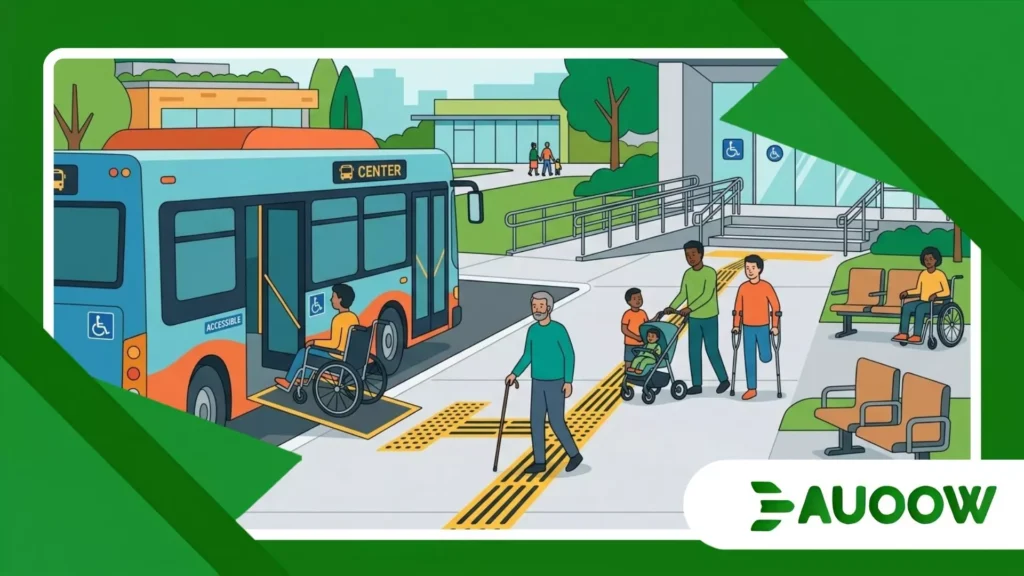
The agency raised platform heights to allow level boarding, added tactile paving along platform edges, and installed high-contrast signs. On paper, the project fulfilled all regulatory requirements.
Within months of completion, however, passengers who use wheelchairs reported that several busy stops were unusable.
An internal review found that the city’s economic development department had granted outdoor dining permits to neighboring restaurants, allowing them to place tables and barrier fences within two feet of the bus boarding area.
The transit authority had no say over sidewalk permits, while the business licensing office had no requirement to verify transit access clearances.
Resolving this issue required months of bureaucratic discussion a delay that a single, shared spatial policy could have prevented instantly.
Read more: The Future of Accessible Public Transportation Policies
The Remote Student Experience
Consider a student with a visual impairment navigating online courses at a public university.
The institution updated its internal guidelines to ensure all educational programs were hosted on a modern digital portal designed for compatibility with assistive technologies.
While the primary platform met standard accessibility guidelines, individual instructors routinely uploaded scanned PDF readings, unformatted book chapters, and video content without captions.
The student spent the initial weeks of each term requesting accessible formats, often falling behind while staff converted materials manually.
Although the university mandate covered the software platform itself, it overlooked the everyday practices of the instructors using it.
Comprehensive policy must address both the technology and the practical workflows surrounding its daily use.
How Does Bureaucratic Silence Maintain Exclusion?
Beyond physical blockades and incompatible software, administrative structures often perpetuate systemic barriers.
Municipal departments frequently lean toward predictable, low-risk routines to prevent short-term budget increases, leading to minor fixes rather than meaningful solutions.
Instead of repaving an entire pedestrian route to fix improper grading and poor drainage, cities frequently patch small surface cracks individually.
These temporary patches create uneven transitions that accumulate over time, turning a simple sidewalk into a series of small hazards.
When city administrators treat accessibility as a series of isolated repair tasks rather than a continuous infrastructure priority, progress remains limited to small, disconnected pockets while the wider public network remains difficult to navigate.
Evaluating Policy Approaches: Traditional vs. Systemic
Comparing traditional compliance measures with integrated systemic policy highlights how different administrative approaches directly affect daily life in the community.
| Municipal Domain | Traditional Compliance Policy | Integrated Systemic Policy | Street-Level Social Impact |
| Sidewalk & Street Maintenance | Repairs triggered primarily by individual citizen complaints or legal claims. | Proactive spatial mapping and continuous automated sidewalk grading audits. | Shifts the burden off disabled citizens and prevents injuries before they occur. |
| Public Transit & Fleet Management | Focuses strictly on buying accessible vehicles (e.g., low-floor buses). | Mandates end-to-end path accessibility, including sidewalk approaches and stops. | Guarantees complete journeys rather than isolated, unusable transit legs. |
| Commercial Permitting & Space | Evaluates building interiors while ignoring temporary outdoor sidewalk uses. | Enforces strict clear-path clearance rules across all sidewalk permits. | Keeps pedestrian paths clear of cafe seating, signboards, and displays. |
| Digital Infrastructure & Services | Assumes web access standards without enforcing document or app compliance. | Integrates universal design into all procurement contracts and software updates. | Provides equal access to public services, schedules, and administrative portals. |
| Construction Zone Oversight | Relies on temporary, often unmonitored signage and manual detours. | Mandates pre-approved accessible pedestrian detours before issuing work permits. | Eliminates dead-end sidewalks and hazardous street crossings near construction sites. |
How Can Cities Shift from Reaction to Prevention?
Creating lasting change requires moving away from reactive compliance toward thoughtful, inclusive urban coordination.
City leaders benefit from recognizing that accessible infrastructure is not a specialized accommodation for a small group, but a core component of healthy civic design.
Features that remove mobility obstacles benefit parents with strollers, delivery workers handling heavy loads, traveler hauling luggage, and older adults navigating changing physical abilities.
First, municipal governments need unified spatial management systems. Urban planning, public works, digital operations, and business licensing offices can share a common spatial database to track physical assets and permits in real time.
Before issuing a permit for a sidewalk cafe or utility project, automated systems can check whether the remaining walkway maintains a safe, continuous path for everyone.
Second, procurement policies can treat universal design as a core technical requirement.
When cities purchase buses, build public web portals, or update civic facilities, vendors should demonstrate full accessibility before contracts are finalized.
Finally, municipalities can reform how regulations are monitored. Relying on residents to report blocked ramps, broken elevators, or incompatible software is inefficient and unfair.
Cities can establish proactive monitoring processes to identify and resolve accessibility barriers before they interfere with daily life.
Rethinking the Architecture of Inclusion
Every curb ramp, accessible digital service, and clear sidewalk path represents a deliberate administrative decision.
When urban policy fails to account for the full range of human movement, sensory experience, and communication needs, the resulting spaces restrict independence, limit civic involvement, and create unnecessary daily challenges for residents.
Achieving meaningful accessibility requires moving past the idea that access is merely a list of minimum legal obligations or secondary retrofits.
It involves treating the design of our shared physical and digital public spaces as a basic responsibility of local governance.
Clear, well-coordinated policies can significantly reduce everyday accessibility barriers, altering how people interact with their local communities.
By dismantling departmental siloes, connecting physical and digital planning, and prioritizing inclusive design from the start, local governments can foster environments where access is a seamless, natural feature of everyday civic life.
Frequently Asked Questions
Why do newly built public spaces still have accessibility barriers?
Newly constructed spaces can still feature physical obstacles when design approvals are handled by isolated departments.
A building project might meet standard architectural requirements, but adjacent street fixtures, lighting poles, or drainage grates may be governed by different municipal codes that do not require coordinated access planning.
How does public policy influence digital accessibility in cities?
Public policy establishes mandatory standards for municipal websites, mobile apps, and public information terminals.
When policies require compliance with recognized digital accessibility guidelines, public services become usable for residents who rely on screen readers, high-contrast settings, or alternative navigation tools.
What is the most effective way for a city to enforce sidewalk clearance?
The most effective approach combines coordinated permit reviews across departments with regular, proactive field monitoring.
Rather than waiting for community complaints, cities can make commercial licenses and construction permits contingent on maintaining a clear, unobstructed pedestrian route, applying clear penalties when conditions are violated.
How do accessibility improvements benefit the broader community?
Design features that improve accessibility such as curb ramps, step-free entrances, automatic doors, and clear visual and audible signals make environments safer and easier to navigate for everyone.
They assist parents pushing strollers, delivery staff moving goods, travelers carrying luggage, and aging residents maintaining their independence.
