
How wearable exoskeletons are moving beyond rehabilitation
The arrival of wearable exoskeletons in community settings signals a quiet shift in how mobility technology intersects with public life.
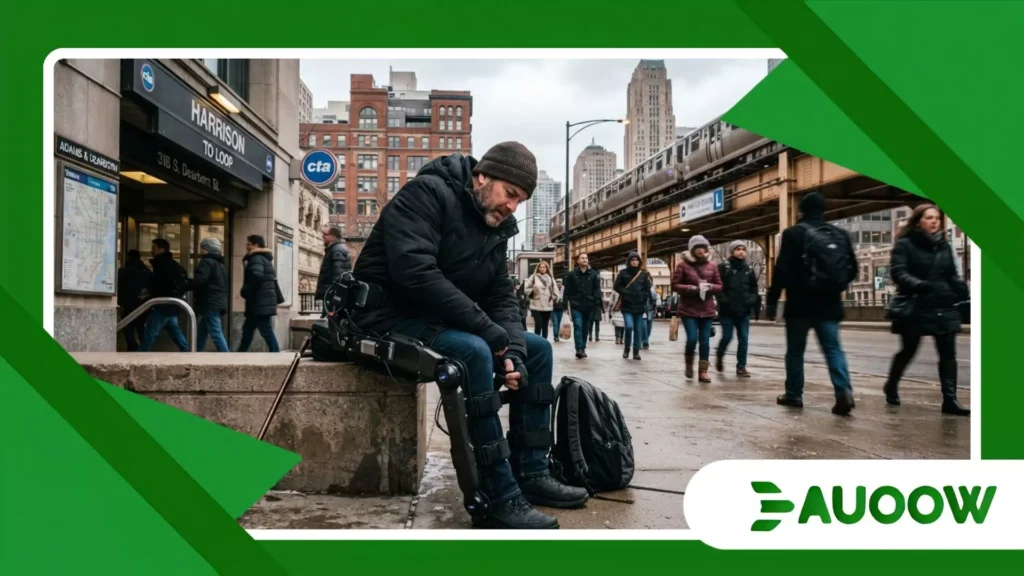
On a chilly afternoon outside a metro terminal in Chicago, Arthur adjusts the leg straps of a lightweight motor-assisted frame before stepping onto a crowded curb.
Arthur, a retired draftsman who sustained a partial spinal cord injury six years ago, spent eighteen months inside clinical gyms using bulky tethered suits under close medical supervision.
Back then, physical therapists stood by with emergency stop buttons for every step.
Today, he navigates a cracked sidewalk on his way to buy coffee, his motorized joints making a low mechanical hum as they compensate for reduced muscle activation.
Passersby notice the titanium bracing, but Arthur is not thinking about clinical metrics; he is simply moving through his neighborhood on his own terms.
In This Article
- From Clinical Rehabilitation to Everyday Autonomy
- Physical Barriers and Urban Realities
- Civil Rights Policy and Historical Context
- Structural Shifts Following Industrial Adoption
- Insurance Barriers and Economic Access
- Community Questions on Mobility and Policy
For decades, robotics in healthcare operated almost exclusively behind hospital doors.
Devices were heavy, expensive, and intended primarily to retrain neural pathways after trauma.
What we see today is a transition toward lighter, untethered, and adaptive hardware designed to assist human movement during everyday tasks.
Why Is Mobility Technology Shifting from Clinics to Sidewalks?
For years, advanced robotics remained confined to rehabilitation centers largely because of how healthcare systems prioritized funding.
Medical models traditionally viewed assistive hardware as short-term therapeutic equipment meant to restore function, rather than long-term infrastructure for independent living.
This dynamic creates a clear operational gap. When policy defines mobility devices purely as clinical treatments, insurance support often ends the moment a person reaches a recovery plateau in physical therapy.
Human independence does not pause at the clinic exit. Once a person returns home, the physical environment presents daily obstacles that standard wheelchairs or traditional braces cannot always solve.
This reflects a broader issue in public infrastructure spending.
Systems frequently allocate resources to reactive care while overlooking practical tools that help people stay engaged in their workplaces, neighborhoods, and social lives.
The integration of wearable exoskeletons brings this divide between clinical eligibility and daily participation into sharp focus.
How Do Infrastructure Failures Complicate Personal Mobility?
To understand why wearable mechanical assistance is gaining traction, we have to look at the physical condition of many modern cities.
Broken pavement, missing curb cuts, broken station elevators, and steep entry steps present ongoing barriers to millions of residents.
Consider a logistics supervisor returning to work after an occupational spinal injury.
The facility may meet basic accessibility standards, but navigating massive warehouse floors in a manual wheelchair can cause severe shoulder strain over time, making long-term employment difficult to maintain.
When assistive robotics enter industrial and public spaces, the dynamic shifts.
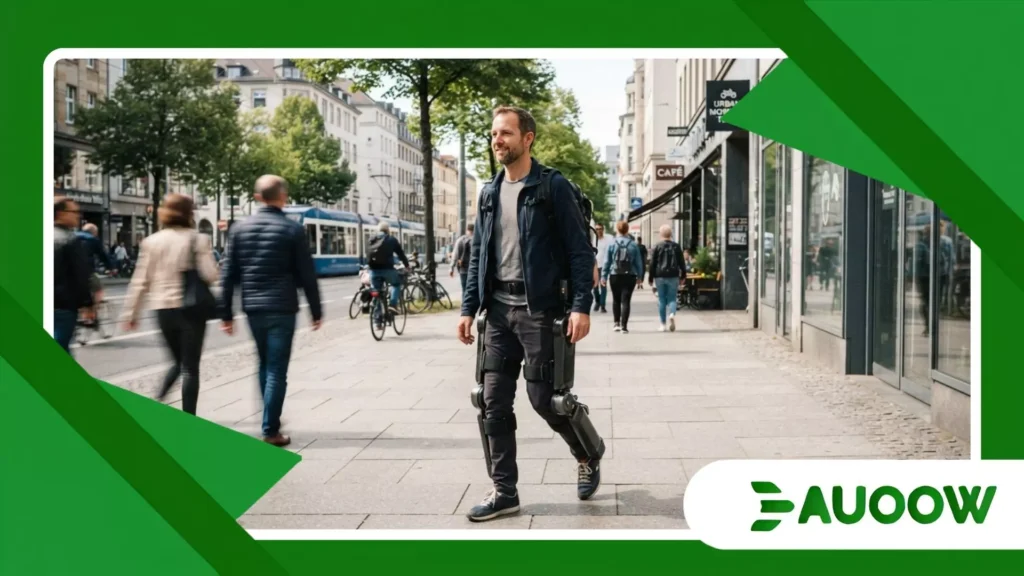
The technology allows individuals to navigate irregular terrain, maintain eye-level communication, and reduce repetitive strain on upper limbs.
The core challenge is no longer just about mechanical reliability.
It is about whether municipal designs and workplace policies are ready to accommodate people using motorized support frames alongside pedestrians and traditional mobility aids.
What Can We Learn from Past Disability Rights Legislation?
The legal foundation of disability rights established that public spaces must adapt to people, rather than forcing individuals to adapt to poor design.
Legislation like the Rehabilitation Act of 1973 and the Americans with Disabilities Act (ADA) of 1990 defined accessible public space as a civil right.
Yet these landmark policies were written when mobility options were largely limited to walking unassisted, using crutches, or using a manual wheelchair.
Early standards focused primarily on static dimensions: ramp slopes, door widths, and elevator button heights.
Policy often moves slower than technological innovation.
A municipality might meet legal standards by placing an accessible ramp two blocks away, even though a person using wearable exoskeletons could safely negotiate a short set of steps if building codes recognized adaptive hardware.
What Actually Changed After Industrial Adoption?
| Domain | Baseline Reality | Post-Integration Experience | Broader Impact |
| Workplace Safety | Frequent chronic back strain in high-impact logistics roles. | Targeted physical strain reduction during lifting and overhead work. | Extended career stability and fewer occupational injury claims. |
| Personal Autonomy | Frequent reliance on assistance for unpaved paths or steep slopes. | Direct navigation across gravel, curbs, and steps. | Expanded choices for community, civic, and outdoor activities. |
| Healthcare Considerations | Higher risk of secondary complications from prolonged sitting. | Regular upright weight-bearing activity that supports bone and circulatory health. | Lower incidence of secondary medical issues over time. |
| Transit Access | Stranded journeys when transit elevators break down. | Alternative options for step navigation during infrastructure outages. | Improved resilience against urban maintenance failures. |
As active assistance moves from research labs into workplaces and community settings, the focus expands from bodily restoration to equal access.
When hardware, public design, and fair policy align, assistive devices cease to be medical novelties and become standard tools for personal autonomy.
Who Gets Excluded When High-Tech Mobility Remains Unsubsidized?
Despite technical advancements, high purchasing costs risk turning advanced mobility technology into an exclusive luxury.
With prices reaching tens of thousands of dollars, these systems remain out of reach for most people without specialized coverage, personal injury settlements, or grant funding.
Public healthcare systems like Medicare, alongside many private insurers, frequently classify motorized assist frames as experimental or non-essential.
Coverage criteria often treat basic manual wheelchairs as sufficient, disregarding the long-term health benefits of upright movement and joint support.
Economic disparities directly influence who gets to be visible in public spaces.
When only higher-income individuals can afford equipment that maintains upright mobility, lower-income disabled citizens are left with aging hardware and greater risks of secondary health issues.
Addressing this gap requires structural policy shifts. Real inclusion cannot depend on personal wealth or crowdsourced fundraising.
It requires funding frameworks that measure success by long-term health, dignity, and civic participation, rather than upfront device costs.
As developers refine sensor precision and battery life, the central issue is no longer whether wearable exoskeletons work, but whether our economic and social systems are willing to make them accessible to everyone who needs them.
Questions Frequently Asked by Communities and Families
Are wearable exoskeletons meant to replace standard wheelchairs completely?
No. Wheeled mobility devices remain the most practical and efficient option for long distances and many everyday routines.
Assistive frames serve as complementary tools, offering upright stance, weight-bearing exercise, and access to locations where steps or rough terrain limit wheels.
How do public health insurance programs currently treat motorized assist suits?
Most public and private insurance frameworks view these devices as therapeutic tools restricted to clinical settings, or classify them as non-essential equipment.
Outside of specialized veterans programs or personal injury settlements, out-of-pocket costs remain a primary hurdle for personal ownership.
What physical requirements are necessary to operate personal mobility robotics?
Requirements vary depending on the device design and the user’s specific mobility profile.
Generally, individuals need sufficient upper-body control, adequate bone density, and functional range of motion in the hips and knees to maintain balance and manage controls safely.
Do these devices require extensive training before home use?
Yes. Users complete structured training programs with physical therapists to practice balance, transfers, fall management, and control settings across different environments before using the hardware independently at home or in public spaces.
