
How cashless payments accessibility impacts elderly and disabled users
Understanding how cashless payments accessibility impacts elderly and disabled users requires us to look beyond the sleek glass of a smartphone and into the hands of those navigating a world that is rapidly retiring its physical currency.
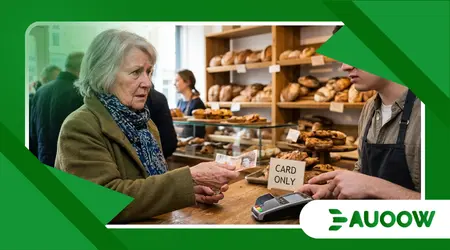
At a small bakery in South London, Margaret stands at the counter. She reaches into her purse for a ten-pound note to pay for a loaf of bread.
The cashier looks at the money with a mix of apology and discomfort. “I’m sorry,” he says, gesturing to a discreet sign. “We’re card only.”
Margaret pauses. She doesn’t use a contactless card; she relies on the tactile certainty of cash to manage her budget.
In that moment, the bakery a place she has visited for twenty years shifts from a community hub into a space that no longer has room for her.
This isn’t an isolated mishap; it is a structural shift. As digital transactions become the default, we are witnessing a quiet revolution in how we exchange value, and a loud silence regarding who we exclude from that exchange.
Perspectives on the Digital Divide
- The Tactile Loss: Why physical currency provides a cognitive safety net.
- The Hardware Hurdle: Design flaws in modern payment terminals.
- Legislative Lag: How public policy struggles to keep pace with “Card Only” mandates.
- Systemic Solutions: Building a truly inclusive financial ecosystem.
Why is the transition to digital payments leaving so many behind?
The push toward a cashless society is often framed as an inevitable march of progress. Efficiency and data tracking are the pillars cited by financial institutions.
However, digital interfaces are inherently more abstract than physical ones. For many, the way cashless payments accessibility impacts elderly citizens is rooted in the loss of sensory feedback.
Cash is a tangible experience. You can feel its weight; you can see a physical balance diminishing.
For individuals navigating early-stage cognitive changes or those who have spent decades mastering a specific way of life, the transition to a “tap and go” world is more than a technological hurdle it impacts their sense of financial agency.
When the ritual of payment is replaced by a vibrating glass screen, the feeling of control over one’s own resources can begin to erode.
We often treat the “digital divide” as a lack of internet access, but it goes deeper. It involves the design of the tools themselves.
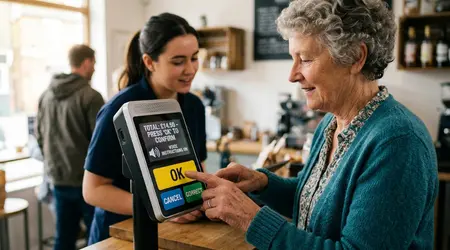
Many point-of-sale (POS) terminals are built for a specific type of user. If you live with tremors, hitting a small “OK” button on a flat touchscreen is an exercise in frustration.
If you have a visual impairment, a smooth glass surface offers no tactile cues to guide fingers to a PIN pad.
++ The problem with touchscreen kiosks accessibility in public spaces
What is the structural detail we usually ignore in fintech?
There is a structural reality often overlooked: the shift toward the privatization of the “right to pay.” For centuries, cash has been a public tool, issued by the state and accessible to most people regardless of their credit score or physical dexterity.
By moving exclusively to cashless systems, we risk outsourcing social inclusion to private corporations.
When a business decides to go cashless, they inadvertently require customers to possess a bank account, a valid ID, a digital device, and the physical ability to use it.
For some in the disabled community, this adds a “tax” on participation.
Consider a wheelchair user who cannot reach a card reader mounted high on a counter, or someone with limited manual dexterity struggling to remove a slim plastic card from a tight wallet.
We often prioritize the speed of a transaction over the dignity of the person making it. The shift is marketed as “frictionless,” but friction is exactly what provides safety for many.
Friction is the moment of pause that allows a person to ensure they are being charged correctly. In the rush for speed, we have removed the handrails.
Is technology inherently biased against the aging population?
A more honest analysis suggests that technology isn’t biased by intent, but by omission. Most developers are young and digitally native.
They often design for their own lived experiences. This is why cashless payments accessibility impacts elderly users so significantly; their daily realities may not have been central to the “user persona” during the design phase.
We see this in the reliance on biometric authentication. Facial recognition and fingerprint scanning are presented as the peak of security.
But what happens to an individual whose fingerprints have changed with age, or someone whose facial symmetry is affected by a neurological condition?
If the backup for these technologies is a complex password entered on a tiny virtual keyboard, the solution becomes a new barrier.
There is also the matter of trust. For many, the “cloud” feels like an invisible, precarious place. After decades of guarding physical wallets, being told that money exists “up there” can be unsettling.
The anxiety of accidentally sending a payment into the digital void is a real psychological barrier that “user-friendly” UI cannot solve without human-centric support.
Read more: Cleaning Made Easy: Accessible Vacuum and Robot Solutions
How do current public policies address these gaps?
In various regions, there are discussions regarding “Access to Cash” legislation. However, most focus on the availability of ATMs rather than the right to use that cash in a shop.
We are currently in a legal gray area where businesses can refuse legal tender, effectively selecting their clientele based on technological capability.
There is a disconnect between disability rights laws and the reality of the digital marketplace. While a building must have a ramp, a digital payment system isn’t always required to have a “digital ramp” for the visually impaired.
If you can enter the store but cannot pay for the goods, the physical entrance is only half the solution.
Some cities, such as Philadelphia and San Francisco, have passed laws requiring brick-and-mortar stores to accept cash.
These aren’t just “pro-cash” laws; they are pro-inclusion laws. They recognize that a significant portion of the population including the unbanked and many elderly and disabled citizens is being systematically distanced from physical society.
Also read: Toothbrush Tech for Disabled Users: The Rise of Y-Brush and Alternatives
What actually changed after the 2020-2022 digital surge?
| Feature | Pre-Digital Surge Era | The Current “Cashless” Reality | Impact on Vulnerable Users |
| Payment Method | Cash as the universal default. | Digital-first; cash often by request. | Increased anxiety; loss of autonomy for those without cards. |
| Terminal Design | Physical buttons with tactile feedback. | Sleek touchscreens with few tactile cues. | Difficult for those with visual impairments or tremors. |
| Bank Presence | Local branches for face-to-face help. | Branch closures; digital-only support. | Loss of a human safety net for complex tasks. |
| Security | Physical theft was the primary concern. | Phishing and digital scams are rampant. | Disproportionate targeting by sophisticated fraud. |
Why must we view accessibility as a continuity, not a novelty?
It is tempting to treat digital accessibility as a new problem. But the struggle for inclusive commerce is ongoing.
Decades ago, the focus was on counter heights or aisle widths. Today, the “aisle” is a digital checkout flow.
The “curb cut effect” teaches us that improvements designed for a specific group often benefit everyone. Ramps for wheelchairs ended up helping parents with strollers and travelers with luggage.
Similarly, making cashless payments accessibility impacts elderly populations a priority will improve the system for all.
A payment terminal with clear voice guidance and high-contrast buttons isn’t just for the blind.
It helps the person paying in the glare of the sun or someone who is simply exhausted. Inclusive design is simply good design, yet it is often treated as an optional add-on.
Can we bridge the gap between innovation and inclusion?
Innovation should serve humanity. If a new technology makes life easier for many but impossible for others, we must question if it is true progress.
The path forward requires a multi-pronged approach. First, hardware mandates are necessary. Every POS terminal should feature an accessible mode whether through tactile overlays, headphone jacks, or haptic feedback.
Second, we must protect the status of cash as a public utility. As long as there are people who cannot use digital tools due to disability or age, cash remains a vital, dignified option.
Imagine a world where a veteran with a visual impairment can enter a shop and hear a discreet voice in their earpiece confirming a transaction.
Or an eighty-year-old who feels confident using a simplified banking interface because it was built with his needs in mind.
This is the world we should be building one where convenience for the majority doesn’t come at the cost of anyone’s autonomy.
FAQ: Navigating the Cashless Transition
Is it legal for a shop to refuse cash?
In many jurisdictions, businesses are allowed to refuse cash if they notify the customer beforehand.
However, legislation in some cities is changing this, mandating that cash be accepted for essential goods and services to ensure broad access.
How can I help a relative who struggles with card payments?
Explore “Simplified” banking options that offer larger print or clearer interfaces.
Some banks allow a “trusted person” to hold a secondary card with specific limits, helping to manage spending while maintaining the individual’s independence.
What assistive features should I look for on a payment terminal?
Many modern terminals have an accessibility mode that can be activated. This might include tactile guides or audio prompts.
If a terminal is touchscreen-only, ask if they have a physical keypad extension or if the business supports mobile wallets, which often have robust accessibility tools built into the phone.
Are there digital wallets specifically designed for people with disabilities?
While most major wallets follow general accessibility guidelines, the most effective approach is often using the native accessibility tools on a smartphone (like VoiceOver or TalkBack) to interact with banking applications.
What should I do if I feel a business is excluding me because of their payment system?
If you encounter a barrier, you can file a complaint based on local accessibility laws. Documenting the incident and contacting a disability advocacy group can help.
Many businesses are unaware of these barriers and are willing to make changes once the issue is brought to their attention.
