
Public Procurement’s Role in Shaping Assistive Tech Markets
Public Procurement’s Role in shaping the market for assistive technology is often hidden beneath layers of bureaucratic paperwork and budget balancing acts.
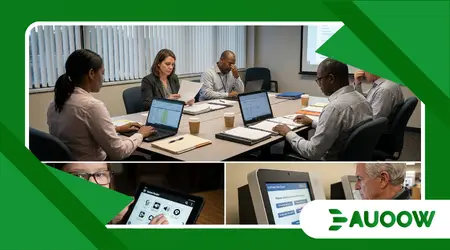
Consider a quiet afternoon in a regional municipal office. A purchasing committee sits around a table, reviewing bids for a standardized software upgrade across all local library kiosks and public school tablets.
To an outside observer, it looks like a routine administrative exercise in cost-cutting.
But for an eight-year-old student with low vision waiting for a compatible screen reader, or an older resident trying to renew a bus pass independently, the technical specifications chosen in that meeting are life-altering.
When a government selects which technologies to validate, finance, and deploy at scale, it does not merely buy products.
It actively decides which assistive tools will thrive in the commercial market and which ones may vanish into obscurity.
Key Editorial Insights
- Market Creation: State purchasing decisions provide the foundational capital needed to transition specialized assistive prototypes into affordable, mass-manufactured realities.
- The Compliance Trap: Strict reliance on rigid legal checklists often prioritizes basic regulatory conformity over genuine, user-centric technological innovation.
- Economic Scale: When public entities mandate universal design standards, production costs drop significantly, making accessibility affordable for the private sector.
Why does a multi-billion dollar industry wait for government approval?
To understand why the commercial market for assistive devices often feels stagnant, fragmented, or prohibitively expensive, one must look at the structural mechanics of supply and demand.
Unlike traditional consumer tech, where individual preferences drive rapid iteration, the assistive tech sector operates under a unique economic constraint: the primary buyers are rarely the end-users.
Historically, specialized tools like refreshable braille displays, advanced motorized wheelchairs, or eye-gaze communication systems have suffered from a small-market penalty.
Because the consumer base is relatively small compared to smartphones or gaming consoles, engineering costs are distributed across fewer units, driving prices to high levels.
Herein lies the transformative power of the state. Public Procurement’s Role functions as an artificial market stabilizer.
When a national health service or a federal school network commits to purchasing thousands of units of a specific communication device, the manufacturing economics shift overnight.
What rarely enters this debate is how this centralized purchasing power creates a predictable revenue runway for developers.
With a guaranteed public contract, an assistive tech startup can secure private investment, scale its production lines, and lower its per-unit cost.
When we observe this phenomenon with more attention, the pattern repeats across decades of industrial history.
Private capital rarely funds deep accessibility research out of pure altruism. It steps in when the state lowers the risk of market entry by acting as the buyer of first resort.
How do past legislative frameworks dictate today’s digital barriers?

The digital infrastructure we navigate today is deeply tethered to procurement decisions made at the turn of the century.
When early accessibility mandates, such as Section 508 of the Rehabilitation Act in the United States or the European Standard EN 301 549, were first written into law, they were hailed as monumental victories.
They established that public funds could not be spent on technology that excluded people with disabilities.
However, an honest analysis suggests that the implementation of these laws created an unintended cultural side effect within public institutions.
Procurement officers, naturally risk-averse and lacking deep technical training in universal design, transformed these living accessibility standards into rigid compliance checklists.
Instead of asking whether a digital portal was intuitive or truly empowering for a disabled employee, the evaluation process became a binary exercise in checking boxes.
++ Why Big Tech Dominates Assistive Innovation—and What That Means for Users
What happens when compliance replaces empathy?
This checkbox mentality has profoundly stifled creative engineering.
When a tech company bids on a public contract, its primary goal is to satisfy the minimum legal definitions set by the purchasing agency to avoid litigation.
If a procurement blueprint explicitly demands compatibility with a specific, decades-old screen reader framework because that is what the government infrastructure currently runs, innovation grinds to a halt.
Newer, more fluid AI-driven navigation tools are locked out of the competition simply because they do not fit the archaic criteria outlined in the bidding documentation.
This is where Public Procurement’s Role can accidentally become a conservative force, anchoring public infrastructure to legacy systems and discouraging developers from experimenting with radical, user-first designs.
“The architectural decisions of the digital state are written in the fine print of its vendor contracts.”
What actually changed after this?
To evaluate how shifted purchasing paradigms alter real-world environments, we can look at the transition from rigid hardware requirements to functional accessibility outcomes over recent administrative cycles.
| Bidding Focus (The Old Way) | Outcome-Based Procurement (The 2026 Paradigm) | Social Impact on the Ground |
| Component Specifications: Demanding specific physical button sizes or rigid port locations on public utility terminals. | Functional Performance: Requiring that any citizen, regardless of fine motor capability, can complete a transaction within three minutes. | Encourages diverse engineering approaches; allows touchscreens, voice-activation, and gesture controls to compete fairly. |
| Isolated Assistive Add-ons: Purchasing standard computers and then buying separate screen-magnification software licenses later. | Native Universal Design: Mandating that all procurement software must have built-in, deeply integrated accessibility features from day one. | Eliminates the ‘disabled tax’ where institutions pay double for accessibility; ensures immediate usability for all employees. |
| Vendor Self-Certification: Relying entirely on a manufacturer’s filled-out Voluntary Product Accessibility Template (VPAT). | Live User Testing: Requiring authentic usability testing with disabled individuals before the public contract is finalized. | Exposes superficial compliance; prevents governments from buying software that is technically compliant but practically unusable. |
How can purchasing choices humanize everyday classrooms?
Imagine a twelve-year-old student named Maya who attends a public school that recently updated its digital learning management system.
Maya is neurodivergent and experiences severe sensory overload when faced with cluttered visual interfaces or chaotic notification layouts.
If the school district’s procurement team evaluated the software solely on cost and standard data privacy metrics, they might have chosen a platform that fulfills basic educational requirements but lacks customizable interface controls.
In that scenario, Maya faces unnecessary barriers, not because she lacks the intellectual capacity to learn, but because the procurement process ignored her cognitive access needs.
Now, consider the alternative scenario. Suppose the state educational authority recognizes Public Procurement’s Role as an instrument of social equity.
In their bidding call, they stipulate that any platform wishing to compete for the multi-million dollar contract must include native features for sensory customization: clean text modes, adjustable contrast profiles, and distraction-free layouts.
Suddenly, every major educational technology firm in the country has an intense financial incentive to build those features into their core product.
Because they want to win the public contract, they spend their own research and development dollars perfecting these inclusive tools.
Once built, these features do not remain exclusive to Maya’s school; they become part of the commercial product software update, benefiting many children worldwide, including those in private schools or home-education settings where procurement laws do not apply.
Also read: AI in Speech Therapy: How Adaptive Systems Boost Progress
Why does the private sector mimic public sector accessibility choices?
There is a structural detail that is often ignored in debates about corporate social responsibility: private corporations are fundamentally mimicking institutions.
When a massive software conglomerate or a hardware manufacturer designs a new product line, they look at the largest buyers on their horizon.
The single largest buyer in almost every developed economy is the collective public sector spanning healthcare systems, civil services, and public universities.
If these public entities collectively declare that they will no longer purchase software that lacks native captioning or hardware that cannot be operated via alternative inputs, the market pivots.
It becomes financially non-viable for a tech company to maintain two separate codebases one accessible version for government clients and one inaccessible version for corporate offices.
Therefore, Public Procurement’s Role serves as a silent tides-shifter. By setting an unyielding baseline of accessibility for public money, the state effectively forces the commercial tech ecosystem to raise its baseline for everyone else.
The private sector inherits these accessibility advancements almost by default, absorbing the benefits of an infrastructure funded and demanded by public institutions.
Read more: Wearable Health Monitors for Chronic Conditions
Are we balancing fiscal responsibility with technological equity?
There are good reasons to question the current pace of change within institutional purchasing departments.
The most honest analysis of modern procurement structures reveals a persistent tension between short-term fiscal accountability and long-term social value.
Procurement officers are legally obligated to protect taxpayer funds, which frequently translates into choosing the lowest bidding vendor that meets the bare minimum technical requirements.
The flaw in this approach is that it treats accessibility as an expensive luxury or an added cost rather than a long-term cost-reduction strategy. When a government buys an inaccessible administrative platform, it creates future expenses.
It will eventually have to pay for specialized technical accommodations, deal with lower productivity among disabled civil servants, or face costly civil rights litigation from frustrated citizens.
When we shift the perspective to look at total societal value, investing public capital in inherently accessible technology is not an act of charity; it is an efficient allocation of public resources that prevents the economic exclusion of a significant portion of the population.
Frequently Asked Questions
How does government purchasing directly lower the price of assistive tech for an individual?
When a government agency buys assistive technology in large volumes for schools, hospitals, or offices, manufacturers can scale up production.
This lowers the cost of making each item. Over time, these savings trickle down to the regular retail market, making the same devices much cheaper for an individual buying them out of pocket.
Why cannot standard market competition fix accessibility barriers on its own?
The regular consumer market relies on high demand to lower prices. Because many assistive tools are needed by smaller, specific groups of people, private tech companies often find it financially risky to invest heavily in developing them.
Without government contracts ensuring a steady demand, companies keep prices high to cover their development costs.
What is the danger of relying purely on accessibility checklists during a public bidding process?
Checklists ensure a product meets basic legal rules, but they do not guarantee it is easy or pleasant for a human being to use.
A website can technically pass an automated accessibility test while still being confusing or slow for a person using a screen reader or alternative keyboard.
Can small tech startups with innovative accessibility ideas compete for large public contracts?
It is often difficult for small startups because traditional government bidding processes favor massive companies with extensive legal teams and long histories.
However, when procurement departments break large contracts into smaller pieces or focus on innovative outcomes rather than rigid corporate credentials, smaller, creative tech companies get a fair chance to compete.
Does outcome-based procurement increase the overall cost for taxpayers?
While designing technology with universal access from the start can sometimes require a higher upfront investment, it saves taxpayer money over time.
It prevents the need for expensive software fixes later, lowers the cost of providing human assistants, and reduces the risk of costly legal battles over discrimination.
