
Why facial recognition accessibility raises daily access concerns
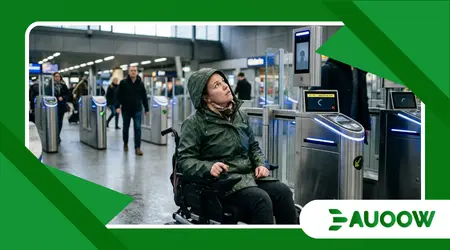
Facial recognition accessibility raises daily concerns for millions of citizens who find themselves quietly locked out of the very infrastructure designed to streamline modern life.
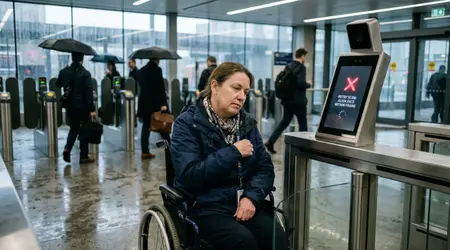
Consider a rainy Tuesday morning at a major international transit hub. A commuter with cerebral palsy approaches the automated biometric turnstile.
The software is calibrated for an upright posture, a specific angle of head tilt, and a steady, predictable gaze.
As the crowd presses from behind, the camera fails to register her face, misinterpreting her involuntary muscle movements as a system error. The gate remains closed.
This is not a hypothetical glitch; it is an ordinary Tuesday. It is a moment where a technological upgrade, marketed as a frictionless leap forward, transforms into a digital brick wall.
What this analysis explores
- The Biometric Shift: How automated identity verification alters our relationship with public and private spaces.
- The Blind Spots of Calibration: Why “neutral” algorithms inherit human biases regarding disability and demographics.
- Policy vs. Reality: The widening gap between statutory accessibility mandates and real-world software deployments.
- Human-Centric Alternatives: Pathways toward biometric implementations that prioritize dignity over mechanical efficiency.
Why are we outsourcing basic citizen access to an algorithm?
Over the past decade, a quiet architectural shift has occurred. Physical keys, magnetic stripes, and human ticket agents have steadily given way to sleek, high-definition camera lenses.
We see them at airport boarding gates, banking application logins, university dormitories, and government benefit portals.
The promise was alluring: absolute security paired with unmatched convenience. What rarely enters this debate is how deeply ableist the foundational blueprints of these systems truly are.
When software developers train facial recognition models, they rely heavily on datasets of standard bodies.
They assume a user who can stand completely still, whose facial symmetry conforms to a predictable mathematical norm, and whose skin tone reflects light within a narrow, optimized spectrum.
If you deviate from this baseline whether due to a neurological condition, a congenital facial difference, or a prosthetic limb the system often reads you not as a human being seeking entry, but as an anomaly.
Consequently, the reality that facial recognition accessibility raises daily challenges becomes painfully clear to those who must suddenly prove their identity to a machine.
On the surface, this looks like a technical bug. If we just optimize the code, the argument goes, the problem will vanish. But when we observe with more attention, the pattern repeats.
This isn’t a failure of optimization; it is a failure of imagination at the design stage. We have built an entire ecosystem of daily access around an idealized, narrow definition of the human body.
++ The problem with touchscreen kiosks accessibility in public spaces
What actually changed after this?
To understand how we arrived here, we have to look at the transition from human-mediated spaces to fully automated environments. The table below traces how the loss of human discretion alters everyday accessibility.
| Before Automation | After Biometric Integration | Social Impact |
| Human Discretion: A station agent or clerk could interpret context, assist with physical barriers, and bypass rigid rules based on common sense. | Algorithmic Rigidity: The software operates on binary logic (Match/No Match). It cannot empathize, adjust for bad lighting, or recognize distress. | A loss of dignity. Users must wait for manual overrides, drawing unwanted attention to their differences in public spaces. |
| Voluntary Enrolment: Biometrics were reserved for high-security clearances or specialized, opt-in programs. | Ubiquitous Mandates: Biometrics become the default, or exclusive, gateway for essential services, employment verification, and public spaces. | Participation in public life becomes conditional on possessing a body that the dominant technology can easily read. |
How do past policy mistakes shape our current digital architecture?
We often talk about digital transformation as if it dropped from the sky last semester. In reality, it follows the exact same ruts carved out by twentieth-century urban planning.
When the first major wave of accessibility legislation was enacted decades ago, the focus was entirely physical.
We fought for curb cuts, elevators, tactile paving, and wide doorways. These victories reshaped our cities to acknowledge that a diverse public required a diverse infrastructure.
Yet, as governance and commerce migrated to the cloud, our legal frameworks failed to keep pace. We treated digital spaces as ethereal luxuries rather than the new town square.
Today, a poorly coded biometric portal can strand a person at home just as effectively as a flight of stairs without a ramp.
Because current regulations frequently treat software design as a consumer preference rather than a civil rights issue, the lack of robust facial recognition accessibility raises daily anxieties for those trying to independently manage their lives.
An honest analysis suggests that we are making the same mistake again. We are building digital high-rises without checking if the elevators work for everyone, assuming we can simply retrofit a patch later if someone encounters a barrier.
The hidden burden of proof
Imagine a qualified desk worker with a severe visual impairment attempting to log into their employer’s secure internal network.
The company recently upgraded to a facial-authentication protocol to comply with corporate security standards.
Every morning, the system asks her to position her face within a green digital oval on her screen, tilt her head slightly up, and blink twice.
Because she cannot see the precise boundaries of the oval, and her eyes do not align in the manner the software expects, the screen flashes red. After three attempts, her account is locked.
She must now call the IT helpdesk, explain her medical condition to a stranger, and wait for a manual bypass. This isn’t just an inconvenience. It is a subtle, recurring erosion of autonomy.
It turns a skilled professional into an administrative problem to be solved, day after day, simply because the enterprise software engineers never tested their product with a blind user.
Read more: Cleaning Made Easy: Accessible Vacuum and Robot Solutions
Why does the illusion of neutrality persist among technology developers?
There is a comforting myth within the technology sector that numbers cannot be biased. A camera simply captures photons; an algorithm simply calculates distances between landmarks on a face.
But data is not a natural resource that we harvest in its pure state. It is a reflection of historical choices, systemic priorities, and the composition of the rooms where the technology is built.
When a system regularly fails to authenticate older adults because their skin elasticity confuses a liveness-detection algorithm, that is a design choice.
When it locks out trans individuals whose features may be transitioning, that is a design choice.
The industry’s defense is almost always pedagogical: “The AI just needs more data to learn.” But this misses the ethical point.
Why should marginalized communities have to surrender their biometric privacy and act as free training data just to receive the same baseline access that others enjoy automatically?
In reading this scenario, the core issue is that we have prioritized speed and friction reduction for the majority while accepting systemic exclusion as an acceptable external cost for the minority.
The fact that flawed facial recognition accessibility raises daily barriers to employment, transit, and banking is treated as a statistical variance rather than a fundamental design failure.
Also read: Toothbrush Tech for Disabled Users: The Rise of Y-Brush and Alternatives
What does a human-centered approach to identity verification look like?
There are good reasons to question the current trajectory of biometric deployment, but this does not mean we must reject technological tools entirely.
Technology can assist, but it must remain subordinate to human dignity. The path forward requires a fundamental shift in how we define a successful system launch.
First, multimodal authentication must become the absolute standard. A biometric option should not be the only option.
If a user prefers to use a hardware security key, a high-security PIN, or a traditional human check-in, that choice must be preserved without penalty or stigma. Accessibility is, at its heart, the preservation of options.
Second, we need to broaden our definition of inclusive design teams. Inclusion isn’t a checklist run through two weeks before a product goes live.
It means having disabled engineers, civil rights lawyers, and social analysts in the room when the very architecture of the system is being sketched out.
Until we dismantle the assumption that there is a “normal” body and a “normal” face, our technological innovations will continue to recreate the old barriers of our physical past in efficient new ways.
Editorial FAQ
How exactly does facial recognition discriminate against people with disabilities?
The software relies on rigid baselines regarding facial symmetry, skin tone, eye alignment, and the ability to hold oneself completely still.
Individuals with conditions like Parkinson’s, cerebral palsy, blindness, or facial differences often cannot meet these arbitrary mechanical criteria, causing the system to reject them.
Can’t we just train the AI with more diverse faces to fix this problem?
While diverse data helps, it does not solve the fundamental flaw of relying on a single, rigid physical metric for access.
True accessibility requires offering alternative methods of verification, rather than forcing everyone to conform to camera-based authentication.
Are there laws that protect people from being excluded by these systems?
Legislation like the Americans with Disabilities Act (ADA) and the European Accessibility Act mandate equal access to services, but their application to emerging biometric software is often vague.
Courts and regulatory bodies are still catching up to how rapidly these digital barriers are being deployed.
Why shouldn’t security completely override convenience in these instances?
Security that excludes legitimate users is not effective security; it is a broken system. A truly secure infrastructure protects everyone’s right to access their data, workplaces, and public benefits without sacrificing human dignity or independence.
