
How multilingual inclusive education improves learning equity
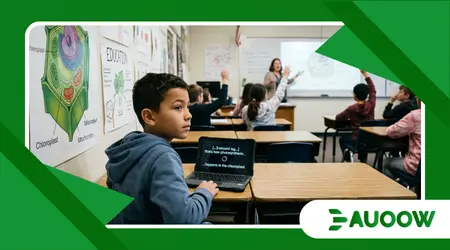
Ten-year-old Elias sits in the back row, his eyes tracing the posters on the classroom wall. The teacher explains the mechanics of photosynthesis, her voice a steady rhythm.
For his peers, this is a lesson in biology. For Elias, who is deaf and relies on a mix of local sign language at home and a rudimentary form of classroom English, it is an exercise in isolation.
When the teacher speaks, the captioning software on his school-provided tablet is often three seconds behind, struggling to sync with her pacing. In those three seconds, the concept of the cell and his chance to grasp it evaporates.
The struggle is not merely with the curriculum; it is with the linguistic architecture of the space.
We often view equity as a matter of ramps and accessible software, but multilingual inclusive education improves learning equity by acknowledging that language is the medium through which cognitive development happens.
When a student’s primary linguistic identity is sidelined, the barrier is not just a disability it is a systematic narrowing of their intellectual horizon.
Language as a fundamental human right in the classroom
The silent disconnect between technology and pedagogy
Moving beyond one-size-fits-all policy frameworks
Why cultural relevance matters for long-term retention
Why do we ignore the linguistic bridge?
Why do we ignore the linguistic bridge?
In the mid-20th century, the push for standardized education was often framed as a triumph of equality.
By ensuring every child received the same curriculum, the logic suggested, we were leveling the playing field.
Yet, this “standardization” was historically built upon a monolingual, able-bodied default.
Schools were designed for a specific learner, and anyone whose cognitive or sensory processing functioned outside that narrow band was treated as an outlier to be remediated, rather than a learner to be accommodated.
What rarely enters this debate is the cost of this homogenization.
We have invested heavily in hardware tablets, specialized software, and diagnostic tools but we have frequently failed to integrate these tools into a truly pluralistic linguistic framework.
Assistive technology is only as effective as the environment it inhabits.
If the teaching philosophy remains rigidly monolingual, even the most advanced screen reader serves only to translate a system that wasn’t designed to include the user in the first place.
When we consider how multilingual inclusive education improves learning equity, we have to look at the dissonance between home life and the classroom.
For many children with disabilities, particularly those from immigrant families or communities with distinct linguistic traditions, the school day is a constant act of code-switching.
They are not just learning physics or literature; they are performing a high-stakes translation of their reality into a format the institution can acknowledge.
++ How hybrid learning accessibility affects disabled students outcomes
The silent evolution of policy

There is a structural detail that is frequently ignored: the history of special education legislation often treats “language” and “disability” as separate silos.
We have policies for linguistic minorities and policies for students with disabilities, but they rarely speak to one another with the sophistication required by the modern student body.
The failure is one of imagination. We treat these as technical requirements to be ticked off on a compliance form.
If a district provides a sign language interpreter, they often believe their work is finished. But an interpreter is a technician, not necessarily an educator.
Without a pedagogical approach that values the student’s native linguistic expression as a vehicle for complex thought, the interpreter is merely a bridge to a place the student isn’t actually invited to enter.
Also read: Inclusive Education in the Middle East: Emerging Opportunities
Beyond the compliance checklist
Consider a case documented in a regional school board audit from three years ago.
A student with profound sensory processing differences was labeled “non-responsive” in his primary language of instruction.
It was only when a pilot program introduced a bilingual support model integrating his native sign lexicon with the academic vocabulary of the school that his test scores shifted.
The student hadn’t changed; the environment had finally allowed his internal logic to align with the external curriculum.
This case demonstrates that multilingual inclusive education improves learning equity not by making school “easier,” but by making the rigor of the material accessible to the student’s unique cognitive framework.
It allows for the expression of complex ideas before the student has fully mastered the dominant, state-mandated language.
| Phase | Previous Approach | Current Shift |
| Assessment | Standardized, single-language tests | Multi-modal, linguistically flexible evaluations |
| Technology | One-size-fits-all hardware | Context-aware, adaptive communication tools |
| Pedagogy | Deficit-based (fix the learner) | Asset-based (leverage student’s linguistic identity) |
| Legislation | Compliance-heavy, siloed regulations | Integrated, holistic inclusion policies |
The risk of shallow implementation
There are reasons to question the current enthusiasm for “inclusive technology” when it is stripped of linguistic depth.
We are seeing a surge in AI-driven translation tools that promise to bridge the gap. While these tools are impressive, they lack the cultural and contextual nuance that a skilled, bilingual teacher provides.
When we rely solely on software to bridge linguistic divides, we risk turning the student into a passive recipient of data rather than an active participant in discourse.
If a student is constantly waiting for an algorithm to process a lecture, they lose the ability to participate in the “social dance” of the classroom the spontaneous questions, the arguments, the subtle humor that makes learning a human endeavor.
The analysis more honest observers would make is that technology should be the infrastructure, not the architect.
Read more: Africa’s Innovative Approaches to Inclusive Learning
True inclusion requires a shift in how we perceive the role of the teacher.
It asks the educator to be a curator of meanings, facilitating a classroom where multiple linguistic paths to knowledge are valued equally.
This is precisely why multilingual inclusive education improves learning equity; it validates the student’s identity as a prerequisite for academic success.
How to move forward with integrity
When we observe with more attention, the pattern repeats: change driven by empathy and local insight often outlasts change driven by mandate alone.
We should stop viewing multilingualism as a barrier to integration and start seeing it as a tool for cognitive flexibility.
When a student learns to navigate two linguistic worlds, they develop a high degree of meta-cognitive awareness.
They learn how to translate concepts, identify gaps in meaning, and advocate for their own understanding.
These are the exact skills required for long-term success in an increasingly fragmented, global economy.
The most effective school systems are those that don’t try to silence the student’s native language to make room for the official one.
Instead, they operate on the principle that the brain is capable of managing multiple linguistic registers, provided it is given the correct scaffolding.
If we want to build schools that reflect the reality of the people they serve, we must move away from the idea that there is one “right” way to express knowledge.
By fostering an environment where multilingual inclusive education improves learning equity, we aren’t just helping students with disabilities; we are enriching the intellectual diversity of the entire classroom.
It is a slow, difficult, and necessary transformation, but it begins with the simple realization that every student deserves to be understood in the language they think in.
FAQ Editorial
Does teaching in multiple languages confuse students with disabilities?
Research often shows the opposite. Students with disabilities benefit from being able to use their full linguistic repertoire.
It allows them to lean on their strengths while they work to acquire new, more complex academic language.
Is this approach too expensive for public schools?
While there are upfront costs in training and resource development, the long-term cost of exclusion is higher.
Failing to educate a child fully often leads to higher costs in specialized services, lower employment rates, and greater reliance on public support systems in the future.
Can technology replace the need for bilingual teachers?
No. Technology is a tool, but it cannot replicate the nuance, empathy, and pedagogical intuition of a trained educator.
AI and software can assist, but they should not be the primary driver of a student’s educational experience.
What is the biggest hurdle to implementing this?
The biggest hurdle is mindset. We are still conditioned to believe that “standardized” equals “equal.”
Moving toward a model that values linguistic pluralism requires a fundamental shift in how teachers are trained and how success is measured in our school systems.
How do I know if my local school is truly inclusive?
Look beyond the presence of ramps or laptops. Ask how the school handles communication with families who speak different languages or use different communication modes.
If the school treats diverse communication as an “extra” or an “inconvenience,” they have yet to adopt a truly inclusive framework.
