
Why inclusive microcredentials are reshaping higher education
The worn-out velvet seat of the lecture hall, usually tilted at an angle that ignores the reality of a wheelchair user’s posture, was not the primary barrier for Elena.
The barrier was the syllabus. As a professional with a decade of experience in adaptive design, she sought a specific certification in digital accessibility audit, a credential that would bridge her practical knowledge with institutional recognition.
Yet, the university program required four years of residency and a rigid, sequential curriculum that ignored the intermittent nature of her chronic health conditions.
She didn’t need a four-year degree; she needed modular, accessible mastery.
For learners like Elena, the academic landscape is finally shifting, and for good reason: inclusive microcredentials are reshaping higher education in ways that legacy systems have failed to do for decades.
The shift toward modular learning is dismantling traditional barriers to entry, moving away from rigid, time-bound degree models toward competency-based systems that prioritize accessibility, financial viability, and the practical needs of a diverse workforce.
A New Architecture for Learning
- Understanding the modular shift in academic accreditation.
- The transition from rigid degrees to competence-based learning.
- Addressing the systemic barriers inherent in traditional university structures.
A New Architecture for Learning

Understanding the modular shift in academic accreditation. The transition from rigid degrees to competence-based learning.
Addressing the systemic barriers inherent in traditional university structures. When we look at the history of higher education, we often mistake tradition for necessity.
The four-year bachelor’s degree, largely standardized in the early 20th century, was designed for a specific demographic: young, full-time students with the financial and physical bandwidth to conform to a static schedule.
What rarely enters the debate is the exclusionary nature of this “time-bound” model.
We built systems that prioritized attendance over competency, creating a sieve that filtered out many whose lives did not conform to a linear path.
The emergence of smaller, focused credentials is not merely a technological trend; it is a structural correction.
When we observe the shift toward micro-learning, we see a quiet dismantling of the “all or nothing” approach.
This movement is significant because it recognizes that human expertise is not always gained in monolithic blocks of time, but through targeted acquisition of skills.
Why Accessibility is No Longer an Add-on
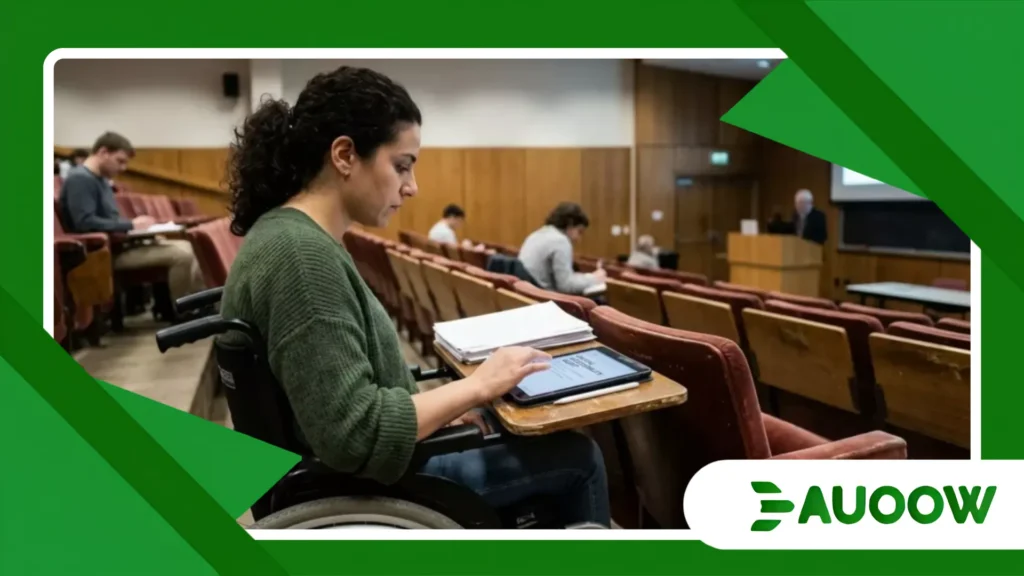
The potential of this shift lies in its inherent flexibility. In a traditional setting, a student with a learning disability might struggle with the sheer volume of a semester-long course, only to fail due to a single high-stakes final exam.
Under the new model, where inclusive microcredentials are reshaping higher education, the learner can engage with material in manageable units.
This is about pedagogical design. When a module is built to be “inclusive by design,” it assumes from the start that students will have varying needs regarding time, sensory input, and cognitive processing.
We have spent decades expecting the student to adapt to the classroom. We are finally entering an era where the classroom is being designed to adapt to the student.
There is a structural detail that is often ignored: the financial barrier to entry.
Traditional degrees are expensive, often prohibitive, for those who have spent their resources managing the day-to-day costs of living with a disability.
Microcredentials provide a lower-cost, high-value alternative that allows individuals to upskill without gambling their entire savings on a credential that may not offer immediate professional return.
++ How AI Tutors Are Changing Learning Opportunities for Students with Disabilities
The Human Cost of Rigid Systems
Consider the case of Marcus, a software engineer with autism who found traditional networking and long-form university projects overwhelming.
He excelled in technical performance but struggled with the rigid requirements of a traditional degree participating in group projects that required constant, synchronous communication and navigating a campus that was, for him, a sensory challenge.
He didn’t need to learn how to conform to an office culture designed by and for neurotypical people; he needed to prove his mastery in backend development.
When he found an inclusive microcredential program that focused entirely on technical competency, assessed asynchronously, his career trajectory changed.
| Feature | Traditional Degree | Inclusive Microcredential |
| Duration | Fixed (3-4 years) | Modular (Weeks to Months) |
| Assessment | Standardized exams/essays | Competency-based portfolio |
| Accessibility | Retrofitted after demand | Built into the framework |
| Cost | High (Institutional overhead) | Variable/Lower |
When we look at how inclusive microcredentials are reshaping higher education, we acknowledge that this is not a panacea.
There is a risk that these credentials could become a “second-class” degree if not properly recognized by employers.
However, the current momentum suggests that the industry is beginning to value the skill over the pedigree.
Bridging the Gap: History and Policy
We must remember that the demand for accessibility isn’t new. For years, we have had legislation such as the Americans with Disabilities Act in the US or the Equality Act in the UK that mandates equal access.
Yet, for a long time, compliance was viewed as a box-ticking exercise. A university might provide a ramp for physical access, but they would often overlook the cognitive access required to actually participate in the course.
The shift we are seeing today is the bridge between civil rights and practical utility.
By decoupling the credential from the physical campus, we are removing the most significant barriers that have historically kept people with disabilities out of the workforce.
When inclusive microcredentials are reshaping higher education, they are forcing a conversation about what “higher education” actually means. Is it a social ritual, or is it a platform for economic mobility?
Also read: Inclusive Education in the Middle East: Emerging Opportunities
Rethinking the Future of Work
The most honest analysis suggests that corporations are already ahead of universities here.
Many tech companies have stopped requiring degrees for roles where they can verify skills via GitHub, portfolios, or micro-certifications.
This external pressure is forcing academia to adapt or risk becoming obsolete. There is a real opportunity here to design these systems to be inherently inclusive.
If we build a micro-program that allows for captioning, screen reader compatibility, and flexible deadlines from the start, we aren’t just helping students with disabilities; we are helping parents, older workers, and people in remote areas.
It is a classic example of the “curb-cut effect” where designing for the most vulnerable improves the experience for everyone.
As we move forward, we should be wary of letting these credentials become another form of gatekeeping.
The goal of this movement is access, not a new way to charge for smaller pieces of the same exclusionary pie.
If these programs are gated behind high costs or proprietary software that isn’t accessible, we have failed.
Read more: Africa’s Innovative Approaches to Inclusive Learning
The Road Ahead
What remains to be seen is how long-term accreditation bodies will treat these smaller units of study. Are they merely “badges,” or will they evolve into a legitimate, stackable alternative to a degree?
The answer will likely come from the labor market. If employers continue to hire based on these competencies, the academic establishment will follow.
The promise of this change is profound. It represents a move toward a meritocracy that actually lives up to the name one that values what you can do, rather than your ability to navigate a system designed for a version of humanity that doesn’t actually exist.
The fact that inclusive microcredentials are reshaping higher education is proof that the old barriers are finally beginning to crack.
Frequently Asked Questions
Are microcredentials considered as valuable as a full university degree by employers?
In many fields, particularly technology and creative industries, yes. Employers are increasingly looking for specific, demonstrated skills over generalized degrees.
While a master’s degree still holds weight for academic or research roles, microcredentials are becoming the standard for skill-based hiring.
How do I know if a microcredential program is actually accessible?
Look for programs that explicitly state their commitment to universal design.
Check if their platform supports assistive technologies, offers captions for all video content, and provides alternative assessments.
If the website doesn’t offer a clear accessibility statement, it is a significant red flag.
Can these be combined to eventually form a full degree?
This is the “stackable” aspect of the movement. Many universities are currently experimenting with “stackable credentials,” where you can earn a series of certificates that count toward a degree.
This is a developing area for those who need flexibility.
Do these programs provide the same networking opportunities as a university?
They provide different ones. While you lose the physical campus experience, these digital programs often connect you with a global cohort of professionals in your niche.
The networking is often more targeted and directly related to your career goals.
Are there government financial aid options for these programs?
This varies by country and institution. In some regions, government lifelong learning grants are beginning to cover these costs, but it remains a patchwork system.
It is worth checking with your local workforce development office or the specific institution for funding options.
