
How Autonomous Mobility Devices Could Change Daily Life
Autonomous mobility devices could change daily life for millions of people who navigate urban environments using power wheelchairs or mobility scooters, transforming a grueling daily obstacle course into an experience defined by dignity, speed, and genuine independence.
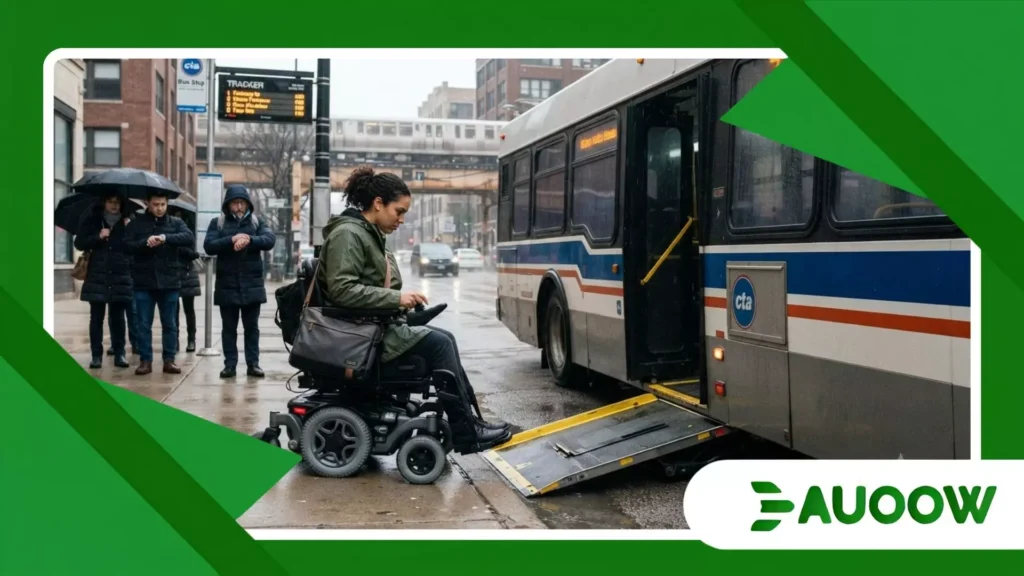
Imagine a rainy Tuesday morning in Chicago. Sarah, a graphic designer who uses a motorized wheelchair, approaches a city bus stop.
The ramp lowers, but the driver misjudges the distance from the curb by four inches.
What follows is a familiar, silent humiliation: the awkward back-and-forth maneuvering, the impatient sighs of passengers behind her, and the lingering anxiety of missing her morning meeting.
The bus itself is modern, compliant with municipal accessibility guidelines, and technically functional. Yet the interaction between human operator, heavy equipment, and static infrastructure breaks down over a gap no wider than a coffee cup.
The Reality of Modern Transit: Why Traditional Mobility Aids Still Fall Short in Unpredictable Public Spaces
Beyond Automation: How Self-Navigating Technologies Shift Independence From an Abstract Right to a Daily Reality
The Structural Divide: The Urban Design Flaws That Autonomous Hardware Must Learn to Overcome
Policy and Autonomy: What Actual Historical Shifts Teach Us About Regulating Adaptive Technology
Frequently Asked Questions: Practical Answers Regarding Cost, Safety, and Implementation Timelines
Why Do Our Sidewalks Still Feel Built for the 19th Century?
When we walk down a city street, we rarely notice the subtle angles of driveway cutouts, the cracked concrete around tree roots, or the sudden termination of a footway near a construction site.
For an individual relying on standard adaptive equipment, these are not minor inconveniences; they are impassable borders.
Public investment has long prioritized speed for automobiles while treating pedestrian infrastructure as a secondary thought.
We have spent decades refining GPS navigation for cars, mapping every highway lane in high definition, while leaving the footpaths used by wheel-users largely unmapped.
When observing with more attention, the pattern repeats across almost every major metropolitan area. We build state-of-the-art accessible train cars, but the elevator leading down to the platform is out of service three days a week.
We legislate physical access, but we fail to account for the dynamic, unpredictable nature of real-world environments.
This is precisely where autonomous mobility devices could change daily life in ways that go far beyond basic transportation.
By incorporating LiDAR, computer vision, and real-time spatial mapping directly into personal chairs and scooters, the equipment stops being a passive rolling seat and becomes an active co-pilot.
Instead of a user having to constantly scan the ground for dangerous cracks or steep inclines, the machine perceives these obstacles meters in advance, adjusting its trajectory smoothly without demanding total physical concentration from the rider.
| Mobility Aspect | Traditional Power Wheelchairs | Autonomous Mobility Devices |
| Obstacle Detection | Manual visual scanning by user | 360-degree real-time sensor mapping |
| Transit Boarding | Dependent on driver assistance | Automated precision alignment |
| Terrain Adaptation | Fixed wheels; prone to tipping | Active suspension & path correction |
| Fatigue Level | High cognitive and physical load | Low; stress-free navigation |
How Does Self-Navigating Tech Restore Individual Agency?
For decades, the public conversation around disability rights focused heavily on physical modifications: ramps, widened doorways, and lowered countertops.
While these structural interventions remain essential, they assume a static world where environments can be permanently fixed.
Infrastructure moves slowly, but technology moves fast. Rebuilding three miles of broken pavement in a dense neighborhood can take a municipal council five years of budget debates.
Equipping an adaptive vehicle with intelligent terrain-sensing software can happen overnight through an update.
The true value of self-driving personal devices lies in cognitive relief. Navigating a busy street in a manual or basic power chair requires hyper-vigilance. You are constantly calculating slope, surface friction, pedestrian speed, and potential drop-offs.
When sensor-driven hardware takes over those micro-adjustments, the user regains the mental space to simply enjoy a morning commute, listen to music, or speak with a friend walking alongside them.
In this context, autonomous mobility devices could change daily life by shifting the user’s experience from surviving the trip to actually experiencing it.
What Happened When Public Transit First Became Accessible?
To understand where personal robotics is taking us, it helps to look back at the late 20th century, when public transit systems were first forced to adopt accessible designs.
The Promises vs. The Practical Reality
When hydraulic lifts were first installed on municipal buses in the late 1970s and 1980s, advocates celebrated a monumental victory.
On paper, the system was complete. In practice, early hydraulic lifts broke down frequently, required lengthy manual operation, and often left passengers stranded in severe weather while drivers struggled with manual overrides.
The technology existed, but the integration was poor. The lesson from that era is clear: hardware alone does not solve an accessibility challenge if it introduces new points of friction, delay, or embarrassment for the user.
++ Smart Glasses for Blind Users: Beyond Navigation
What Actually Changed After Legislative Mandates?
- 1990 Americans with Disabilities Act (ADA): Mandated curb cuts and accessible public entrances across new construction. This normalized universal design, benefiting parents with strollers, delivery workers, and aging populations.
- Low-Floor Bus Introductions (Late 1990s): Replaced unreliable hydraulic lifts with simple, fast deployable ramps. This dramatically reduced bus dwell times and eliminated social friction during boarding.
- Smart Curb Mapping Projects (2020s): Digital cataloging of sidewalk barriers and micro-accessibility hazards. This laid the foundational data layer required for self-navigating personal mobility devices.
The history of adaptive policy shows us that real progress only happens when a technology becomes so seamless that it disappears into the background of daily life.
Read more: Public Procurement’s Role in Shaping Assistive Tech Markets
Who Benefits Most When Adaptive Hardware Thinks for Itself?
Imagine a qualified professional with progressive motor loss who turns down a promotion simply because the daily commute across two bus transfers and a hilly urban center is too physically exhausting.
Think of a university student with visual impairments and mobility challenges who struggles to find accessible lecture halls across a sprawling, historic campus where paths are constantly changing due to seasonal maintenance.
These scenarios are not edge cases. They represent millions of citizens who are routinely excluded not by a lack of personal talent or desire, but by the relentless tax that inaccessible travel extracts from their energy and time.
We are currently designing cities that force human bodies to conform to cold concrete, rather than making technology conform to human needs.
When intelligent algorithms monitor path stability, detect approaching traffic around blind corners, and seamlessly communicate with smart city traffic lights to extend pedestrian crossing times, the city begins to adapt to the individual.
Under these conditions, autonomous mobility devices could change daily life by turning hostile public spaces into navigable, welcoming corridors.
Also read: Why Assistive Technology Regulation Still Focuses on Devices, Not Systems
Are We Building Inclusive Systems or Exclusive Luxury Gadgets?
There are good reasons to question the current trajectory of high-tech personal transit.
If these advanced mobility systems are developed purely as high-end commercial products, they risk widening the economic divide within the disability community.
A high-cost artificial-intelligence-powered chair covered only by high-tier private insurance does nothing for an aging pensioner relying on basic public healthcare systems.
Furthermore, we must guard against the dangerous assumption that smart hardware excuses municipalities from fixing broken sidewalks. Technology should complement public infrastructure, not serve as an expensive patch for civic neglect.
If a city council concludes that it no longer needs to repair broken curb cuts because smart chairs can handle it, we have failed fundamentally in our ethical obligation to universal access.
What Does True Mobility Independence Look Like?
True independence is not about operating high-tech machinery; it is about spontaneity. It is the ability to decide, on a whim, to cross the street, enter a newly opened coffee shop, or catch a late train without planning the route days in advance.
When self-navigating personal vehicles reach maturity, they will not just prevent accidents; they will eliminate the friction of planning.
The chair will coordinate directly with low-floor trams, signal municipal doors to open automatically, and dynamically reroute around unexpected sidewalk closures.
As these systems mature, autonomous mobility devices could change daily life by transforming mobility from a negotiated privilege into an unquestioned baseline of civil participation.
Frequently Asked Questions
Will autonomous mobility devices make human assistants obsolete?
No. These devices are designed to restore personal autonomy for navigation and physical movement, not to replace essential human care, companionship, or specialized personal assistance.
How do these devices navigate severe weather like snow or heavy rain?
Advanced models utilize a combination of optical cameras, ultrasonic sensors, and localized radar. Radar and ultrasound can penetrate fog, heavy rain, and light snow better than human eyes or basic camera setups, making them reliable in harsh conditions.
Are smart mobility aids safe on crowded municipal footpaths?
Yes. Autonomous personal hardware operates at low pedestrian speeds and utilizes short-range spatial sensors that react faster to sudden movements such as a child running into the path than manual human controls can manage.
Will public health insurance cover self-navigating wheelchairs?
Coverage will depend heavily on regional policy. Advocates are currently pushing health authorities to recognize navigation-assist technologies not as luxury features, but as essential medical equipment that prevents falls, injuries, and long-term joint strain.
Can autonomous devices handle stairs and high curbs?
While some experimental units feature track-based or legged mechanisms to climb steps, most commercial autonomous devices focus on optimizing path-finding over flat, inclined, or moderately uneven terrain, directing users toward accessible ramps automatically.
