
How Accessible Are Voice-Based Digital Services?
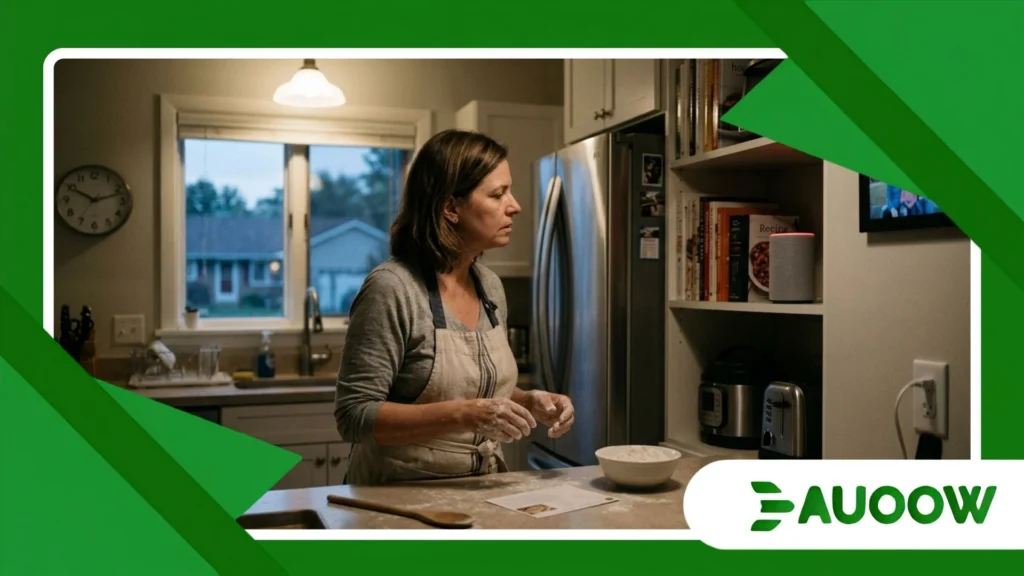
The kitchen is quiet at 7:15 PM, save for the rhythmic hum of the refrigerator and the low, mechanical confirmation chime of a smart speaker trying and failing to understand a request for the weather forecast.
Elena, standing by the counter with her hands flour-dusted and her eyes resting on the soft evening shadows outside, repeats her command for the third time, slightly raising her pitch.
The device blinks, hesitates, and defaults to playing a generic music playlist she never asked for. For most, this is a minor domestic irritation, a glitch in the convenience economy.
For Elena, who relies entirely on voice-based digital services to navigate her smart home appliances, schedule her day, and review digital correspondence following a progressive loss of motor control and low vision, it is a reminder of an invisible wall.
The technology was promised as the great equalizer a hands-free bridge to the digital world yet it frequently functions as a closed door built by engineers who never imagined how someone might speak, pause, or breathe differently.
- The design legacy behind modern acoustic interfaces
- Who gets left behind when conversational computing fails
- Moving beyond token compliance toward true sonic equity
Why Standardized Speech Does Not Equal Universal Access
There is a comforting illusion in Silicon Valley and corporate tech campuses that speech is inherently democratic.
After all, nearly everyone speaks, making voice-based digital services appear natively inclusive on paper.
Yet, when we examine the architecture of acoustic recognition models, a rigid baseline emerges.
These systems are trained overwhelmingly on standardized accents, predictable cadences, and uninterrupted vocal streams.
When a user speaks with a tremor, a stutter, regional dysfluencies, or atypical breath control, the commercial algorithm stumbles.
What often gets overlooked in this ongoing debate is the commercial incentive driving these omissions.
Designing for edge cases for the person whose vocal output deviates from the training median requires dedicated investment that yields lower immediate market returns.
++ Adaptive Driving Technologies Worth Watching
The Hidden Bias in Acoustic Training Data
Commercial speech recognition engines rely heavily on massive corpuses of audio collected from users with normative speech patterns. This creates a feedback loop of exclusion.
- Acoustic Normativity: Algorithms penalize pauses, background ambient noise common in assisted living spaces, and non-standard syntax.
- Linguistic Uniformity: Regional dialects and sociolects are frequently misclassified as errors rather than valid human communication.
- The Cost of Misinterpretation: For a non-disabled user, a misunderstood command means repeating a song title. For a disabled user relying on voice-based digital services to control home security or emergency contacts, a misinterpretation can mean isolation or hazard.
| Metric / Dimension | Standard Commercial Baseline | Inclusive Acoustic Framework |
| Primary Training Set | High-clarity, native speakers | Diverse linguistic & motor ranges |
| Tolerance for Pauses | Strict time-outs (< 0.8 sec) | Dynamic, adaptive parsing |
| Environmental Filtering | Basic noise suppression | Context-aware acoustic isolation |
| Error Recovery | Generic “I didn’t catch that” | Contextual confirmation prompts |
The Architectural Oversight of Modern Interfaces
When graphical user interfaces (GUIs) transitioned into voice user interfaces (VUIs), designers dropped visual clutter only to replace it with auditory opacity.
With a screen, a user can scan for an alternative button or find a manual workaround. With purely audio-driven or conversational systems, if the prompt fails, the user is cast into a void of trial and error.
A more honest analysis suggests that the rapid deployment of conversational AI has occasionally outpaced our collective frameworks for digital accessibility.
We treat these tools as progressive upgrades while sometimes ignoring the structural fragility they introduce into daily routines.
Also read: Why facial recognition accessibility raises daily access concerns
When Convenience Becomes a Barrier
Consider the automated customer service phone tree or the smart-home hub integrated into public housing.
As municipal services and private utilities transition their primary access points to voice-based digital services, they often decommission physical service desks or accessible text-based web portals.
“When efficiency becomes the sole metric of progress, the friction experienced by marginalized bodies is quietly erased from corporate balance sheets.”
This shift assumes that every citizen possesses reliable vocal stability and an environment free from auditory interference.
It ignores older adults with age-related vocal cord thinning, individuals recovering from throat surgeries, and those with neurodivergent communication styles who may process and articulate responses at variable speeds.
Bridging the Gap Between Code and Community
Transforming acoustic technology from an exclusive novelty into a reliable public utility requires a fundamental shift in how engineering teams validate success.
Accessibility cannot remain an afterthought checked off during a pre-launch compliance audit.
There are valid reasons to question the current regulatory approach, which occasionally treats digital accessibility as a static checklist rather than an ongoing dialogue with diverse communities.
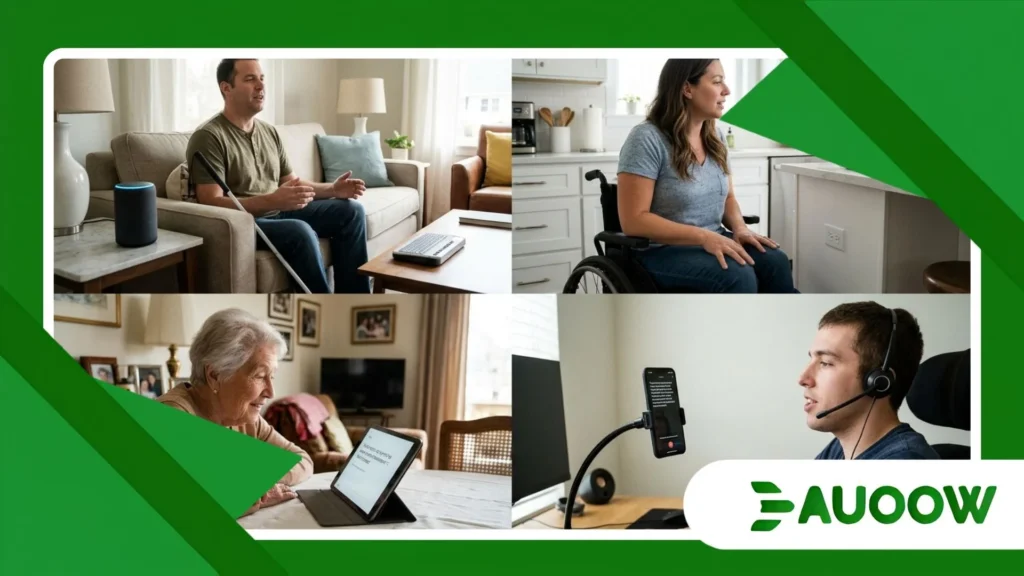
True inclusion demands that developers sit alongside users whose vocal patterns and physical environments do not match the sanitized conditions of a laboratory testing booth.
Read more: The rise of smart crosswalk accessibility in urban mobility plans
Rethinking Feedback Loops in System Design
To build truly resilient conversational tools, developers must embrace multi-modal fallback mechanisms.
If an engine fails to parse a voice command, it should seamlessly offer tactile, visual, or simplified text alternatives rather than terminating the interaction.
Furthermore, training datasets must actively incorporate diverse speech pathologies, variable breath supports, and non-linear conversational patterns.
By expanding what an algorithm considers normal, we do not just help disabled users; we create robust systems that perform better for everyone in noisy, chaotic real-world environments.
Conclusion: The Horizon of Conversational Equity
Revisiting Elena by her kitchen counter, we recognize that the future of human-computer interaction will be judged not just by how fast it responds, but by whom it leaves behind in the silence.
As conversational interfaces become the primary gatekeepers to employment, public services, and daily administration, ensuring genuine equity in voice-based digital services is a profound moral and structural imperative that demands our sustained attention.
The journey toward a truly inclusive digital ecosystem requires a collective willingness to listen closer, adapt faster, and respect every unique human voice without exception.
The path forward requires abandoning the illusion of a single universal user.
By designing technology that honors human diversity in all its acoustic and physical variations, we can build digital spaces that genuinely welcome everyone, transforming potential barriers into bridges of opportunity.
Frequently Asked Questions
Are companies legally required to make voice interfaces accessible?
Most existing digital accessibility legislation, such as the Americans with Disabilities Act (ADA) or European accessibility acts, was originally drafted for physical spaces and traditional websites.
While legal frameworks are increasingly being updated to cover software and digital utilities, enforcement regarding conversational AI and smart home technology remains inconsistent and largely reactive.
Why do speech recognition systems fail for people with speech disabilities?
Commercial speech models are trained primarily on large datasets of normative, clear speech patterns. They rely on predictable cadence, volume, and pronunciation.
When a user has a speech impediment, a stutter, or a variable vocal volume due to a physical condition, the algorithm often misinterprets the acoustic features as background noise or invalid input.
Can text-based fallbacks solve the limitations of voice technology?
Text-based alternatives are essential, but they are not a complete replacement.
For individuals with severe upper-limb motor disabilities or low vision, typing can be equally burdensome.
The ideal solution is a truly multi-modal system where voice, touch, gesture, and text can be used interchangeably without losing context.
How can developers test their conversational systems more inclusively?
Development teams must involve disabled testers and individuals with diverse speech profiles from the earliest stages of product conception, rather than bringing them in for token compliance checks right before release.
Testing environments should also replicate real-world conditions, such as background noise and variable acoustic spaces.
