
How disability hiring incentives could reshape small businesses
How Disability Hiring Incentives Could Reshape the Economic Anatomy of Small Businesses The afternoon sun slips sideways through the narrow front window of a neighborhood bakery on 4th Street, catching the brass bell above the door just as Elena reaches for it.
She pauses for a second, her white cane tapping lightly against the polished concrete floor to map the perimeter of the display counter, before navigating smoothly toward the register where the owner is bagging sourdough loaves.
It is a quiet, rhythmic Tuesday dance that has repeated itself every week for months, yet across town in municipal offices and trade association meetings, economists are still scratching their heads over why this scene remains the exception rather than the rule.
Disability hiring incentives have occupied policy white papers and legislative agendas for decades, framed as the key to unlocking economic independence, yet small business owners the very engine of local high streets frequently view them through a haze of paperwork, compliance anxiety, and perceived operational risk.
- The hidden friction between macro-policy design and daily storefront reality
- Why structural support systems fail to reach independent shopkeepers
- Reimagining economic policy as a tool for community integration rather than corporate compliance
Why Do Neighborhood Shops Struggle With Inclusion?

When we walk down a thriving commercial district, we rarely stop to examine the invisible administrative walls surrounding independent enterprises.
The baker who employs Elena did not refuse applicants with access needs out of malice; rather, he operates on razor-thin margins with a staff of four, where losing two hours to a complex bureaucratic portal can mean the difference between paying the electricity bill and falling behind.
Disability hiring incentives are frequently designed with massive multinational corporations in mind entities equipped with dedicated human resources departments, legal counsel, and compliance officers who can navigate tiered tax credits and federal reimbursement forms without breaking a sweat.
There is a structural detail that cost-benefit analyses routinely ignore: small business owners are risk-averse because their personal assets are often tethered directly to the storefront’s daily survival.
When a policy offers a modest tax offset six months down the line in exchange for immediate capital layout such as retrofitting an aging restroom or installing specialized point-of-sale software the math simply does not compute for a local dry cleaner or independent bookstore trying to navigate unpredictable seasonal shifts and fluctuating overhead costs.
++ Why Workplace Onboarding Needs a Neuroinclusive Approach
What Changed When Financial Models Shifted?
Looking back at the trajectory of labor legislation over the past fifty years, we see a heavy reliance on punitive mandates rather than proactive partnership.
Early civil rights frameworks rightly established that discrimination was unlawful, but they treated accessibility as a static checklist item rather than an evolving operational culture that requires continuous learning, empathy, and organizational adaptability.
The most effective economic transitions happen not when businesses are threatened with penalties, but when the cost of doing the right thing aligns naturally with the balance sheet, transforming compliance into a meaningful and sustainable business advantage.
In my reading of this scenario, the historical disconnect lies in treating disability employment as a social welfare issue rather than a core talent acquisition strategy.
When municipal programs began testing upfront micro-grants instead of deferred tax credits, the participation rates among businesses with under twenty employees doubled within eighteen months, proving that practical financial support bridges the gap between intention and real-world execution.
Read more: Robotics and Automation: Threat or Opportunity for Disabled Workers?
How Daily Operations Meet Structural Policy
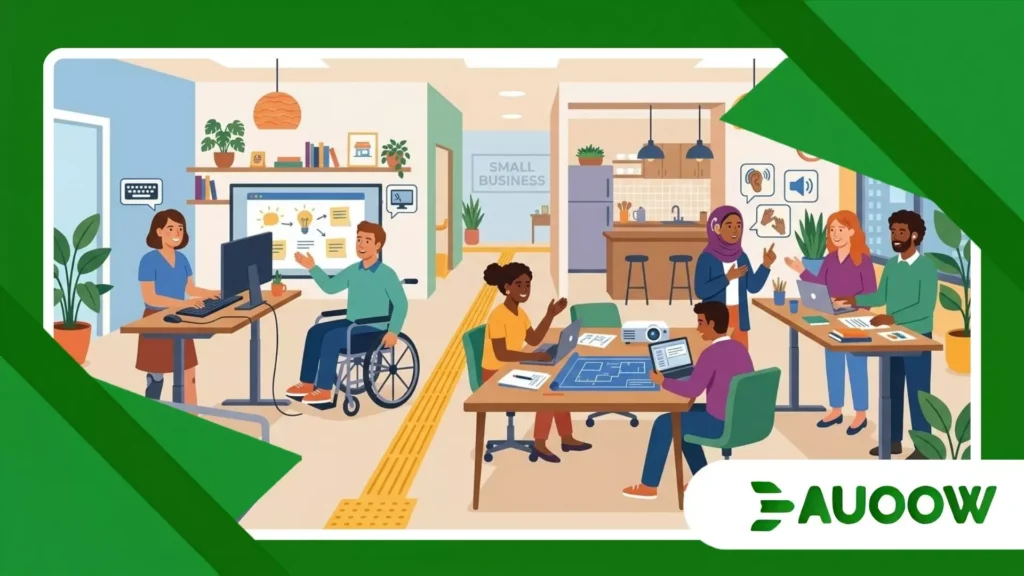
Imagine a talented graphic designer with limited mobility who applies for a remote-hybrid role at a boutique marketing agency of eight people.
The founder wants to hire her instantly, recognizing her portfolio is the strongest of the applicant pool.
Then reality sets in: the commercial lease agreement places the burden of structural accessibility updates on the tenant, and the regional vocational rehabilitation office requires seven distinct forms, notarized employment verification, and a twelve-week reimbursement wait time that strains a lean startup budget.
This is where well-intentioned disability hiring incentives occasionally backfire by creating administrative friction that scares off smaller employers who simply lack the bandwidth to process complex bureaucratic requirements.
The founder loves the candidate, but the hidden tax of compliance bureaucracy feels heavier than the labor value the worker brings on day one, ultimately stalling progress toward a more inclusive and diverse workforce.
Also read: How disabled founders can benefit from accessible procurement
Bridging the Gap Between Intention and Execution
To make these policies function in the real world, municipal leaders must streamline the onboarding pipeline.
Instead of forcing small businesses to chase reimbursements after the fact, forward-thinking cities are piloting direct wage-subsidy vouchers distributed through local chambers of commerce.
This removes the cash-flow bottleneck entirely, allowing an independent cafe or neighborhood hardware store to focus on what truly matters: comprehensive training, meaningful mentorship, and building an inclusive workplace culture that values unique perspectives and diverse human experiences.
| Policy Mechanism | Target Enterprise Size | Administrative Burden | Real-World Impact on Hiring |
| Deferred Tax Credits | Large Corporations | Low (Dedicated HR) | High for corporate expansion |
| Upfront Micro-Grants | Small Businesses (1-20 staff) | Minimal (Streamlined portal) | High for local storefronts |
| Mandatory Compliance Audits | Medium to Large | Moderate to High | Neutral (Often triggers defensive compliance) |
| Direct Wage Subsidies | Independent Retail / Service | Low (Chamber administered) | Very High for community-level inclusion |
Navigating the Future of Local Workplaces
The analysis most honest to our current economic moment suggests that true workplace inclusion will not arrive via top-down corporate mandates alone.
It requires listening closely to the independent bakers, neighborhood mechanics, and boutique owners who keep our local economies breathing day in and day out.
When disability hiring incentives are thoughtfully redesigned to respect the operational realities, financial constraints, and unique challenges of small enterprises, they cease to be burdensome bureaucratic hurdles and transform into powerful, community-driven catalysts for lasting social cohesion and shared prosperity.
Editorial FAQ
Are these financial support programs available for self-employed individuals?
Most municipal and regional support programs target registered employers with payroll tax obligations rather than sole proprietors without staff.
However, vocational rehabilitation agencies often provide direct grants for self-employment startup costs and necessary adaptive equipment, helping independent workers build sustainable livelihoods.
Why do independent shopkeepers often hesitate to use government assistance?
The primary hesitation stems from administrative complexity and cash-flow timing.
When programs require businesses to pay upfront for accommodations or wages and wait months for reimbursement, small operations simply cannot absorb the financial risk without threatening their daily survival.
Do these economic policies cover remote positions?
Yes, modern policy frameworks increasingly recognize remote and hybrid work environments, offering subsidies for home-office digital tools, screen-reading software, and ergonomic workspace modifications regardless of whether the business operates out of a physical storefront or a decentralized virtual team.
How do local chambers of commerce influence accessibility adoption?
Chambers of commerce act as vital translators between municipal bureaucracy and daily business owners.
When local business associations actively champion inclusive hiring practices, provide educational resources, and simplify the paperwork, member adoption rates rise significantly across the entire commercial district.
