
Why flexible work models matter for disabled entrepreneurs
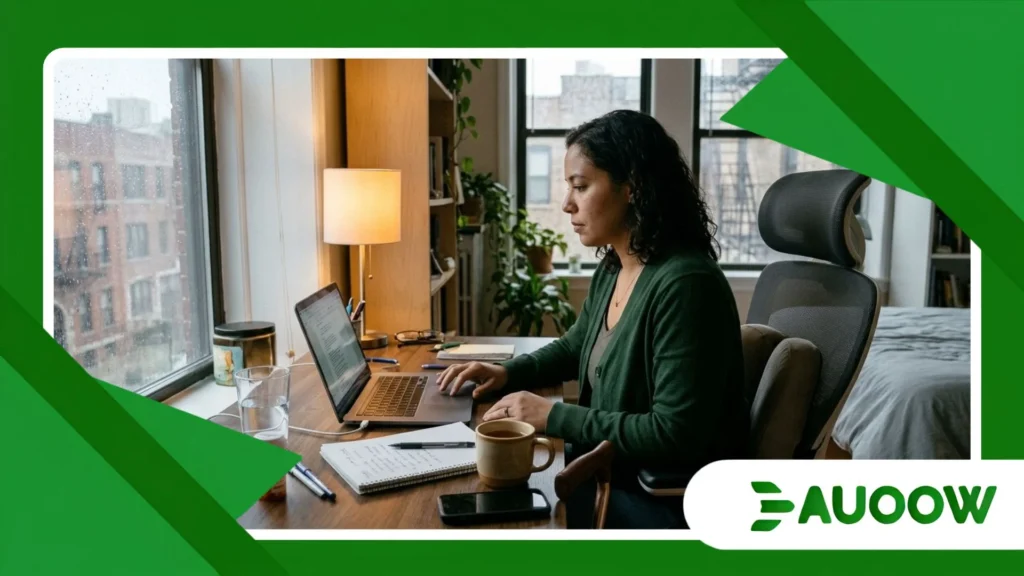
Why Flexible Work Models Matter for Disabled Entrepreneurs: Redefining Productivity Beyond the Nine-to-Five At 6:45 AM on a rainy Tuesday in Chicago, Maya adjusts the angle of her laptop screen from her bed while waiting for her morning nerve pain medication to take effect.
Two hours later, long after the rush-hour commuters have swiped into downtown glass towers, she logs onto a video call with a client in London, sharpest and most focused at a time when traditional corporate attendance policies would have already marked her tardy.
Why flexible work models matter for disabled entrepreneurs starts right here not in a boardroom policy manual, but in the quiet negotiation between human biology and artificial clocks.
For decades, the standard workweek operated on an unspoken physical requirement: a body that performs identically from nine to five, five days a week, inside a designated building.
When disabled professionals step away from rigid corporate structures to launch their own ventures, they are rarely chasing a trendy lifestyle.
Instead, they are building an operational architecture where energy, medical care, and cognitive output actually align, ensuring their professional longevity and personal well-being remain intact.
In this deep dive, we will explore:
- How historical industrial schedules created invisible barriers for disabled founders
- The structural link between disability legislation and modern self-employment trends
- Real-world mechanisms that allow asynchronous businesses to outperform rigid competitors
- Policy gaps, healthcare cliffs, and financial trade-offs that still challenge independent workers
- A side-by-side comparison of traditional employment versus adaptive entrepreneurial models
Why Did the Nine-to-Five Clock Become a Barrier in the First Place?
What rarely enters the conversation about workplace productivity is how recently our current schedule was invented.
The rigid eight-hour shift, synchronized across an entire workforce, was engineered for factory assembly lines during the Industrial Revolution an era when machines required simultaneous human supervision.
Even as knowledge work replaced physical manufacturing, organizations clung to synchronized presence as a proxy for commitment and reliability.
For people living with chronic fatigue, autoimmune flares, sensory processing differences, or mobility impairments, synchronicity is rarely a neutral rule.
It acts as an invisible filter that systematically eliminates diverse talent before a single deliverable can be evaluated on its actual merits.
How Do Rigid Schedules Penalize Fluctuating Energy?
When we look more closely at everyday operations, the pattern repeats across industries.
Standard corporate structures reward predictability over total output, creating a constant friction point that pushes many capable professionals toward self-employment.
Consider the daily logistics required before work even begins. Accessible public transit delays, paratransit booking windows, or morning physical therapy routines consume hours that non-disabled peers never have to budget.
By the time a disabled employee reaches a traditional desk, half their cognitive battery may already be depleted by the sheer physical effort of arriving.
In my reading of this landscape, self-employment becomes less about rejecting hard work and more about reclaiming control over when and how that work happens.
This practical necessity explains why flexible work models matter for disabled entrepreneurs who would otherwise be sidelined by rigid human resources attendance trackers.
++ How disability hiring incentives could reshape small businesses
What Happens When Output Replaces Seat Time?
A neurodivergent software architect might produce ten hours of brilliant code between midnight and four in the morning, followed by a quiet afternoon of rest.
In a conventional agency, that rhythm triggers performance warnings. Inside an independent consultancy, that exact same rhythm becomes a competitive advantage.
How Does Past Disability Policy Connect to Today’s Entrepreneurial Shift?
To understand why so many disabled workers are building independent businesses today, we have to look back at how civil rights laws were originally framed.
When the Americans with Disabilities Act (ADA) passed in 1990 and similarly when the UK Disability Discrimination Act followed in 1995 lawmakers focused heavily on physical access and reasonable accommodations within existing corporate hierarchies.
Those laws transformed curb cuts, elevator access, and screen-reader compatibility across public life.
Yet there is a structural detail that is often ignored: legislation built around the traditional employer-employee relationship struggled to regulate the invisible cultural norms of corporate life.
Also read: How Skills-Based Hiring Could Benefit Professionals with Disabilities
Why Did Reasonable Accommodations Fall Short in Traditional Offices?
Requesting a modified schedule or permanent remote status under traditional employment law often requires extensive medical documentation, formal HR negotiations, and ongoing justification.
Even when granted, workers frequently report subtle penalties being passed over for high-visibility projects or excluded from impromptu hallway decisions that shape career advancement.
The sudden shift to remote and hybrid operations after 2020 proved that millions of jobs never actually required physical presence.
However, as major corporations began mandating return-to-office policies over the last few years, disabled workers watched hard-won accessibility evaporate overnight.
The most honest analysis suggests that many disabled professionals concluded they could no longer trust corporate employers to maintain accessible conditions.
Entrepreneurship offered a permanent exit from having to repeatedly ask permission to work in ways their bodies required.
What Does Adaptive Entrepreneurship Look Like in Practice?
Data from the U.S. Bureau of Labor Statistics consistently shows that people with disabilities are self-employed at significantly higher rates than non-disabled workers.
Yet statistics only tell half the story; the daily mechanics of these businesses reveal how accessibility drives operational innovation.
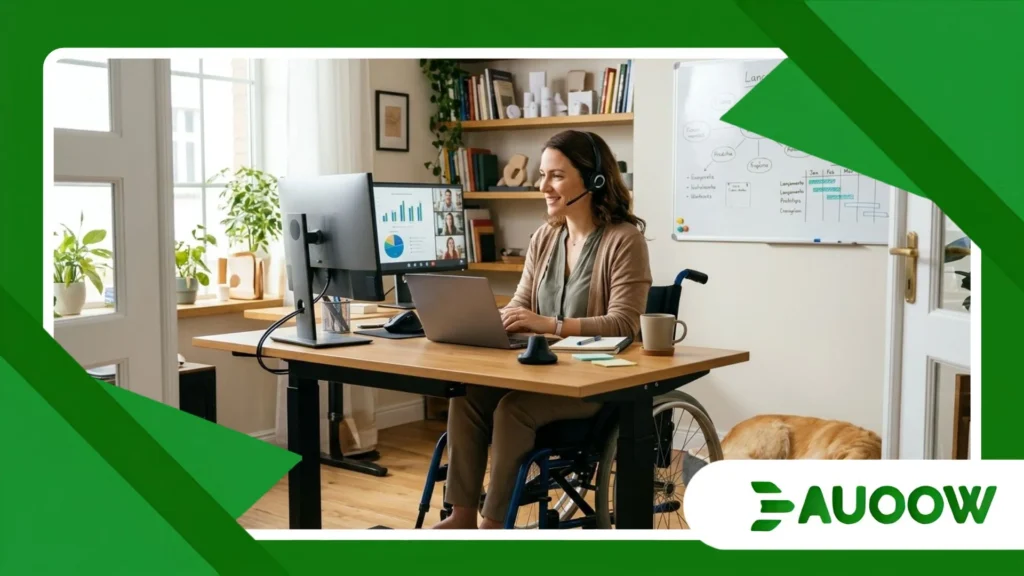
Think of a skilled graphic designer living with severe migraines and photophobia. In a fluorescent-lit agency bullpen with constant Slack notifications, she might struggle to sustain twenty billable hours a week.
Running her own studio from a dim, acoustically controlled home office, using asynchronous client portals instead of live status meetings, she regularly delivers high-margin branding packages ahead of deadline.
Read more: Robotics and Automation: Threat or Opportunity for Disabled Workers?
How Do Asynchronous Workflows Protect Health and Quality?
There are good reasons to question the assumption that constant availability equals superior customer service. Disabled founders have pioneered boundary-driven operations that actually improve client outcomes:
- Written-first communication: Replacing unscheduled phone calls with detailed video walkthroughs or structured project briefs eliminates cognitive overload and creates a permanent, searchable record for both client and founder.
- Buffer-built timelines: Instead of promising frantic 24-hour turnarounds, adaptive entrepreneurs build realistic delivery windows that absorb unexpected medical appointments or flare-ups without compromising overall quality.
- Modular micro-teams: Many disabled business owners partner with other independent contractors on a project basis, ensuring that deadlines remain protected even if one person needs a recovery day.
Because these systems remove wasted meeting hours, flexible work models matter for disabled entrepreneurs not merely as a personal accommodation, but as a leaner, higher-margin business framework.
Can Assistive Technology Thrive Better in Self-Owned Businesses?
In large enterprises, installing specialized voice-recognition software, custom ergonomic hardware, or AI transcription tools often stalls in IT security review queues for months. Independent founders configure their digital ecosystems immediately.
Whether relying on eye-tracking navigation, speech-to-text drafting, or automated scheduling scripts, disabled entrepreneurs integrate assistive tools directly into their core workflows from day one.
Accessibility stops being an expensive afterthought and becomes the native operating system of the company.
What Structural Risks Still Threaten Disabled Business Owners?
Celebrating the freedom of self-employment without examining its financial traps would be irresponsible. Leaving traditional payroll behind strips away critical safety nets that society still ties exclusively to conventional employment.
The most acute barrier remains the benefits cliff and healthcare access. In the United States, founders relying on Medicaid home- and community-based services which fund essential personal care attendants that corporate insurance rarely covers face strict income and asset caps.
Earning a modest profit can abruptly disqualify an entrepreneur from the very support services that enable them to run their business safely.
Why Is Access to Capital Still Unequal?
Beyond healthcare, traditional bank loans and venture capital networks remain heavily biased toward founders who can pitch in person, travel frequently, and follow aggressive, linear growth trajectories.
A founder scaling a sustainable, lifestyle-aligned consultancy at a steady pace often gets overlooked by investors chasing hyper-growth metrics.
Furthermore, unstable income months can collide painfully with ongoing medical expenses.
Recognizing why flexible work models matter for disabled entrepreneurs also means advocating for portable benefits, accessible micro-grants, and reformed asset limits that do not punish financial independence.
How Do Traditional Corporate Roles Compare to Adaptive Entrepreneurship?
To see how structural design shapes daily reality, it helps to examine the concrete trade-offs between conventional corporate employment and self-directed, flexible business models.
| Operational Dimension | Traditional Corporate Employment | Adaptive Entrepreneurial Model |
| Daily Schedule & Pacing | Fixed hours (typically 9-to-5); tardiness or mid-day rest often penalized. | Energy-aligned blocks; work occurs during peak cognitive and physical windows. |
| Communication Style | Synchronous meetings, instant messaging expectations, open-office noise. | Asynchronous briefs, recorded updates, scheduled deep-work boundaries. |
| Workspace & Tools | Standardized office hardware; slow IT approval for assistive software. | Fully customized sensory environment; immediate integration of assistive tech. |
| Commute & Logistics | Daily transit strain, inaccessible infrastructure, high energy depletion. | Zero-commute baseline; travel reserved strictly for high-value strategic needs. |
| Financial & Benefit Security | Steady paycheck and employer health plans, but rigid income ceiling. | Variable cash flow and complex benefit cliffs, balanced by uncapped earning potential. |
Reimagining Economic Participation Beyond Rigid Clocks
Stepping back from individual case studies, the rise of disabled entrepreneurship forces a broader reckoning with how we measure human value in the economy.
For over a century, society confused endurance of physical discomfort with professional merit.
If a system only functions when workers suppress pain, hide fatigue, and conform to an identical clock, the flaw lies in the architecture of the system not in the people excluded by it.
What disabled founders are quietly proving across consulting agencies, e-commerce brands, software studios, and creative practices is that adaptability breeds deep resilience.
By stripping away performative presence and anchoring work in clear deliverables, they have built blueprints that benefit caregivers, aging workers, and anyone navigating life’s inevitable unpredictability.
Ultimately, supporting these ventures requires more than applause for individual grit.
It demands modernizing public benefit rules, expanding accessible capital, and recognizing that economic inclusion flourishes when people are trusted to design how they contribute.
When we remove the tyranny of the rigid clock, flexible work models matter for disabled entrepreneurs because they finally allow talent, creativity, and lived insight to speak louder than physical constraints, fostering an inclusive economic landscape where diverse human experiences are recognized as a core driver of sustainable innovation.
Frequently Asked Questions
Why are disabled people more likely to become entrepreneurs than non-disabled people?
Traditional workplaces often enforce rigid hours, mandatory commutes, and slow accommodation processes that clash with fluctuating health needs or assistive setups.
Self-employment allows disabled professionals to control their schedules, sensory environments, and pacing, turning otherwise inaccessible career paths into sustainable livelihoods.
What is an asynchronous work model and how does it help disabled founders?
An asynchronous work model means team members and clients do not need to be online at the exact same moment to collaborate.
Using written project briefs, recorded video updates, and clear deadline windows removes the stress of back-to-back live meetings and allows founders to work during their highest-energy hours.
Do disabled entrepreneurs lose government disability benefits when they start a business?
It depends on the country and the specific program. In the U.S., programs like SSI and Medicaid enforce strict income and asset limits often called the benefits cliff which can reduce cash assistance or essential home-care coverage if business profits rise too high, though work incentives like PASS can help protect certain assets during startup phases.
How can clients and corporate partners work better with disabled business owners?
Clients can build stronger partnerships by respecting written communication preferences, avoiding last-minute unscheduled calls, offering accessible digital contract formats, and paying invoices promptly since predictable cash flow helps independent founders manage both business overhead and healthcare costs.
Are there specific grants or funding programs for entrepreneurs with disabilities?
Yes, several public and private initiatives target this gap, including state Vocational Rehabilitation self-employment grants in the U.S., the UK’s Access to Work scheme (which also supports self-employed individuals), and specialized disability-led venture funds and micro-grant programs offered by nonprofit business accelerators.
