
Disabled People in Politics: Structural Barriers Beyond Discrimination
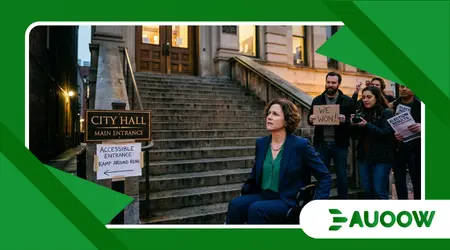
The presence of Disabled people in politics often begins not with a manifesto, but with a flight of stone steps outside a municipal hall.
Imagine a candidate who has spent months organizing a grassroots campaign, building a coalition of local voters, and refining a platform focused on urban renewal.
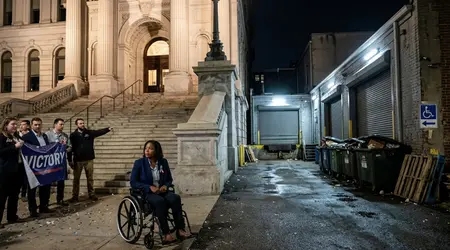
On election night, as the results come in and victory is secured, this newly elected representative arrives at the historic civic building only to find that the main entrance is entirely inaccessible to a wheelchair.
The celebratory moment is instantly punctuated by a quiet, systemic barrier: entering through a back alley, past the loading docks and waste bins, because the architecture of governance never anticipated their arrival.
This is not an isolated incident of poor planning; it is a visible manifestation of a deeper, institutional design flaw.
What We Examine in This Analysis
- The Physical Gatekeepers: How historical civic architecture continues to create barriers for qualified leaders.
- The Hidden Operational Barriers: The exhausting logistical and financial tolls required just to participate in legislative sessions.
- A Shift in Perspective: Moving beyond basic anti-discrimination rhetoric toward genuine structural overhaul.
When we discuss the democratic deficit, the conversation routinely lands on voter apathy, campaign finance, or partisan polarization.
What rarely enters this debate is how the physical and operational structures of our political institutions actively filter out diverse leadership.
The conversation around diversity in leadership has expanded significantly, yet the specific realities facing Disabled people in politics remain relegated to the margins, treated more as a compliance checklist than a core democratic necessity.
To understand why true representation remains so elusive, we have to look past overt prejudice. The barrier is seldom a sign on the door that explicitly bans a segment of the population.
Instead, it is a subtle, interlocking web of historical precedents, rigid procedural rules, and institutional inertia that achieves the same exclusionary result without ever having to express bias out loud.
++ Police Training and Disability Rights: Policy vs Practice
Why Does Civic Architecture Still Keep Leaders Out?
When observing with more attention, the pattern repeats itself across centuries-old parliaments and modern city councils alike.
The buildings where laws are debated and passed were largely constructed during eras when disability was viewed strictly through a medical or charitable lens, rather than a civil rights framework.
Grand marble staircases, narrow corridors, and elevated podiums were designed to project power, authority, and a specific, narrow definition of physical vitality.
The preservation of these architectural choices is not merely an aesthetic preference; it is a political decision.
When a heritage building is exempted from modern accessibility upgrades under the guise of historical preservation, the institution makes a choice about what it values more: the unaltered masonry of the past or the democratic participation of the present.
This historical continuity creates a profound contradiction.
A government might pass sweeping legislation mandating accessibility in private businesses, while its own representatives gather in a chamber where a member with a mobility impairment cannot physically reach the voting button or step up to the microphone without assistance.
The message this sends to the public is unmistakable: you are welcome to be governed, but you are not truly expected to govern.
Also read: Disability Rights in Africa: Emerging Leaders in Inclusion
Beyond the Ramp: What Are the Hidden Tolls of Campaigning?
The hurdles do not begin at the parliament steps; they begin on the campaign trail, where the structural disadvantages confronting Disabled people in politics become magnified.
Traditional campaigning relies on a demanding, physically grueling formula: door-to-door canvassing across uneven sidewalks, navigating inaccessible community spaces, and maintaining an exhausting schedule of town halls and media appearances.
There is a detailed structural element that financially penalizes candidates who require alternative paces or specific accommodations.
Consider the financial architecture of a modern political campaign. Election finance laws are highly specific about what constitutes a valid campaign expense.
While traditional expenses like printing flyers, renting office space, or hiring political consultants are universally approved, the rules around disability-related costs are often ambiguous or penalizing.
A candidate who requires a sign language interpreter for every public event, or who needs specialized accessible transport to navigate a rural district, faces a steep financial hill.
If these expenses must be drawn from the core campaign budget, the candidate is forced to choose between personal accessibility and competitive political advertising.
| Traditional Campaign Framework | The Reality of Accessibility |
| Door-to-door neighborhood sweeps | Inaccessible housing infrastructure |
| Unregulated, exhausting schedules | Disregard for pacing and stamina |
| Standardized campaign expense rules | High out-of-pocket access costs |
What Actually Changed After the ADA and Equality Act?
The passage of landmark civil rights laws, such as the Americans with Disabilities Act in the United States or the Equality Act in the United Kingdom, was celebrated as a turning point for societal inclusion.
Decades later, an honest analysis suggests that while these frameworks transformed public transit and commercial spaces, their application to the internal mechanics of political parties and legislative bodies remains remarkably weak.
Political parties, functioning essentially as private clubs or distributed networks, frequently operate outside the strict oversight applied to traditional employers.
A party’s internal selection process for choosing candidates is often informal, relying on networking events held in backrooms of pubs, late-night dinners, or crowded, inaccessible venues.
Because these processes are decentralized, they evade standard accessibility audits.
Historical legislation focused on eliminating discrimination in the open market, but it failed to anticipate how deeply entrenched informal barriers are within the structures that determine who gets to run for office in the first place.
Read more: Accessibility Policies in India: Progress and Pitfalls
How Do Procedural Rules Weaponize Time?
Once elected, a new set of institutional barriers emerges within the legislative chambers themselves.
The daily operations of governing bodies are governed by procedural rules that often trace their origins back centuries.
These rules frequently weaponize time and physical presence in ways that disproportionately impact Disabled people in politics.
Imagine a legislative session that extends into the early hours of the morning, driven by filibusters or tactical delays.
For a representative managing a chronic health condition or relying on a structured care routine, these unpredictable, marathon sessions are not merely inconvenient; they can be a direct threat to their health and ability to perform their duties.
The resistance to modernizing these procedures is frequently defended in the name of tradition or legislative rigor.
During recent global crises, many governing bodies temporarily adopted remote voting and virtual participation systems, proving that flexible operations are entirely feasible.
Yet, as soon as the immediate crises subsided, many of these systems were dismantled in favor of returning to mandatory in-person presence.
This insistence on physical proximity, without a corresponding commitment to total accessibility, reveals a systemic preference for traditional form over genuinely inclusive substance.
Who Benefits from Maintaining the Status Quo?
To understand why change occurs at such a slow pace, we must ask who benefits from the current arrangement.
The political arena is inherently competitive, structured as a zero-sum game where any advantage is fiercely guarded.
The prevailing template of the successful politician characterized by boundless physical stamina, spontaneous travel, and the ability to command a room through traditional vocal delivery suits those who already fit this profile.
When the system treats accommodations as special treatments rather than fundamental rights, it limits the pool of competition.
This dynamic keeps perspective narrow. When disabled people are absent from the committees drafting healthcare, urban planning, or economic policies, those policies inevitably develop blind spots.
The societal cost is immense: public infrastructure continues to be built with design flaws that must be retrofitted later at great public expense, all because the initial planning sessions lacked the insights of leaders who navigate the world differently.
Moving From Accommodation to Systemic Design
The path forward requires a fundamental shift in how we conceptualize political inclusion.
For too long, the approach has been reactive, relying on individual representatives to fight for their own accommodations on a case-by-case basis.
This burden is both unfair and unsustainable; an elected official should be focusing their energy on serving their constituents, not negotiating for a functional desk or a working elevator.
True democracy demands that we view accessibility not as a series of retrofitted modifications, but as a core pillar of institutional design.
This means rewriting campaign finance laws to explicitly exempt accessibility costs from spending caps, ensuring every citizen has an equal opportunity to run for office.
It means structurally auditing parliamentary procedures to allow for flexible participation models that accommodate diverse human needs.
Until these structural transformations are realized, our democratic institutions will remain incomplete, reflecting only a segment of the citizenry they claim to represent.
Frequently Asked Questions
Why isn’t standard anti-discrimination law enough to fix this issue?
Standard laws typically focus on employment and public accommodation, but political parties and legislative procedures often operate in a grey area with unique exemptions.
These laws are also reactive, requiring an individual to experience exclusion and file a complaint, rather than forcing institutions to proactively redesign their structures from the ground up.
What are the specific campaign finance barriers facing these candidates?
Candidates often face significant personal costs for sign language interpretation, accessible transport, or support staff.
In many jurisdictions, campaign finance regulations do not clearly define whether these are permissible campaign expenses or if they must come from personal funds, putting those candidates at a distinct financial disadvantage.
How do late-night legislative sessions impact representation?
Unpredictable and prolonged sessions favor individuals who do not rely on structured daily medical care, specific rest periods, or external caregiving networks.
By treating physical endurance as a measure of political commitment, traditional rules systematically disadvantage individuals with chronic illnesses or mobility challenges.
Has virtual or remote participation helped improve political access?
Yes. The temporary adoption of remote voting and virtual testimony demonstrated that legislative bodies can function accessibly.
However, the subsequent push to eliminate these systems in the name of returning to tradition has undone much of that progress, showing that the barrier is often political will, not technological capability.
