
The Global Movement Toward Inclusive Public Policy
The Architecture of Belonging: How Systems Shape Access and Why Genuine Inclusion Takes Time.
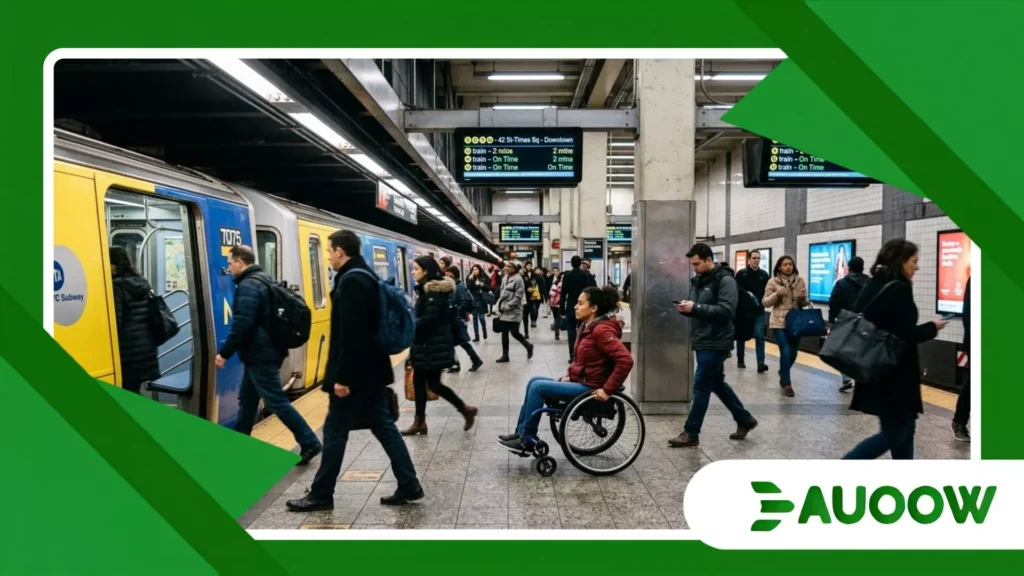
The subway doors slide open at a major transit hub, and the rush begins a synchronized movement of footsteps, scrolling screens, and hurried murmurs.
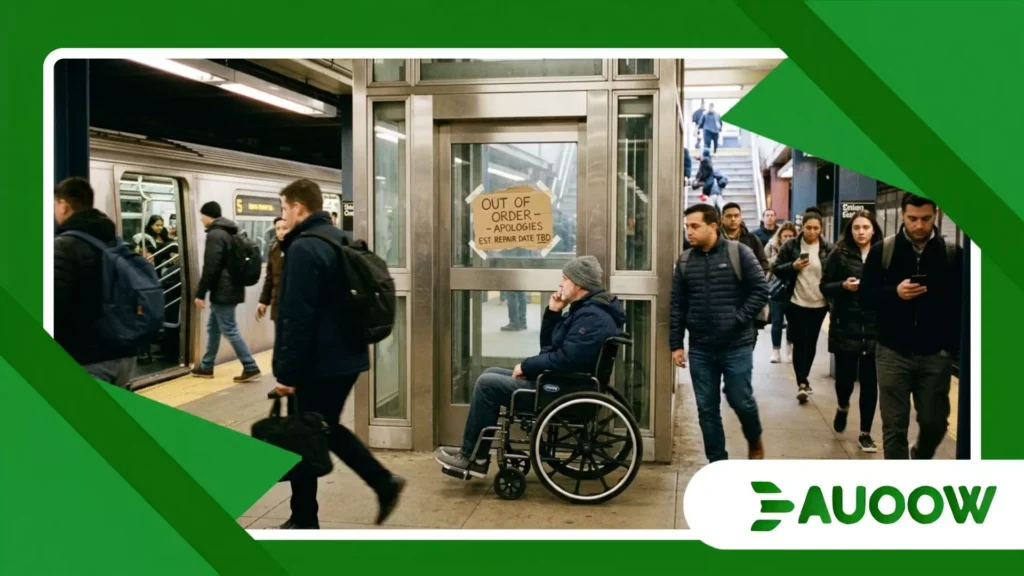
Amidst this fluid motion, a wheelchair user stops in front of a broken platform lift, staring at a handwritten out-of-order sign that has lingered for three weeks.
No announcements were made, no alternative routing was posted, and commuters stream past, instinctively parting around the obstacle as if it were a permanent architectural column rather than a systemic failure.
This quiet friction where public infrastructure treats human variation as an inconvenient exception rather than a design baseline reveals how far our built environments remain from reality.
Understanding this persistent disconnect requires examining the global movement toward inclusive public policy, which seeks to transform how societies conceive of civic life, rights, and collective responsibility.
Mapping the Shift: From historical charity models to modern rights frameworks.
The Structural Inertia: Why implementation lags behind progressive legislation.
Human Realities: Navigating public spaces and workplaces under legacy designs.
Economic Imperatives: The measurable impact of universal accessibility on communities.
When Good Intentions Meet Bureaucratic Inertia
For decades, conversations surrounding disability and access were dominated by charity and medical frameworks.
People with disabilities were often viewed through a lens of individual deficit or personal misfortune, expected to rely on specialized intervention rather than systemic accommodation.
Legislation, when present, frequently focused on exemptions and segregated provisions instead of universal integration.
Over recent decades, however, a profound philosophical pivot has taken root internationally, driven by grassroots advocacy, legal precedent, and international covenants such as the United Nations Convention on the Rights of Persons with Disabilities.
Yet translating international agreements into everyday municipal reality is rarely straightforward.
The global movement toward inclusive public policy encounters deep-seated institutional inertia, where municipal budgets, zoning laws, and historic preservation guidelines frequently clash with the demands of universal access.
Why do old urban planning models persist?
Cities act as physical archives of past political and economic priorities. Nineteenth-century transit networks and twentieth-century suburban sprawl were engineered around narrow assumptions about productivity, speed, and standard body types.
When retrofitting these older systems, urban planners still tend to treat accessibility as a secondary expense rather than essential civic infrastructure.
When examining municipal budgets across major metropolitan areas, spending on universal design is routinely categorized as discretionary rather than essential safety expenditure.
The distance between policy offices and daily street-level realities often shields decision-makers from the friction of uneven sidewalks, inaccessible polling places, or government web portals that fail screen-reader compatibility.
Maintaining legacy systems offers a comfortable path of least resistance, because redesigning them forces institutions to confront exclusionary assumptions built decades ago.
++ How NDIS reforms Australia could reshape disability rights
The Hidden Costs of Fragmented Implementation
When policies are drafted without direct input from the communities affected, implementation usually creates new friction points instead of solutions.
Consider public transportation networks: while newer subway stations may feature elevators and tactile paving, older interchange stations remain neglected under the justification of high renovation costs.
Take the case of a qualified accountant with a mobility impairment who turns down a promotion because the new office building requires navigating three unramped steps just to reach the main elevator bank.
No written rule bars this professional from advancing, yet the physical architecture achieves that exact result.
| Policy Approach | Primary Focus | Typical Outcome |
| Charity & Medical Model | Individual impairment, medical rehabilitation | Segregated services, low employment rates, systemic dependency |
| Compliance-Driven Model | Minimum legal standards, avoiding litigation | Tokenistic ramps, inaccessible digital interfaces, isolated solutions |
| Universal Design Framework | Systemic equity, human variation, proactive inclusion | Fully integrated public spaces, shared civic life, economic vitality |
This overview highlights how the underlying philosophy of a policy shapes its practical outcome. Treating compliance merely as a bureaucratic requirement stalls practical innovation.
Building genuine equity means moving past minimum legal thresholds toward design that respects human dignity.
How do modern legislative frameworks attempt to bridge this gap?
Contemporary policy design increasingly emphasizes universal design the principle that products, environments, and communication systems should be inherently usable by as many people as possible without needing secondary adaptations.
This approach shifts focus away from individual fixes, recognizing that barriers emerge when environments are poorly conceived.
As the global movement toward inclusive public policy matures, lawmakers are beginning to link infrastructure funding directly to mandatory universal design standards.
Projects that fail to incorporate accessible transit connections, inclusive digital portals, and barrier-free public spaces face delayed approvals or withheld funding.
Also read: Why disability voting access is a major issue in 2026 elections
Navigating the Digital Frontier of Accessibility
As physical infrastructure gradually adapts, a parallel transformation is unfolding across the digital landscape.
Public services, healthcare portals, and educational resources have moved online, offering widespread convenience. Yet this transition has also introduced distinct forms of exclusion.
Read more: Exporting Accessibility Laws: Do Western Models Actually Work Elsewhere?
Is digital transformation automatically more inclusive?
Not by default. Launching online portals without strict adherence to digital accessibility standards leaves millions of citizens including people with visual, auditory, or cognitive disabilities unable to access basic services.
An improperly coded tax portal or an inaccessible appointment system operates much like a flight of stairs at a town hall entrance.
Assuming that screens automatically equalize access ignores how digital exclusion can mirror physical barriers.
Over the past decade, legal challenges and regulatory shifts have pushed public agencies to address digital accessibility as a fundamental right rather than a technical preference.
Public sector websites in various jurisdictions face growing requirements to align with international frameworks, such as the Web Content Accessibility Guidelines (WCAG).
While implementation remains uneven, public institutions can no longer overlook digital access barriers.
Re-envisioning Public Space for Everyone
At its core, inclusive public policy extends beyond ramps and digital screen readers; it reflects who is welcomed into civic life.
Designing streets, schools, transit systems, and online platforms around human diversity benefits broader communities from parents navigating with strollers and older adults experiencing age-related changes to people recovering from temporary injuries.
The evolution of these policies marks a shift toward listening to real lived experiences.
As the global movement toward inclusive public policy continues to reshape civic standards, meaningful progress will not be measured by legislation alone, but by how naturally people can participate in everyday life without having to fight the design of their environment.
Editorial FAQ
What does inclusive public policy actually mean in practice?
Inclusive public policy refers to laws, regulations, and urban planning strategies that proactively account for human diversity including physical, sensory, and cognitive differences ensuring that public infrastructure, education, transportation, and digital services are usable from the outset.
Why do accessibility retrofits take so long in major cities?
Retrofitting older urban infrastructure involves real engineering challenges, high costs, and heritage preservation rules.
Progress is also slowed when accessibility is treated as an optional upgrade rather than an essential public utility.
How do universal design principles differ from standard compliance?
Standard compliance focuses on meeting basic legal requirements to avoid penalties, which often leads to isolated additions like an accessible entrance built at the rear of a building.
Universal design builds accessibility directly into the primary structure so that one seamless environment serves everyone.
Are private businesses bound by the same accessibility policies as public entities?
Regulations vary by region, but many legal frameworks extend accessibility requirements to commercial spaces, workplaces, and digital service providers, acknowledging that public life relies on both civic and private infrastructure.
