
Supporting Executive Function Challenges in Mainstream Schools
The morning sun cuts sharply across the linoleum of a suburban middle school hallway, illuminating a scene that repeats itself in thousands of buildings before the first bell even rings.
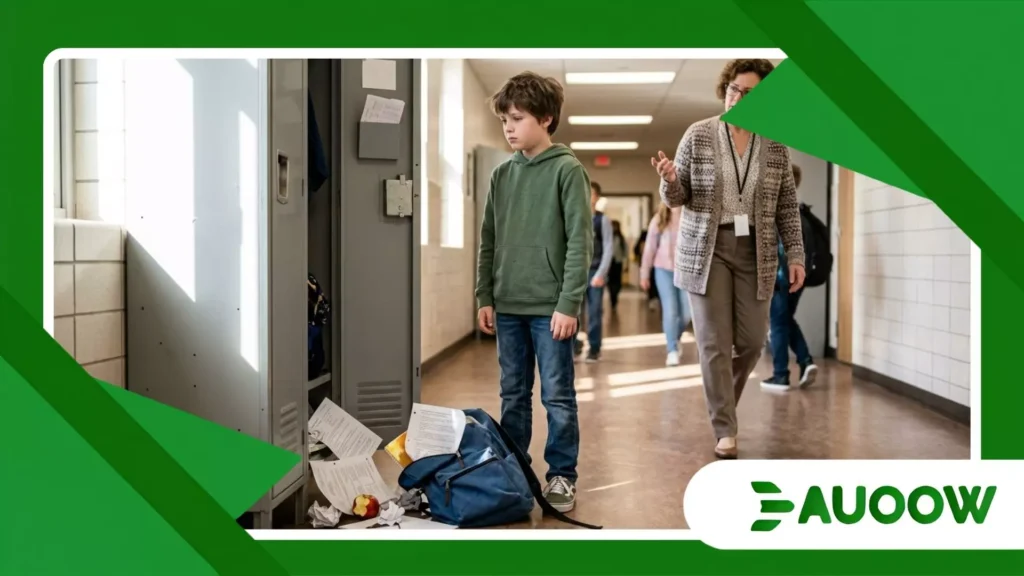
Ten-year-old Leo stands frozen in front of his locker, his backpack unzipped and spilling a chaotic avalanche of crumpled worksheets, a half-eaten apple, and a math notebook missing its cover.
His homeroom teacher walks by, offering a familiar, well-intentioned reminder: “Just get organized, Leo. You know where things belong.”
But for Leo, the locker is not merely messy; it is the physical manifestation of a neurological bottleneck.
The invisible weight of executive function challenges in mainstream schools often remains entirely misunderstood, frequently misdiagnosed as simple laziness or a lack of discipline when it is actually a profound processing difference in how the brain prioritizes, plans, and executes daily tasks.
“Navigating the modern classroom requires a continuous sequence of cognitive shifts that standard school architectures were never built to accommodate.”
What Does a Typical Day Feel Like Inside These Classrooms?
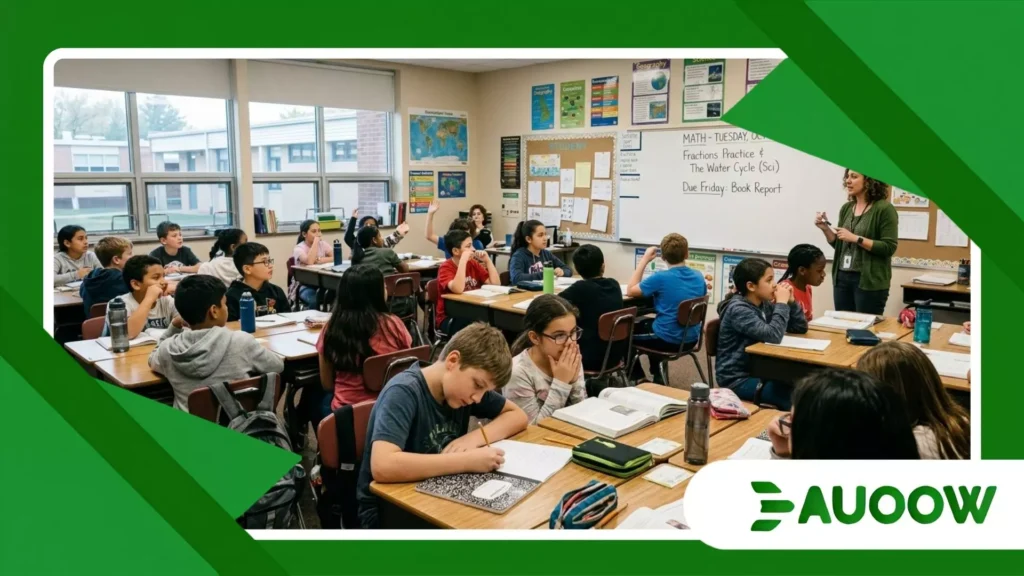
Think about an average Tuesday morning in a crowded sixth-grade classroom.
Within a span of forty-five minutes, students are expected to transition smoothly between completely distinct subjects, unearth specific materials from deep within their bags, filter out the ambient hum of thirty other children shuffling papers, and hold multi-step instructions in their working memory without external prompts.
For most students, these transitions happen unconsciously. For children navigating executive function challenges in mainstream schools, every single shift demands a massive expenditure of mental energy.
When we observe these classrooms with genuine attention, a recurring pattern emerges.
The student who forgets their pencil is rarely the student who didn’t care about the lesson; more often, they are the child whose cognitive bandwidth was entirely consumed by the sheer panic of remembering which classroom they are supposed to be in next.
Why Do Traditional School Architectures Fail This Cognitive Reality?
The Rigid Blueprint of Historical Education
The modern school model is largely a legacy of industrial-era design. It values uniformity, linear pacing, and rigid time blocks above all else.
“We built our educational spaces to process batches of students efficiently, assuming that every mind operates on the same internal clock.”
Historical policies assumed that compliance and attentiveness were default human traits rather than developed neural capacities.
When systems demand that every child sit still, track multiple instructions simultaneously, and manage independent project timelines without scaffolding, they systematically disadvantage those whose frontal lobes develop along a different trajectory.
What rarely enters this policy debate is the financial and emotional cost of this mismatch. Schools invest heavily in remedial reading programs and behavioral intervention plans, yet they frequently overlook the foundational architecture of executive control.
++ How AI Tutors Are Changing Learning Opportunities for Students with Disabilities
The Hidden Cost of Rigidity
When a system refuses to bend, individuals are forced to break. Children experiencing executive function challenges in mainstream schools often internalize their structural difficulties as personal moral failures.
They hear variations of “try harder” for years until their academic self-worth erodes completely.
How Did We Move from Exclusion to Integrated Environments?
A Century of Changing Expectations
To understand why contemporary classrooms struggle with cognitive diversity, we must examine how integration evolved over the past several decades.
Mid-century educational reforms fought hard to bring children with physical and developmental differences out of segregated institutions and into neighborhood schools.
This physical integration was a monumental victory for civil rights. However, bringing bodies into a building is fundamentally different from adapting the cognitive environment to meet those bodies’ needs.
For years, policymakers treated inclusion as an architectural check-box: widen the doors, add a ramp, install an elevator, and the job is done.
The invisible barriers the executive demands, the sensory overloads, the unspoken social rules—remained entirely intact.
Read more: Africa’s Innovative Approaches to Inclusive Learning
What Actually Changed After This?
| Decade | Dominant Educational Approach | View of Student Difficulty | Primary Remediation Method |
| 1970s–1980s | Mainstreaming / Integration | Individual deficit | Segregated special education rooms |
| 1990s–2010s | Inclusion & Early Accommodations | Medical model | Individualized IEPs and basic physical access |
| 2020s & Beyond | Universal Design for Learning (UDL) | Environmental mismatch | Flexible pacing, environmental scaffolding, systemic adaptation |
Shifting from Compliance to Environmental Design
Rethinking How We Structure the School Day
The analysis most honest suggests that tweaking homework policies or offering occasional after-school tutoring will never resolve systemic cognitive friction.
Instead, educators are beginning to explore environmental interventions that reduce the cognitive load for everyone in the room.
Consider how visual schedules, predictable routines, and reduced sensory clutter fundamentally alter a classroom’s atmosphere.
These aren’t just accommodations for a specific diagnosis; they are universal design choices that benefit every single learner.
When a teacher writes the sequence of daily tasks on the board and leaves them visible, they relieve the working memory of every child in the room.
This simple practice directly mitigates executive function challenges in mainstream schools without singling out any individual student.
Also read: Inclusive Education in the Middle East: Emerging Opportunities
The Role of Assistive Technology in Daily Regulation
Technology has moved far beyond simple word processors and screen readers. Today, digital tools offer environmental scaffolding that mimics a supportive external prefrontal cortex.
From smart reminders that gently cue task transitions to noise-canceling headphones that reduce sensory distraction, these tools act as bridges across cognitive gaps.
Yet, access remains unevenly distributed across districts, depending heavily on local funding and administrative awareness.
Frequently Asked Questions
Are executive function difficulties considered learning disabilities?
No, they are not classified as specific learning disabilities like dyslexia or dyscalculia.
Instead, they represent delays or differences in the brain’s management system including working memory, cognitive flexibility, and self-control frequently co-occurring with conditions like ADHD or autism.
How do these challenges manifest during adolescence?
As academic demands shift toward independent long-term projects and self-directed study in middle and high school, difficulties with planning, prioritizing, and time management become much more pronounced, often leading to sudden drops in academic performance.
Can classroom environments be modified without disrupting other students?
Yes, absolutely. Most strategies designed to support executive function challenges in mainstream schools such as visual agendas, clear transitions, and structured choices actually improve focus and classroom management for the entire student body.
Is professional medication the only effective intervention?
Medication can be helpful for specific underlying conditions like ADHD, but it is rarely sufficient on its own.
Comprehensive support always requires environmental modifications, explicit instruction in coping strategies, and a collaborative approach between educators and families.
What is the first practical step a teacher can take tomorrow?
Start by externalizing the invisible. Break complex multi-step assignments down into bite-sized written milestones on the board, and allow students brief, structured pauses between high-focus tasks to reset their cognitive stamina.
