
Voice-Controlled Appliances: Are They Worth It?
Evaluating the true utility of voice-controlled appliances in a home requires looking past marketing hype and examining how people interact with technology when physical access is compromised.
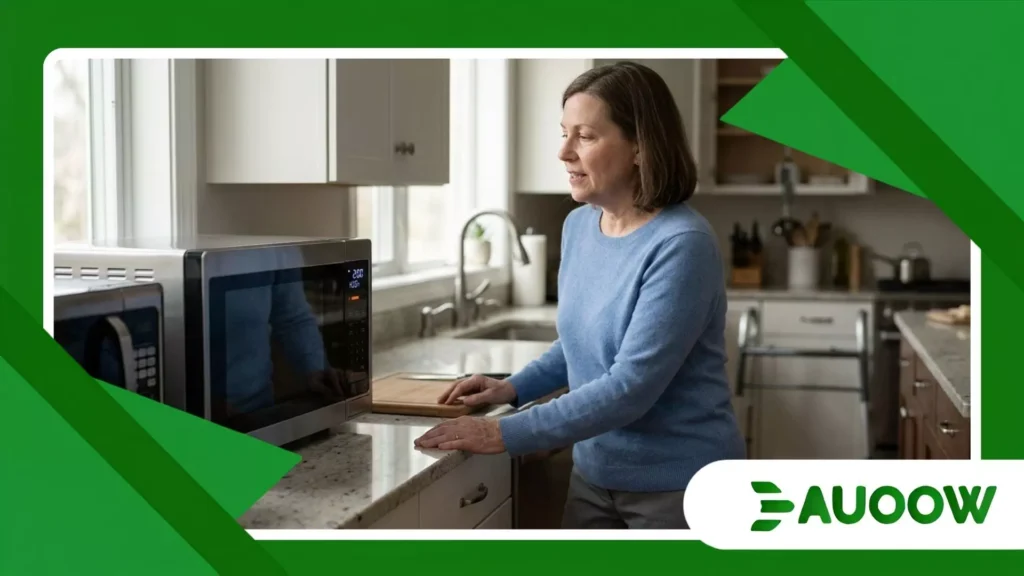
A quiet hum echoes in the kitchen as a woman with progressive multiple sclerosis stops two steps short of her microwave.
Her hands, unsteady this afternoon, struggle to grip the handle or align her finger with the flat, smooth capacitive buttons on the control panel.
On the counter nearby, a smart counter oven sits idle, waiting for a vocal prompt. She speaks softly, asking it to heat her meal for two minutes at high power.
The machine chimes, clicks to life, and begins humming. For a moment, the friction between a human body and a physical environment disappears, replaced by an invisible bridge built out of sound.
Yet stories like this exist alongside less triumphant realities muffled words ignored by stubborn algorithms, internet outages disabling entire kitchens, and high price tags that keep assistance out of reach for those who need it most.
Key Perspectives in This Article:
- The shift from novelty smart gadgets to genuine assistive independence
- Underlying structural barriers in software design, internet reliability, and pricing
- Practical trade-offs between physical accessibility and technological dependency
- Real-world usability across different physical, cognitive, and vocal capabilities
Beyond the Novelty: Why Voice Interfaces Matter for Daily Independence
When smart speakers and connected ovens first arrived on consumer shelves, public relations campaigns framed them as luxury conveniences for the busy professional.
The messaging focused on preheating an oven from the driveway or starting a coffee pot without getting out of bed.
What the market framed as a minor comfort, however, carried profound implications for disabled individuals, older adults aging in place, and anyone recovering from temporary injury.
What rarely enters this debate is how physical appliance design systematically drifted away from tactile accessibility over the past twenty years.
Older stoves and washing machines relied on raised knobs, firm mechanical switches, and distinct tactile clicks.
As manufacturers shifted toward flat glass touchscreens and seamless digital pads to lower production costs and project a sleek aesthetic, they inadvertently erected barriers for people with visual impairments, tremors, or limited hand strength.
In this context, voice-controlled appliances emerged not as a futuristic luxury, but as an architectural workaround for a physical world that had quietly become less accessible.
Speaking a command bypasses the demand for fine motor control, precise spatial alignment, and physical reach.
It transforms a complex physical interaction into a simple verbal statement, restoring autonomy in fundamental daily routines like cooking, laundry, and home climate regulation.
++ Smart Home Features That Actually Improve Independence
What Are the Real Limitations Behind the Hype?
Despite their transformative potential, smart home tools frequently fail at the intersection of real-world diversity and rigid software design.
There is a structural detail that tends to be ignored in product reviews: voice recognition models are trained primarily on standard speech patterns, normative dialects, and clear vocal tones.
For an individual with dysarthria, a speech impediment, or speech changes caused by a stroke, interacting with voice-controlled appliances can turn into a frustrating cycle of repeated prompts and ignored requests.
When an automated system fails to comprehend a command, the user is forced back onto the physical controls the very interface they were attempting to avoid.
Network Dependence and System Resilience
- Most voice-processing systems rely on active cloud connections to interpret natural language.
- A brief Wi-Fi disruption can render a high-tech kitchen completely non-responsive.
- Local, offline voice processing remains rare in standard consumer models.
Maintenance and Software Obsolescence
- Appliances outlive software update lifecycles, risking broken voice integration within a few years.
- Third-party smart home ecosystems frequently change APIs, breaking setup routines without warning.
- Physical manual overrides are often buried behind multi-step menus or non-accessible buttons.
When we observe with closer attention, the pattern repeats: digital interfaces are treated as complete replacements for inclusive hardware design rather than complementary layers.
Relying entirely on voice without maintaining physical accessibility creates a double bind, where a tech failure leaves a person without any usable way to operate their own home.
Also read: Why facial recognition accessibility raises daily access concerns
Connective History: How Standards and Universal Design Evolved
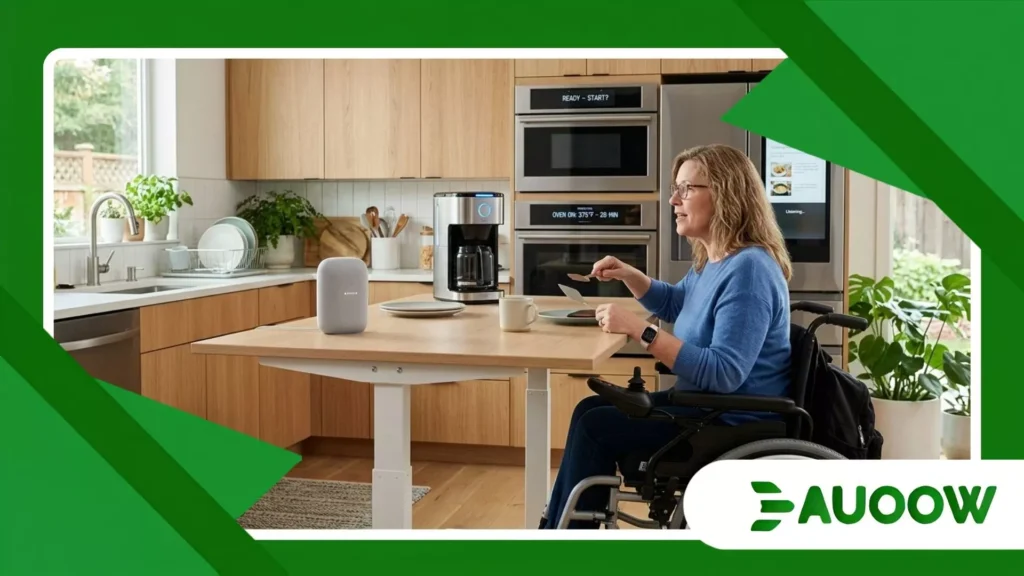
The tension between functional accessibility and consumer design is not new. In the mid-twentieth century, accessibility interventions were strictly clinical, designed for medical facilities rather than domestic comfort.
The passage of foundational civil rights statutes and early accessibility standards forced a gradual rethink of public spaces, pushing architects to consider physical reach, door widths, and handrail placements.
However, private domestic spaces remained governed by market trends rather than accessibility mandates.
While public buildings added braille signage and lever handles, home appliances leaned heavily into visual-only feedback and flush buttons.
The surge in voice-controlled appliances represents a private-market response to a gap that public guidelines never fully bridged: making domestic operations effortlessly usable regardless of a person’s physical strength or sensory capacity.
Connecting past hardware design with present software ecosystems reveals a critical lesson. True universal design does not replace one mode of interaction with another; it offers redundant pathways.
A truly accessible stove is not one that only responds to voice, but one that offers clear vocal feedback, tactile physical knobs, and intuitive visual cues simultaneously.
Read more: The rise of smart crosswalk accessibility in urban mobility plans
Everyday Realities: How These Systems Perform in Practice
To evaluate whether modern voice systems deliver genuine value, consider a realistic domestic scenario involving two different households navigating daily tasks.
Living with Limited Mobility
Imagine an older resident with advanced arthritis attempting to manage laundry. Traditional washing machines require turning stiff dials, pulling heavy doors, and reading small digital displays.
With a voice-enabled setup, the individual can state the load type and initiate the cycle from across the room.
The immediate benefit is a reduction in physical pain and energy expenditure. The obstacle occurs when the machine experiences an error such as an unbalanced load.
If the machine simply chirps an error code without vocalizing the solution, the user must still inspect the drum physically, highlighting the gap between basic voice triggers and full operational feedback.
Navigating Visual Impairment
Consider a student with complete vision loss preparing dinner. Touch-screen induction cooktops offer zero tactile feedback, making setting temperature levels dangerous without assistance.
Utilizing voice-controlled appliances allows direct temperature adjustments (“set front burner to medium-high”) without guessing surface positions.
Here, voice control serves as a primary access channel. Yet, if the system requires a smartphone app confirmation or relies on a visual screen to verify the input, the accessible workflow breaks down.
The technology succeeds only when the entire loop input, processing, and confirmation remains accessible without visual verification.
Evaluating Assistive Utility in Domestic Environments
Comparing traditional hardware setups against modern smart platforms illustrates how different design approaches impact long-term independence.
| Dimension | Traditional Manual Appliances | Screen-Based Smart Appliances | Voice-Integrated Systems |
| Physical Reach Required | High (must reach controls directly) | High (must view and touch screen) | Low (operable from across a room) |
| Fine Motor Skills Needed | High (turning dials, pressing pads) | Moderate to High (precise tapping) | None (vocal input only) |
| Cognitive Load | Low (direct visual/tactile feedback) | High (navigating digital menus) | Moderate (remembering phrasing) |
| System Reliability | Very High (mechanical components) | High (local digital circuits) | Moderate (dependent on Wi-Fi/cloud) |
| Setup & Maintenance | Plug-and-play | Requires app configuration | Complex multi-device integration |
My reading of this scenario suggests that smart appliances are neither a complete cure for domestic barriers nor a meaningless gimmick.
The most honest analysis indicates they are powerful supplemental tools whose value depends entirely on how thoughtfully they are integrated into a home and supported by backup options.
Ultimately, evaluating voice-controlled appliances comes down to recognizing that technology is only as good as its fallback options.
When built with human variability in mind, voice interaction offers a vital step toward a domestic environment where independence is defined by choice, not physical limitation.
Frequently Asked Questions
Do voice-controlled appliances work well for people with speech accents or impairments?
Performance varies significantly depending on the system. While general voice recognition has improved, standard algorithms still struggle with non-standard accents, dysarthria, or speech impediments, often requiring deliberate phrasing or secondary input methods.
Can smart appliances be operated if the internet connection goes down?
Most consumer models require an active internet connection to process natural language voice commands via cloud servers.
Without Wi-Fi, voice functionality is usually disabled, though basic physical controls on the appliance will still function manually.
Are voice-controlled options significantly more expensive than standard models?
Yes, voice integration is typically bundled into mid-to-high-tier smart appliances, raising the upfront cost. However, standalone smart plugs and retrofit voice-bridge hubs offer a more affordable way to add basic voice commands to older, traditional appliances.
How do voice systems protect user privacy inside the home?
Voice-enabled devices process audio through local wake-word detection before transmitting recording data to cloud servers.
Users concerned with privacy can adjust microphone mute settings, review data retention logs, or opt for systems that process simple voice triggers locally.
Are voice controls reliable enough to completely replace physical knobs and buttons?
No. Software updates, network drops, and algorithm misinterpretations mean voice controls should serve as a helpful primary or secondary access layer, rather than a total replacement for simple, accessible physical controls.
