
How Student Voices Are Shaping Inclusive Education Policies
That student voices are shaping inclusive education policies across modern school districts is a truth felt long before it is written into administrative handbooks or discussed in boardrooms.
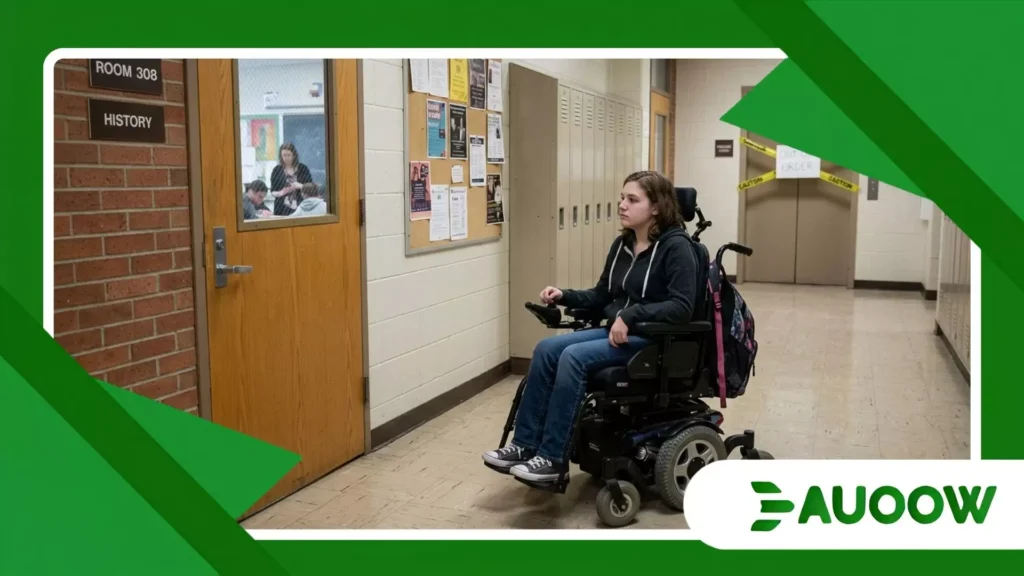
Consider a Tuesday morning in a mid-sized public high school in suburban Ohio. Maya, a sixteen-year-old junior with cerebral palsy who uses a motorized wheelchair, sits outside a third-floor history classroom.
The elevator, built during a late-1990s facility expansion, has broken down for the third time in two months.
Down the hall, a teacher offers a well-meaning compromise: Maya can sit in the ground-floor library with a laptop and watch a silent, laggy livestream of the lecture.
For decades, that would have been the end of the story an isolated administrative inconvenience handled with passive compliance. But Maya did not open her laptop.
Instead, she took a picture of the heavy fire door blocking her path, drafted a three-paragraph document detailing how repeated physical exclusion degraded her academic progress, and brought it directly to the local school board meeting that evening.
She did not ask for a single repair; she demanded a systemic audit of student movement patterns and a seat on the district’s capital planning committee.
This moment was not an isolated act of teenage defiance. It was a clear signal of an ongoing structural shift.
Across North America, Europe, and beyond, disabled students and their allies are stepping away from the role of passive beneficiaries of adult advocacy and assuming their places as primary policy architects.
What You Will Find in This Analysis
- The Evolution of Advocacy: How self-directed student agency is replacing traditional paternalistic support models.
- Structural Barriers Uncovered: The administrative blind spots that official compliance audits consistently miss.
- A Tale of Two Frameworks: How legal guarantees on paper compare to the lived reality in modern classrooms.
- Systemic Impact Assessment: A clear breakdown of what changes when youth experiences lead policy design.
- Practical Answers: Answering key questions about implementation, legal standing, and student engagement.
Why Is Traditional Policy Design Failing Today’s Classrooms?
When we look back at the history of special education legislation from the United States’ Individuals with Disabilities Education Act (IDEA) to various European national frameworks a clear historical pattern emerges.
These policy frameworks were overwhelmingly designed by adults for children. They were drafted by legal scholars, child psychologists, school administrators, and well-intentioned parents.
While these pioneers established fundamental civil rights, their top-down approach created a persistent structural blind spot.
Adults designed systems based on what they assumed a disabled student needed to survive an educational environment, rather than what the student required to thrive within it.
What rarely enters this governance debate is the profound difference between compliance and actual accessibility.
A school can spend hundreds of thousands of dollars installing heavy compliance ramps, automated doors, and standardized sensory rooms to satisfy federal regulators, only to find those facilities remain underutilized or practically useless.
Why? Because no one consulted the teenagers who actually navigate those corridors during a frantic five-minute passing period between classes.
When we observe school climate surveys with more attention, the pattern repeats: administrative metrics track physical infrastructure, while disabled students track belonging, dignity, and social autonomy.
The realization that student voices are shaping inclusive education policies marks the transition from token consultation to genuine co-design.
Young people are pointing out that an accessible building means very little if the social and pedagogical practices inside it continue to isolate them.
++ The Growing Role of Universal Design for Learning in Modern Schools
How Are Young Self-Advocates Exposing Administrative Blind Spots?
There is a structural detail that is habitually ignored in educational sociology: institutional policies tend to preserve administrative convenience over human complexity.
School routines are built around uniformity standardized testing schedules, uniform class lengths, and rigid behavioral codes. Disability, by its very nature, disrupts uniformity.
In looking closely at this evolving landscape, young disabled activists are not simply asking for special favors or retrofitted accommodations.
They are challenging the fundamental premises of standard instructional design.
Consider the growing movement around Universal Design for Learning (UDL), which advocates for flexible learning environments that can accommodate individual learning differences.
For years, UDL remained an academic concept discussed at education conferences. It began taking real root in daily school schedules only when neurodivergent students began organizing.
High schoolers with autism, ADHD, and sensory processing differences started documenting how rigid classroom environments fluorescent lighting, compulsory group projects, strict bans on fidget tools, and relentless verbal presentations created artificial barriers to their academic success.
These youth campaigns forced a critical shift in perspective. Instead of forcing an individual student to produce a clinical diagnosis to earn a separate accommodation, students argued that flexible assessment options should be built into the standard curriculum for everyone.
They demonstrated that when a lesson allows for oral, written, or multimedia submissions by default, the stigma associated with special education dissolves.
Here again, student voices are shaping inclusive education policies by turning personal accommodations into universal pedagogical standards.
Also read: Inclusive Education in the Middle East: Emerging Opportunities
What Happens When Lived Experience Meets Legislative History?
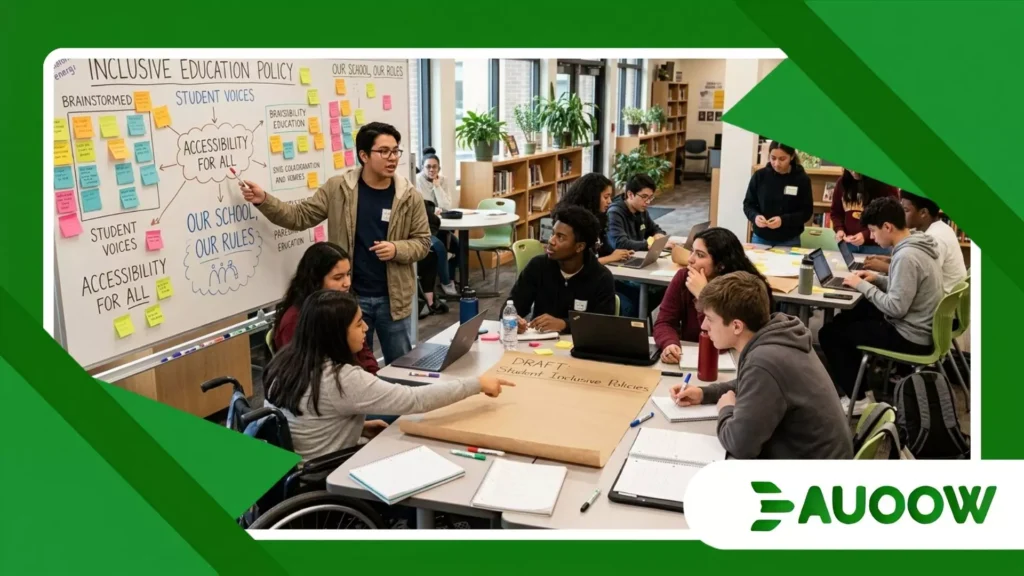
To understand why youth-led advocacy is gaining ground today, we must connect past legal foundations with current social realities.
The legal victories of the late twentieth century established access as a civil right.
However, those early statutes often framed disability through a medical lens: a deficit within the individual that required clinical intervention or special accommodation to fit into an unchanged mainstream world.
Today’s youth advocates operate through a social model of disability. They argue that disability is not an individual medical failure, but a mismatch between human needs and societal design.
This distinction is far more than academic phrasing; it fundamentally changes what students demand from public policy.
When a student sitting in a district policy meeting asserts that their inability to participate in extracurricular activities is caused by school scheduling rather than their physical condition, they are redefining institutional accountability.
In a documented case from a large urban school district in the Pacific Northwest, a group of high school seniors with mobility impairments conducted a participatory action research project.
They mapped every accessible route in their six high schools using tracking apps and video logs.
Their findings were striking: while all six buildings met legal accessibility mandates on paper, the accessible routes required disabled students to walk up to three times the distance of their non-disabled peers, often forcing them through service corridors, loading docks, and kitchen areas.
The students presented their findings not as a legal complaint, but as an analysis of lost instructional time and social alienation.
The school board responded by rewriting its capital improvements policy, mandating that future construction or renovation evaluate accessibility through the lens of student travel efficiency and social dignity rather than mere legal compliance.
Read more: Africa’s Innovative Approaches to Inclusive Learning
Why Is Youth Agency Essential for Assistive Technology Integration?
The rapid integration of technology into educational settings has exposed both immense possibilities and frustrating barriers.
During the initial push toward classroom digitalization, school districts invested heavily in software platforms, digital textbooks, and personal laptops.
Yet, many of these procurement decisions were made without consulting the students who rely on screen readers, alternative input devices, or speech-to-text software.
As tech-savvy digital natives, disabled youth are uniquely positioned to critique and refine these digital environments.
They do not view assistive technology as a separate add-on, but as an essential element of modern learning spaces.
When a student identifies that a district-mandated learning portal fails to work with third-party screen readers, they are pointing out an operational defect that adults frequently overlook.
When observing how student voices are shaping inclusive education policies in the digital realm, we see youth advisory boards actively participating in EdTech procurement decisions.
Students are evaluating software platforms for accessibility compliance before districts sign multi-year contracts.
They are advocating for policies that guarantee open access to personal assistive devices, opposing restrictive network security measures that inadvertently block speech-to-text tools or custom communication applications.
What Actually Changed After Youth Inclusion in Policy Design?
When school districts move beyond tokenism and give students real structural authority, the institutional culture shifts noticeably.
Below is an overview of policy outcomes before and after formal youth participation mechanisms were introduced in district governance.
| Policy Domain | Traditional Adult-Led Approach | Post Youth-Inclusion Governance | Direct Social & Educational Impact |
| Infrastructure Planning | Focus on minimum legal compliance (ramps, elevators). | Integration of travel efficiency, dignity, and peer proximity metrics. | Reduced transition times; decreased social isolation during school hours. |
| Instructional Assessment | Rigid standardized formats with individualized accommodation waivers. | Universal Design for Learning (UDL) principles integrated into general curricula. | Lowered stigma surrounding special education; improved engagement across all student groups. |
| EdTech Procurement | Purchasing software based on vendor claims and administrative cost. | Student testing of software accessibility prior to district purchasing. | Elimination of inaccessible digital platforms; faster adoption of modern assistive tools. |
| Behavioral Policies | Punitive responses to non-normative behavior or sensory overload. | Sensory-informed discipline policies and student-managed quiet spaces. | Significant reductions in disciplinary referrals for neurodivergent students. |
How Can School Systems Build Genuine Youth Consultation Mechanisms?
For youth-led advocacy to bring about lasting institutional change, it must be embedded directly into governance structures rather than left to occasional student activism.
School systems that successfully integrate youth perspectives typically establish dedicated advisory councils with formal reporting channels to superintendents and school boards.
However, creating these channels requires deliberate effort.
Honest social analysis suggests that traditional student councils often attract a narrow subset of the student body, frequently missing the very individuals who experience institutional exclusion firsthand.
To build inclusive governance, school leaders must actively create pathways for marginalized youth, providing mentorship, compensation, or course credit for their policy contributions.
Furthermore, these advisory bodies must be granted real decision-making power. When young people realize their feedback is being collected merely for public relations, engagement drops quickly.
Conversely, when students see their recommendations reflected in district budgets, code-of-conduct revisions, and facility designs, a culture of shared responsibility takes root.
This proves that student voices are shaping inclusive education policies not through passive consultation, but through active governance.
Reimagining the Educational Landscape
A candid assessment of modern education reveals that public schools stand at a critical crossroads.
For decades, educational institutions operated on a model of passive inclusion treating accessibility as an administrative duty managed through compliance checklists, legal waivers, and physical add-ons.
That framework, while historically necessary to establish basic access, is proving inadequate for the complex demands of contemporary classrooms.
The systemic barriers remaining in our schools today are subtle, structural, and deeply embedded in daily routines.
They cannot be resolved by administrative mandate alone, nor can they be solved by adults working in isolation from the students they aim to support.
The growing evidence that student voices are shaping inclusive education policies offers a far more promising path forward for districts worldwide.
When we invite young people to analyze and help redesign the institutions built for them, we do not simply improve physical accessibility or digital infrastructure.
We change the fundamental culture of our schools from top to bottom.
Students who see their lived experiences validated in boardrooms and policy documents learn a vital civic truth: that institutions are not static structures to be endured, but living systems that can be reasoned with, reshaped, and made more just through thoughtful dialogue and collective action.
Ultimately, the goal of inclusive education is not merely to bring disabled students into traditional classrooms; it is to transform those classrooms so that every learner can participate with dignity, agency, and purpose.
By stepping back and listening to the young people who navigate these environments every day, adult policy-makers are not relinquishing their governance responsibilities.
On the contrary, they are finally acquiring the vital insights required to build truly accessible, resilient, and humane educational systems that respect the rights and capabilities of every single student.
Frequently Asked Questions
How can school boards legally include minor students in official policy decisions?
School boards can create student advisory seats, establish youth-led policy committees, and incorporate formal student surveys into their official decision-making frameworks.
While voting rights on school boards are usually governed by regional legislation, advisory positions offer a powerful mechanism for students to directly inform and shape board decisions before final votes are taken.
Does centering student voices diminish the role of professional educators?
No. Centering student voices enriches educational expertise rather than replacing it.
Teachers and administrators bring pedagogical training, legal knowledge, and operational experience to the table, while students contribute critical insights into how those policies play out in real time.
The most effective educational policies emerge when professional knowledge works alongside lived student experience.
How do schools ensure that non-verbal or severely disabled students are included?
Inclusion requires adopting multimodal feedback channels. School districts can partner with speech-language pathologists, assistive technology specialists, and families to interpret alternative communication methods.
Observational assessments, user-experience mapping, and specialized creative expression tools ensure that students with complex cognitive or communication challenges have their experiences fully represented in policy evaluations.
What is the difference between token student involvement and genuine co-design?
Token involvement occurs when administrators invite students to speak at events or fill out occasional surveys without giving them insight into how their feedback is used or allowing them to influence final outcomes.
Genuine co-design gives students seats at the planning table, access to relevant data, direct dialogue with decision-makers, and clear mechanisms to track how their input directly alters policy language and budget allocations.
