
How student-led accommodations are changing inclusive classrooms
In high school corridors where self-advocacy meets daily practice, student-led accommodations are redefining how inclusive education functions in real-time.
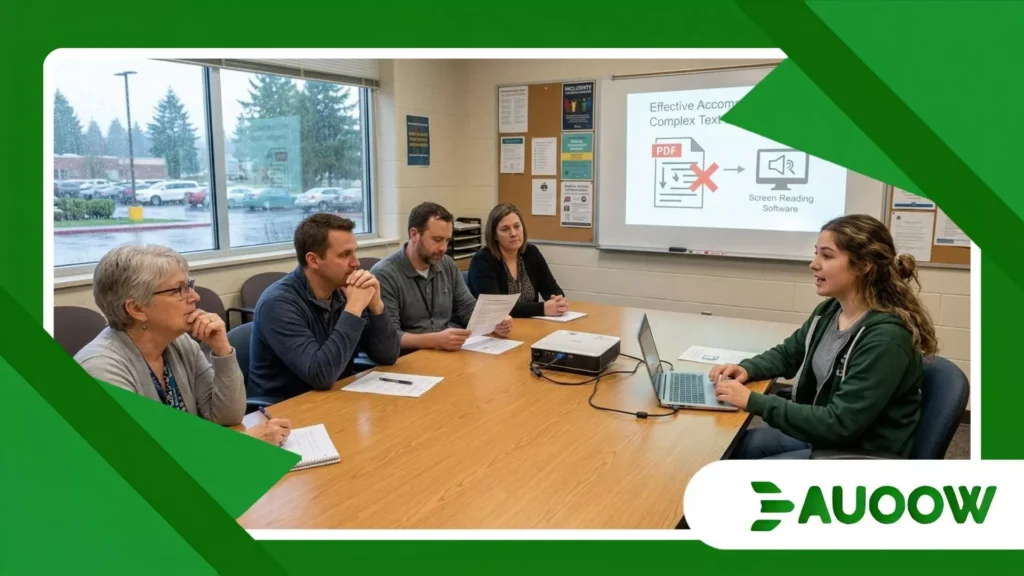
A seventeen-year-old student with dyslexia sits at the head of a guidance conference desk in an Oregon public high school, adjusting her laptop.
Rather than waiting for a multidisciplinary team to read aloud a clinical psychoeducational assessment, she opens a presentation she created.
She explains precisely how screen readers distort multi-column PDFs during timed examinations, shows her teachers which speech-to-text software yields her best writing, and proposes a revised timeline for essay submissions.
Her special education coordinator takes notes while her subject teachers listen not to a bureaucratic mandate handed down from an administrative office, but to a primary user explaining the architecture of her own learning environment.
This approach sits right alongside broader movements toward self-determination, much like how accessible digital identity systems and user-centered design give individuals autonomy over their personal credentials.
What We Cover in This Article
- The Shift Away From Passive Compliance: How student participation alters traditional Individualized Education Programs (IEPs).
- Structural Barriers in Classroom Design: Why standard top-down accommodations often fail in daily execution.
- The Legislative Bridge: Connecting historic disability rights laws to contemporary student self-advocacy.
- Practical Outcomes and Institutional Impact: A clear snapshot of traditional versus self-directed support models.
- Frequently Asked Questions: Direct answers regarding implementation, rights, and classroom management.
Why Are Traditional Support Models Failing Today’s Students?
For decades, the mechanics of educational inclusion relied almost entirely on top-down delegation.
Adults evaluated a student, drafted a document, signed compliance forms, and delivered a list of mandatory modifications to a classroom teacher.
What gets overlooked in this routine is how profoundly this passive pipeline disconnects students from their own learning process.
When accommodations arrive purely as external dictates, students often view them as marks of difference rather than useful tools.
Consider a typical secondary classroom. A student with auditory processing needs receives a standardized directive for printed lecture outlines.
If an educator hands those outlines to him conspicuously at the start of every period, the social friction can feel overwhelming.
Many teenagers choose to tuck the paper away unused, preferring academic struggle over public singling-out.
The intervention exists on paper, legal requirements are met, yet practical accessibility remains zero.
This pattern plays out across districts every day. Accommodations designed without the student’s direct input frequently address clinical descriptions rather than lived realities.
A professional evaluation might specify extra time on tests, but it might miss the fact that the student’s primary barrier is sensory fatigue caused by fluorescent lighting or clunky software interfaces.
Without student insight, institutional support stays rigid, reactive, and often ineffective.
++ Preparing Disabled Students for Career Success Before Graduation
How Does Self-Advocacy Reframe Classroom Dynamic?
When schools shift toward self-directed strategies, the fundamental conversation moves from administrative compliance to practical utility.
The integration of student-led accommodations allows learners to articulate not merely what support they need, but how that support actually operates during a full school day.
This shift changes the dynamic within the building, transforming accommodation planning from an annual paperwork exercise into an active, ongoing dialogue.
In a self-directed framework, the student participates directly in identifying barriers and choosing tools.
A student with motor planning differences might request permission to submit audio notes instead of written drafts, explaining directly to their instructor how keyboard fatigue impedes their analytical output.
This conversation establishes mutual understanding rather than reluctant compliance.
This structural realignment changes how teachers view assistance. Rather than managing a list of special dispensations, educators receive direct feedback on instructional clarity.
When a student explains that color-coded slides prevent them from reading lesson objectives, fixing it benefits the whole class.
Inclusion stops being a separate track for a few students and becomes a continuous refinement of overall teaching methods.
What Historical Decisions Shaped Our Current Educational Framework?
To understand why this evolution matters, we have to look at the legislative foundations that established disability rights in education.
The passage of the Education for All Handicapped Children Act in 1975 which later became the Individuals with Disabilities Education Act (IDEA) was a major step forward.
It guaranteed access to public education for millions of children who had previously been excluded or institutionalized.
However, early legislation was constructed primarily around physical protection and basic placement, not student agency.
The system was built by medical professionals, attorneys, and administrators to ensure physical access to spaces and general curricula.
It relied on a clinical model of disability, viewing the student as someone to be evaluated and assisted entirely by adult experts.
As IDEA underwent updates over the decades, particularly in 1997 and 2004, lawmakers began recognizing the importance of transition planning for older students. Yet in practice, top-down structures persisted in most classrooms.
Today’s movement toward student-led accommodations does not replace these legal protections; it builds on them, moving from passive access to active autonomy.
Also read: Inclusive Education in the Middle East: Emerging Opportunities
How Do Student-Led Frameworks Work in Real Classrooms?
Imagine a middle school history class working on a term project.
Under a traditional plan, a student with executive functioning differences receives a generic checklist created by a special educator six months earlier.
The checklist sits in a folder, disconnected from the daily flow of history assignments.
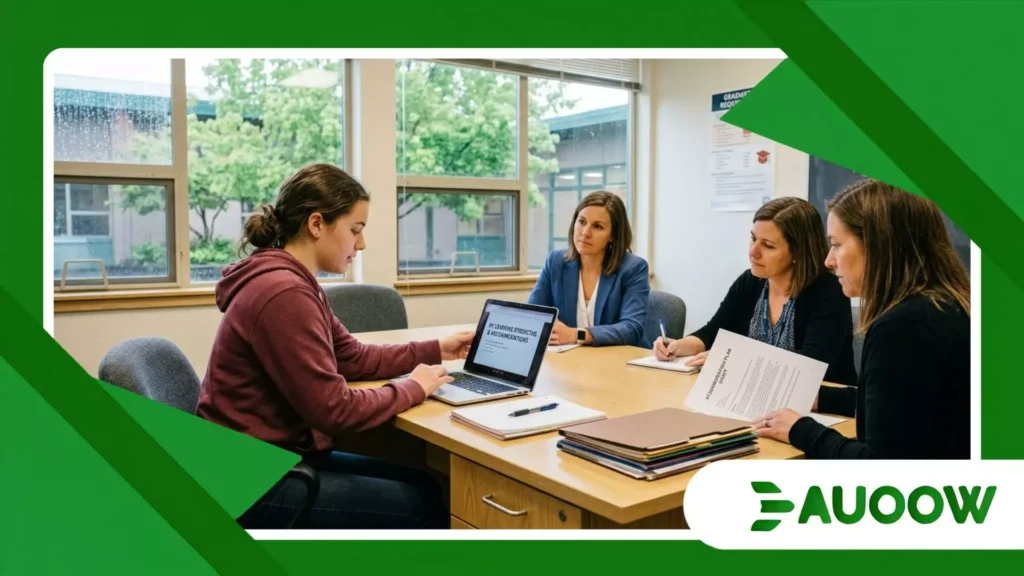
Now consider the same scenario under a self-directed model. The student meets with her teacher at the beginning of the unit to present a modified schedule she designed herself.
She requests that the project be broken down into three mini-deadlines, paired with digital calendar alerts on her personal device.
Because she identified her own organizational friction points, she takes real ownership of the process.
To see how these approaches differ across everyday school routines, consider this breakdown:
Institutional Comparison of Accommodation Models
| Operational Dimension | Traditional Accommodation Model | Student-Led Accommodation Model |
| Primary Initiative | Generated by multidisciplinary adult teams | Co-designed by the student and educators |
| Student Role | Passive recipient of designated supports | Active communicator of operational needs |
| Primary Goal | Legal compliance with district mandates | Functional accessibility and self-determination |
| Adjustment Speed | Slow; requires formal administrative review | Agile; refined through direct feedback |
| Long-Term Impact | High dependence on institutional systems | Early development of lifelong self-advocacy |
This practical shift demonstrates that accessibility is not a static set of equipment or extra time tokens. It is an ongoing, adaptive process shaped by the person using it.
What Obstacles Impede the Adoption of Self-Directed Supports?
Despite clear benefits, implementing student-led accommodations across public school systems faces real structural inertia.
The biggest barrier is rarely student capability; it is the friction of rigid schedules, standardized testing protocols, and heavy administrative workloads designed around uniform delivery.
Allowing students to negotiate and adapt their support strategies requires flexibility that many systemically under-resourced schools struggle to provide.
Educators themselves often lack training in facilitating student self-advocacy.
Professional development programs frequently emphasize legal compliance and clinical criteria over practical communication techniques that help young people articulate their learning styles.
As a result, teachers may occasionally view student-led requests with hesitation, misinterpreting self-advocacy as a desire to simplify coursework.
Equity gaps also persist. Students from well-resourced districts or families experienced in navigating special education are far more likely to learn self-advocacy skills early.
Students in underfunded schools, or those navigating language barriers, are more frequently left inside rigid compliance models that offer little room for personal agency.
Read more: Africa’s Innovative Approaches to Inclusive Learning
How Does Self-Advocacy Prepare Students for Higher Education and Employment?
K–12 environments often create artificial safety nets that change immediately upon graduation. In post-secondary education and workplace environments, the legal landscape shifts.
The automatic provisions of K–12 frameworks give way to systems like Section 504 and the Americans with Disabilities Act (ADA), which require individuals to disclose their needs and request specific, reasonable accommodations independently.
Students raised entirely under traditional, top-down support models often face a steep learning curve when entering university or the workforce.
Having received support automatically for years, many have had few opportunities to explain their learning profiles or negotiate practical adjustments.
When required to request accommodations from a university office or workplace manager, building that confidence on the spot can be difficult.
By embedding student-led accommodations into secondary education, schools help bridge this gap.
Students learn to analyze their environments, evaluate tools, and communicate what they need with confidence.
They leave secondary school not as passive subjects of an administrative file, but as active navigators of their own academic and professional paths.
Frequently Asked Questions
Can middle and high school students legally lead their own accommodation meetings?
Yes. Federal regulations under IDEA explicitly state that whenever appropriate, students should attend and participate in their IEP or 504 plan meetings, particularly as transition planning begins.
Do student-led supports reduce academic standards or expectations?
No. Accommodations change how a student accesses information or demonstrates knowledge; they do not lower learning goals or alter core academic expectations.
How can teachers encourage self-advocacy without placing too much burden on the student?
Teachers can provide simple self-assessment templates, offer choices in assignment formats, and schedule brief, informal check-ins to help students reflect on which strategies work best for them.
What happens if a student requests an accommodation that is not feasible in the classroom?
The process works best as a conversation. Educators work with the student to understand the underlying barrier and find a practical alternative that addresses the need within the classroom environment.
Does this approach apply to students with significant cognitive or communication differences?
Yes. Student leadership looks different for everyone. It can involve non-verbal choices, visual communication tools, or student-selected assistive technology, ensuring every learner has a voice in their accommodations.
