
Preparing Disabled Students for Career Success Before Graduation
When preparing disabled students for career launch, higher education often stumbles long before the first job interview takes place, leaving capable graduates navigating an obstacle course designed around outdated assumptions.
Consider a university senior sitting in a career services office, listening to an advisor emphasize firm handshakes, eye contact, and traditional networking events.
The student holds a stellar academic record and uses a screen reader alongside speech-to-text software to manage a heavy courseload.
Yet the guidance being offered assumes a sensory and physical experience that simply does not match her daily reality.
This disconnect rarely stems from a lack of goodwill; it exists because transition planning was built for an era when workplace accessibility was treated as an afterthought rather than a core operational requirement.
This divide between academic achievement and professional entry remains one of the most persistent, unaddressed challenges in modern workforce planning.
In This Article
- The invisible divide between academic accommodation and workplace reality.
- Why early professional integration changes long-term employment trajectories.
- Comparative Framework: Academic Support vs. Workplace Realities.
- Structural solutions for institutional career services.
- Common questions regarding disabled students entering the workforce.
Why Does Academic Success Fail to Guarantee Professional Integration?
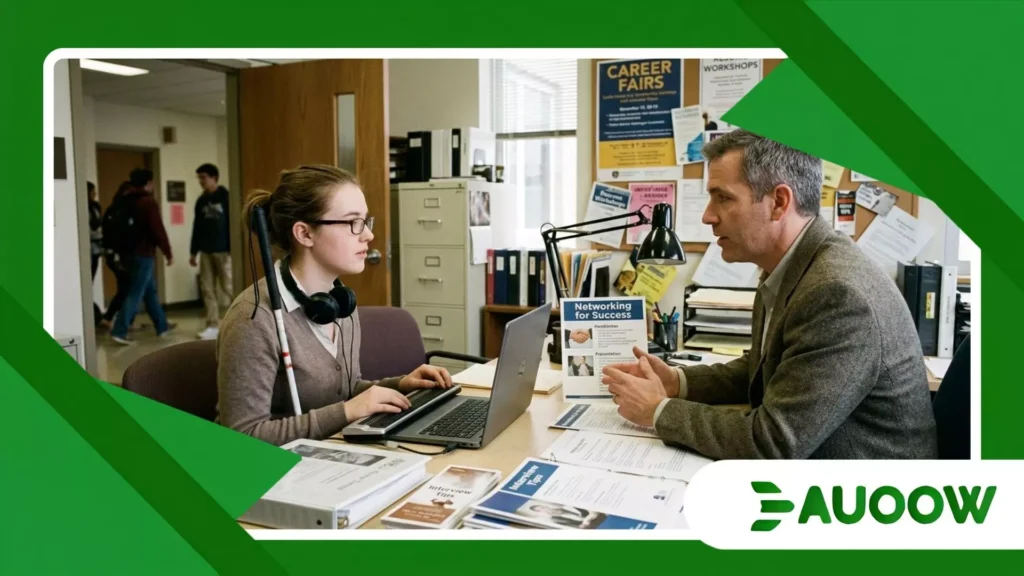
The transition from a university lecture hall to a professional team reveals a sharp, systemic divide.
In higher education, legal frameworks focus heavily on equal access to learning materials extended exam times, digital textbooks, accessible lecture spaces.
However, when preparing disabled students for career transitions, institutions frequently treat career services as a separate administrative island.
The assistive tools that universities provide for coursework rarely align with the proprietary databases, internal communication platforms, or recruitment portals used by modern employers.
A critical nuance often gets lost here: the difference between academic modification and professional independence.
In college, disability service offices act as intermediaries, negotiating adjustments on behalf of the student.
Once that student steps into the job market, that administrative buffer vanishes.
The individual must navigate an unfamiliar landscape governed by different legal frameworks, HR practices, and performance metrics, advocating for themselves directly.
When we look closer, the pattern repeats across professional disciplines.
A computer science student who excels using customized keyboard mappings might find themselves taking a technical assessment on a locked-down browser that blocks screen readers.
The issue here is not candidate competency; it is a structural failure to align educational support with actual workplace conditions.
++ How AI Tutors Are Changing Learning Opportunities for Students with Disabilities
What Has History Taught Us About Workplace Readiness?
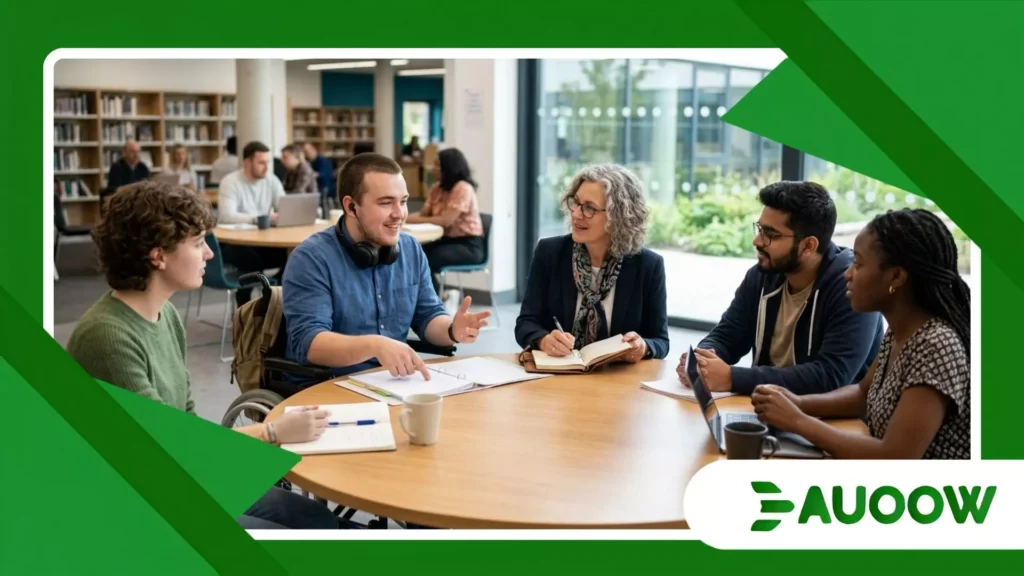
The assumption that physical access naturally leads to economic mobility has shaped policy for decades.
The passage of foundational civil rights legislation opened university doors wider than ever before.
Buildings added ramps, doors were widened, and assistive technologies entered the classroom.
Yet decades later, the employment gaps for disabled college graduates remain significantly wide compared to their non-disabled peers.
A structural detail is often overlooked: early policy focused heavily on physical entrance while neglecting professional pathways.
Legislative frameworks historically viewed disability through a medical or protective lens.
Higher education adapted by prioritizing compliance ensuring a student could physically enter a classroom and complete a degree.
Modern employment, however, relies heavily on early experiential learning, structured internships, and active mentorship networks.
When institutions focus exclusively on classroom accommodations while ignoring career readiness, they defer accessibility barriers rather than removing them.
Physical presence in a classroom is merely the foundation, not the final goal.
Also read: Inclusive Education in the Middle East: Emerging Opportunities
How Do Academic Accommodations Compare to Corporate Practices?
Understanding the divergence between university support systems and workplace realities highlights where institutional planning falls short.
| Dimension | Higher Education Framework | Corporate & Professional Environment |
| Legal Basis | Driven by academic entitlement and educational access laws | Governed by employment non-discrimination and reasonable accommodation standards |
| Advocacy Model | Mediated by dedicated campus disability service offices | Direct self-advocacy between employee, direct manager, and HR |
| Technology Provision | Standardized campus software licenses and hardware loans | Custom, IT-approved enterprise systems and security-compliant tools |
| Evaluation Metrics | Mastery of academic subject matter through tests and papers | Performance key indicators, productivity metrics, and collaborative deliverables |
| Career Preparation | Often isolated to general resume reviews and campus job fairs | Requires industry-specific networking, mentorship, and practical intern experience |
What Role Do Early Internships Play in Long-Term Mobility?
Consider a qualified software design applicant facing a multi-stage technical interview process. The candidate possesses the precise technical skill set required for the position.
However, the employer’s standard hiring portal requires timed cognitive puzzles that do not support screen magnification software.
The candidate drops out of the selection pipeline before a hiring manager ever reviews their application.
Scenario-based barriers like this occur long before day one on the job.
When institutions prioritize preparing disabled students for career opportunities, integrating real-world recruitment scenarios into early career coaching becomes essential.
Bridging this gap requires universities to simulate realistic hiring environments early in a student’s academic journey.
This involves moving beyond standard job fairs to collaborate with corporate partners testing candidate portals for digital accessibility, offering mock interviews tailored to diverse communication styles, and ensuring internships accommodate assistive tools seamlessly from day one.
Read more: Africa’s Innovative Approaches to Inclusive Learning
How Can Higher Education Restructure Career Services?
Rethinking career services requires shifting from a model of reactive assistance to one of integrated, strategic preparation.
Why Must Assistive Technology Align with Industry Standards?
Universities frequently train students on specialized academic software that is rarely deployed in corporate environments.
To build meaningful career readiness, campus technology labs need to mirror the software stacks, project management systems, and collaborative tools used in modern industries.
When students master accessible workflows on industry-standard platforms before graduating, they enter the labor market as competitive, self-reliant professionals.
How Can Campus Networks Build Authentic Professional Mentorship?
Mentorship remains one of the strongest indicators of early career success, yet disabled students are systematically underrepresented in traditional networking pipelines.
Higher education institutions can actively build mentorship programs connecting current students with disabled professionals who have navigated similar industry landscapes.
These relationships provide practical insights into self-advocacy, requesting workplace adjustments, and navigating workplace culture that general career advisors cannot provide.
Frequently Asked Questions
When should a college student begin preparing for their post-graduation career transition?
Career preparation works best when integrated during the first year of university.
Early engagement allows students to explore industry-specific assistive tools, build a professional network, and secure accessible internship opportunities long before their final semester.
Should students disclose their disability during the job application process?
Disclosure is a personal decision that depends on individual circumstances, corporate culture, and whether reasonable accommodations are required during the recruitment process itself.
Early consultation with experienced career advisors can help candidates develop a disclosure strategy that feels comfortable and strategically sound.
How can career centers better support disabled students seeking remote work?
Career services can help students evaluate potential employers for genuine remote-work infrastructure, teach strategies for maintaining accessible home-office environments, and guide candidates on how to advocate for digital accessibility in distributed teams.
What is the difference between university accommodations and workplace accommodations?
University accommodations focus on learning access and academic evaluation, often managed directly through a specialized campus office.
Workplace accommodations focus on performing essential job functions and are typically negotiated directly between the employee, human resources, and team management.
How can employers partner with universities to improve hiring accessibility?
Employers can collaborate with university career centers to audit their recruitment platforms for accessibility, offer structured internship placements, participate in targeted mentoring programs, and provide feedback on the real-world readiness of emerging graduates.
