
How Robot Vacuums Can Support Independent Living
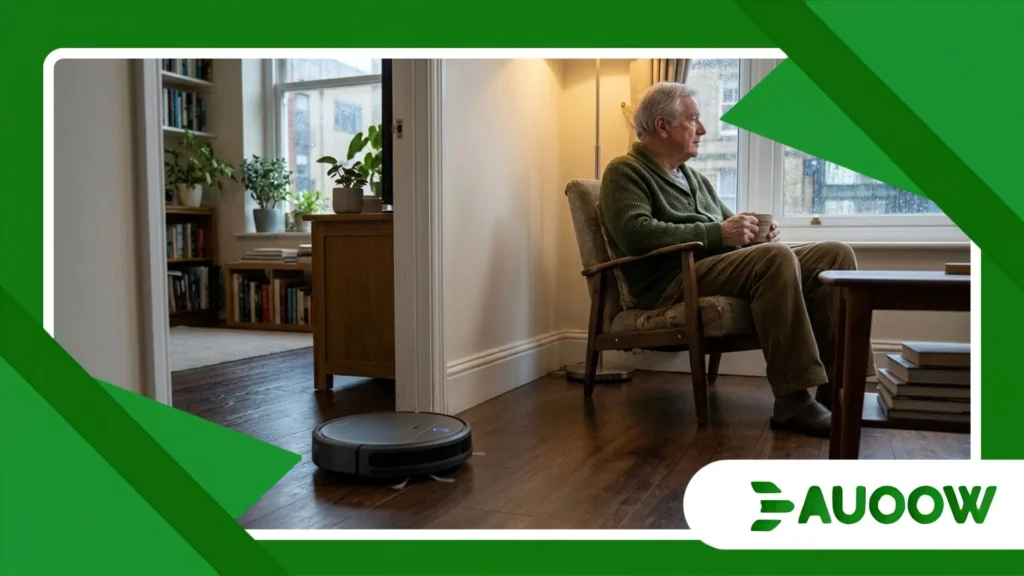
Late on a rainy Tuesday afternoon, Arthur sits near his living room window in Manchester, watching water bead against the glass.
At seventy-two, living with progressive motor neurone changes, the physical geometry of his home has gradually rearranged itself around him.
Tasks that once occupied ten mindless minutes now require strategic planning, energy budgeting, and occasionally, an uncomfortable request for assistance.
Yet, as dusk settles, a soft chime echoes from the hallway, followed by a low, steady hum.
Without human intervention or physical exertion, a compact disk traverses the hardwood floor, clearing dust from beneath the sideboard.
It is in these quiet, unglamorous moments that we observe how robot vacuums can support independent living for individuals navigating age or mobility challenges.
What to Expect in This Analysis
- The unseen burden of daily maintenance: Why domestic chores represent a critical friction point in personal autonomy.
- The structural shift in assistive design: How consumer smart devices are silently overtaking specialized, medicalized equipment.
- Policy, economics, and access: The growing gap between high-end home automation and public care subsidies.
- A practical comparative breakdown: Weighing traditional home aid models against automated floor maintenance.
- The future of dignified aging: Redefining domestic independence without compromising personal space.
Why Does the Unseen Weight of Household Chores Shape Personal Autonomy?
When we talk about accessibility, conversation naturally gravitates toward grand infrastructure: public transit ramps, tactile paving, accessible entrances, and curb cuts.
What rarely enters this debate, however, is the interior landscape of the private home specifically, the relentless friction of routine upkeep.
Dust accumulates regardless of physical capacity. Crumbs fall irrespective of joint inflammation or chronic fatigue.
For someone navigating limited mobility, pushing an eight-kilogram upright vacuum cleaner across a carpet is not merely a chore; it is an exhausting expenditure of finite physical tokens that could otherwise be spent on work, social connection, creative pursuits, or basic self-care.
When a home becomes difficult to maintain, the psychological impact is immediate. Environments begin to feel unmanageable, leading to a subtle erosion of personal agency.
For decades, the primary solution offered by social services and family networks was human assistance: personal care assistants, domestic aides, or visiting relatives.
While invaluable, human help carries an implicit trade-off.
Accepting aid often means surrendering a degree of privacy, conforming to external schedules, and enduring the quiet vulnerability of admitting that one’s space can no longer be managed alone.
This is precisely where consumer technology enters the picture in ways traditional policy frameworks failed to anticipate.
By automating mundane domestic friction, households reclaim a measure of effortless continuity.
When we evaluate how robot vacuums can support independent living, we are not simply discussing a convenient gadget for busy professionals.
We are looking at an understated instrument of dignity that quietly preserves energy, reduces daily stress, and protects personal privacy within the domestic sanctuary.
++ How beach access mats improve seaside visits for wheelchair users
How Did Consumer Innovation Silently Eclipse Specialized Assistive Tech?
There is a structural detail that is frequently overlooked when examining home adaptation.
For decades, equipment designed for disabled individuals or older adults was funneled almost exclusively through specialized medical suppliers.
The result was often functional, but aesthetically institutional, prohibitively expensive, and frequently stigmatizing.
A heavy-duty, industrial-looking grab bar or a specialized mobility chair announced its medical purpose immediately, turning a personal living room into an extension of a clinic.
In recent years, a profound shift occurred. Mainstream consumer electronics driven by massive commercial competition began solving accessibility problems better than specialized medical devices, without ever labeling them as such.
Voice assistants, smart doorbells, automated lighting, and autonomous floor care were developed for general convenience.
Yet, their most radical impact has been registered in households requiring accessible solutions.
When a person living with severe arthritis uses a voice command or a smartphone app to schedule an autonomous cleaner, they bypass the entire bureaucratic apparatus of medical supply procurement.
There is no need for a clinical assessment, no waiting list for equipment grants, and no institutional design ruining their living room aesthetic. The device is sleek, modern, and universally recognizable.
This convergence of mainstream design and accessibility illustrates a broader truth about modern independence.
When technology is designed well for the general public, it frequently dismantles barriers for those with specific functional limitations.
The continuous mapping, obstacle avoidance, and self-emptying features found in contemporary units mean that physical interaction with dust bins or tangled cords is largely eliminated, proving once again how robot vacuums can support independent living across varied age demographics and functional requirements.
Also read: Why facial recognition accessibility raises daily access concerns
What Hinders Universal Access to Autonomous Home Aids?
Despite these clear advantages, we must maintain a balanced perspective. Autonomous appliances are not a panacea, nor are they universally accessible to everyone.
High-performing models equipped with reliable laser navigation, self-emptying docks, and advanced obstacle recognition carry substantial retail prices.
For individuals living on fixed disability benefits or modest pensions, these upfront costs remain significant barriers.
Furthermore, physical environments matter tremendously. Older housing stock, split-level apartments, steep thresholds, and thick plush carpets can hinder autonomous navigation.
Technology can reduce domestic friction, but it cannot overcome structural architectural flaws without broader home adaptations, thoughtful interior adjustments, and inclusive urban housing policies.
Read more: The rise of smart crosswalk accessibility in urban mobility plans
What Does a Real-World Application Look Like in Daily Life?
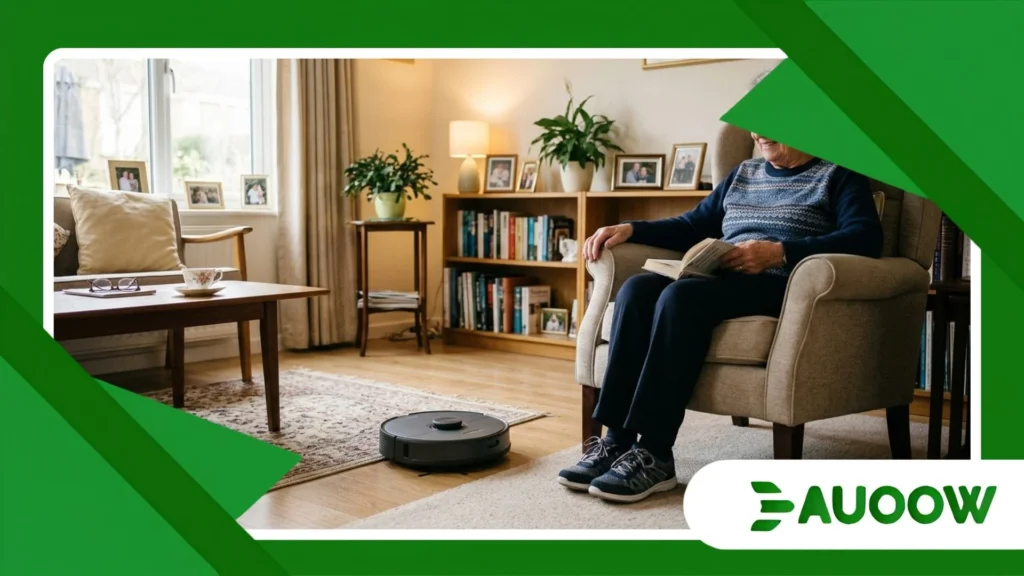
To understand the practical reality beyond technical specifications, consider Elena, a fifty-four-year-old high school history teacher living with chronic fatigue syndrome (ME/CFS) and joint hypermobility in Chicago.
For Elena, managing physical exertion is not a matter of willpower; it is a strict medical necessity.
Over-exertion can trigger severe crashes that leave her bedridden for days, threatening her ability to work and care for herself.
Before adopting smart home automation, weekend cleaning was a source of persistent anxiety.
Pushing a vacuum cleaner required an entire afternoon’s energy, leaving her unable to grade papers, prepare lesson plans, or enjoy meaningful time with her family.
By integrating an autonomous vacuum with automated scheduling and self-emptying capabilities into her home, Elena altered her weekly balance.
The floor maintenance happens while she is at work or resting.
Dust levels drop, indoor air quality improves due to integrated HEPA filtration, and her physical energy is preserved for her professional and personal life.
Cases like Elena’s demonstrate that accessibility is rarely about dramatic transformations; it is about the accumulation of small, preserved energy margins that allow a person to retain control over their daily life, career, and personal wellbeing.
How Do Historic Infrastructure Decisions Impact Modern Assistive Integration?
When we examine how housing policies developed over the last half-century, a clear pattern repeats.
Municipal building codes in many Western nations long treated interior accessibility as a niche requirement rather than a baseline standard for human habitation.
Deep door sills, narrow hallways, abrupt floor transitions, and poor electrical placement were woven into millions of homes.
Today, these legacy architectural choices complicate the deployment of autonomous devices.
An autonomous cleaner, no matter how advanced its navigation algorithm, cannot climb a three-inch wooden threshold separating a kitchen from a living room without structural adjustments or custom ramps.
When we trace the evolution of social care policies, we see a similar lag.
Government assistance programs frequently fund physical alterations like stairlifts or walk-in showers, but rarely recognize smart appliances as valid assistive tools.
There is an urgent need for policy updates that acknowledge how consumer robotics can prevent falls, reduce home care service hours, and prolong independent living in existing housing stock.
As we look at household dynamics today, recognizing how robot vacuums can support independent living becomes an essential part of modern housing and social care discussions.
Evaluating Floor Care Options for Supported Living
To clearer understand how different floor maintenance methods compare in terms of accessibility, physical strain, autonomy, and long-term costs, consider the following structural comparison:
| Maintenance Approach | Physical Exertion Required | Impact on Personal Privacy | Recurring Operational Strain | Suitability for Limited Mobility |
| Traditional Upright Vacuum | High (pushing, pulling, bending, lifting) | None (self-managed) | High physical strain per session | Low; high risk of fatigue or injury |
| In-Home Care Assistant | None (performed by external worker) | Moderate to High (requires outside access) | High financial/administrative coordination | High physical relief; low personal privacy |
| Autonomous Robot Vacuum | Minimal (app setup, occasional filter cleaning) | Total (runs independently inside home) | Low; automated docking and self-emptying | High; maintains consistent daily cleanliness |
The Path Ahead: Redefining Autonomy and Dignity in the Smart Home
Reimagining accessibility does not require waiting for futuristic humanoids or fully automated domestic staff.
The revolution in home independence is happening incrementally, right now, through quiet, functional devices that take over micro-tasks within our living spaces.
Every automated cycle represents more than just dust gathered; it represents hours of human physical exertion saved, personal privacy protected, and energy returned to the individual.
The honest assessment suggests that while smart appliances cannot solve systemic healthcare shortages or fix inaccessible housing architecture on their own, they offer immediate, tangible relief to millions of individuals seeking to age in place or manage physical disabilities on their own terms.
When we shift our perspective from viewing technology as a mere luxury to recognizing it as a vital facilitator of self-reliance, we begin to construct living environments that respect individual dignity and accommodate changing physical needs over time.
True independence is not defined by doing every single task with one’s own hands; it is defined by having agency, choice, and control over one’s environment.
By acknowledging how robot vacuums can support independent living, we open up new conversations between technological innovation, social care policy, and universal design.
When we harness smart technology to eliminate daily friction, we preserve human energy for what truly matters living fully, comfortably, and autonomously in the places we call home.
Frequently Asked Questions
Can robot vacuums handle high thresholds or steps between rooms?
Most standard models can negotiate small thresholds up to about 0.75 inches (2 cm).
However, higher step transitions or split-level homes will prevent the unit from moving between rooms independently unless ramp transitions are installed.
Are these devices easy to operate for someone who is not tech-savvy?
While initial setup through a smartphone app might require brief assistance from a family member or technician, daily operation can be fully automated on a set schedule or triggered using simple physical buttons or voice commands via smart speakers.
How often do self-emptying robot vacuums need maintenance?
Models equipped with self-emptying dust bases typically require bag replacement or bin clearing only once every 30 to 60 days, significantly reducing the need for daily bending or physical handling.
Can an autonomous cleaner completely replace deep cleaning for someone with mobility limitations?
It handles daily surface dirt, hair, and dust exceptionally well, maintaining a consistent baseline of cleanliness.
However, occasional deep cleaning of tight corners, upholstery, or high shelves may still require periodic assistance.
Are smart vacuums covered by disability grants or social care funding?
Currently, most public healthcare and social welfare systems do not explicitly cover off-the-shelf consumer smart appliances.
However, some flexible self-directed care budgets and private insurance programs allow participants to purchase consumer tech if it directly supports independent living goals.
